by admin | Dec 10, 2016 | Headlines, National News
The 66th year of the International Human Rights Day will be commemorated in the Philippines by calls for justice for the victims of the US-supported Marcos dictatorship and for the Filipino people to persevere in the struggle against state fascism.
Now, more than ever, there is great need for organized resistance against the political rehabilitation of the Marcoses and the continuing gross violations of people’s democratic rights. There is a need to be vigilant and to thwart the authoritarian tendencies of the Duterte administration. Now, more than ever, there is great need for the Filipino people to work for a just and lasting peace.
While hero’s honors were given to the dictator Ferdinand Marcos, martial law victims are still crying out for justice. The Marcoses have yet to return much of the billions which they looted from the nation’s coffers. The martial law victims still need to be indemnified.
Political prisoners, a vivid imprint of martial law, exist to this day despite commitments and agreements in the GRP-NDFP peace process (There are fiveBoholano political prisoners, namely: Alberto Pancho & Cristuto Lastomen presently detained in Bohol Dist. Jail, Pedro Lumantas & Calixto Vistal both currently serving sentences in the Nat’l Bilibid Prison, and the ailing Exuperio “Exam” Lloren, former Mayor of Jagna town). The GRP’s use of their release as a gambit in the peace process to exact a bilateral ceasefire makes worse the injustice they have suffered for defending people’s democratic rights.
Extrajudicial killings of activists and civilians continue under Oplan Bayanihan and in line with the Duterte government’s war against drugs. The poor peasants, indigenous and Moro people, workers, women and the youth remain to be the majority of the victims in brutal military and police operations.
Despite a unilateral ceasefire declaration from the Duterte government, there has been no let-up in combat operations in rural communities characterized by bombings, indiscriminate firing, threats, harassment, and encampment in homes and schools (In Bohol, relentless military operations of 47th IB in the guise of civil-military operations continue according to Humabol-KMP. Personnel of said army unit are also encamped in several barangay halls). Shocking is the recent appointment of the notorious human rights violator Gen. Eduardo Ano as AFP Chief of Staff who is being held responsible by human rights defenders for the enforced disappearance of Jonas Burgos. Ano is expected to adhere to the same counter-insurgency framework that results in more human rights violations.
Also worrisome are the threat of the suspension of the privilege of the writ of habeas corpus and the imposition of martial law; the revival of the notorious Philippine Constabulary; and attempts to re-legislate the death penalty.
Even with the ouster of the US-backed Marcos dictatorship, succeeding regimes maintained the status quo, enjoying the benefits of bureaucrat capitalism, fascism and US puppetry, always hiding under the cloak of ‘democracy’.
Hunger and poverty worsen as neoliberal policies ravage the domestic economy. Land to the tillers, decent jobs and living wages for the workers, and democratic access to social services remain to be distant realities. While Duterte has proclaimed that he is cutting military and political ties with the US government, he has yet to abrogate the unequal treaties and agreements between the US and the Philippines. State violence continues to be felt, even as the Duterte government has resumed formal peace talks with the NDFP and Moro revolutionary movements.
We urge Pres. Duterte to pursue with vigor the positive commitments he has made like ending contractualization, shifting to an independent foreign policy, negotiating for just and lasting peace, battling corruption in the bureaucracy, and the likes.
We call on the President to categorically order the military, police and para-military units to stop the killings. We urge him to immediately abide by his commitment to release all political prisoners. He must put an end to Oplan Bayanihan which perpetrates state terrorism on civilian communities. And he should stop coddling the Marcoses who are inching their way back to Malacanang.
Now, more than ever, we reaffirm our commitment to fight for people’s rights and against all forms of fascist attacks against the Filipino people.
For reference: Cristina Palabay, Karapatan Secretary General (0917-3162831)
by admin | Dec 7, 2016 | DTI Updates, National News
The Department of Trade and Industry (DTI) through its Bureau of Domestic Trade Promotion (BDTP) with the support from DTI Regional and Provincial Offices will showcase various products of local micro, small, and medium enterprises (MSMEs) at the Sikat Pinoy National Trade Fair (NTF) on 7 to 11 December at the Megatrade Halls 1-3, SM Megamall, Mandaluyong City.
The five-day National Trade Fair features a wide array of products carefully selected from various regions and provinces of the Philippines. Products that are up for sale include processed food, wearables, home furnishings, furniture, and health and wellness products.
Some notable displays present at the fair are the Yakan handwoven products from Zamboanga City, pure honey from Bukidnon, VCO soap from Compostela Valley and fruit wines from Agusan del Norte.
“The National Trade Fair aims to provide avenues for our local MSMEs to showcase their world-class products to our domestic markets, especially to buyers and consumers in the National Capital Region,” said BDTP Director Rhodora Leaño.
Aside from the buying public, members of various trade associations and retail & wholesale institutional buyers seeking subcontractors & suppliers of intermediate and finished products are expected to attend and visit the said trade fair.
DTI hopes to attract more visitors and buyers for this year’s NTF as the fair coincides with the upcoming Christmas and holiday shopping season.
“We urge our fellow Filipinos to buy locally-produced products and support our local MSMEs as they help in providing jobs in their respective communities,” said DTI Industry Promotion Group Undersecretary Nora K. Terrado.
In the 2014 figures of the Philippine Statistics Agency, there are about 946,988 established MSMEs which account for 99.6% of the total businesses in the country that employ 63% of the total labor force. With this number, DTI sees the potential of MSMEs in driving economic growth and aside from serving as the primary provider of jobs for most Filipinos in the regions.
Sikat Pinoy National Trade Fair is conducted annually by the DTI-BDTP as a means of promoting Philippine products at the domestic level. It also recently held the Sikat Pinoy National Arts and Crafts Fair which promoted the indigenous products of the Philippines and world-class talents of Filipino artisans.
by admin | Dec 7, 2016 | DTI Updates, National News
Pasay City – The Department of Trade and Industry (DTI) through its Export Marketing Bureau, Export Development Council (EDC) and Philippine Export Confederation Inc. (PHILEXPORT), celebrate 2016 National Exporters Congress with a theme dubbed as “Advancing SMEs through Inclusive Business: From Local to Global” at the Philippine Trade Training Center, Pasay City.
This year’s congress highlights the role of inclusive business model in providing access to domestic MSMEs to the global value chains (GVCs). DTI noted that with its thrust of providing more jobs and making entrepreneurship an effective tool in eradicating poverty across the country, inclusive business helps its agenda by allowing small businesses to be part of the GVCs.
“If more MSMEs are sustainably linked into the value chain of big businesses, we expect more jobs from the sector,” said DTI Industry Promotion Group Undersecretary Nora K. Terrado.
DTI, through its key initiatives and services, implements targeted interventions and support services to the export sector through the strategies laid out in the Philippine Export Development Plan (PEDP) 2015-2017. PEDP was developed through public-private initiative in 2014 and was signed in February 2016 through Memorandum Circular 91. The plan includes discussion of eight key strategies that address bottlenecks of the sector and provides comprehensive approaches in driving growth for Philippine exports.
“Through PEDP, our goal is not only to increase our total export revenues, and make Philippine products known in the global market but also to address constraints in export growth. As we do this, we expect to open more opportunities for employment and increase household income in the coming periods,” added Undersecretary Terrado.
Successful implementation of the strategies laid out in the PEDP 2015-2017 with a sustained target increase of 3% in 2016 and 5% in 2017, is expected to boost employment generation by 225,000 and 600,000 more jobs, respectively.
One of the key private partners of the government in catering to the needs of the export sector is the Philippine Exporters Confederation, Inc. (PHILEXPORT). PHILEXPORT has been pro-active in collaborating with government initiatives. It is present in 20 regions and provinces through its chapters. It assists its exporter members through various services such as policy advocacy, facilitation, information collection and dissemination and export-import documentation and capacity building. “By empowering manufacturers and their suppliers especially in the countryside, PHILEXPORT hopes to promote inclusive business and growth,” emphasized PHILEXPORT President and CEO Mr. Sergio Ortiz-Luis Jr.
Meanwhile, DTI Export Marketing Bureau (DTI-EMB) leads DTI in developing, promoting and expanding exports trade. It takes various initiatives in making government support services accessible to all domestic producers. It offers free information sessions on Philippines’ Free Trade Agreements (FTAs) through its Doing Business in Free Trade Areas (DBFTAs) info sessions and leads the implementation of Philippine Export Competitiveness Program (PECP) that aims to increase productivity and competitiveness of exporters through seminars, outbound business missions, and business matching activities.
According to EMB, the growing number of SMEs operating in the country is seen by the government as a welcome development, a testament to the inclusive growth being experienced by various sectors. The government, the DTI in particular, has been at the forefront of efforts to harness the economic power of the country’s smaller, but numerous business entities.
For the past 17 months, Philippine exports experienced a decline due to the global economic slowdown. It was only in September 2016 when Philippine exports reflected an increase of 5.1% with total export sales from $4.9 billion in 2015 to $5.2 billion this year. Electronic products remained to be the top Philippine export while Japan maintained its spot as the top Philippine export destination.
“As we diversify our markets, and urge our exporters to innovate products and services, we are keen on having positive growth in the coming months,” said DTI EMB Director Senen M. Perlada.
by admin | Dec 6, 2016 | DTI Updates, Headlines
The Department of Trade and Industry (DTI) have already surpassed its target of 150 Negosyo Centers for 2016 after continuously launching centers nationwide – with the centers now totaling at 403.
For 2016, there have been 203 Negosyo Centers launched after the Department set a supposed target of 150.
DTI Regional Operations Group Supervising Undersecretary Zenaida Maglaya said that the launching of these Negosyo Centers is in line with the Republic Act No. 10644 or the Go Negosyo Act.
Maglaya said MSMEs or entrepreneurs can visit these centers for access to information, business name registration, access to finance, access to market and access to training.
“We are proud that we have established more Negosyo Centers more than what we have expected to establish. We did not expect to surpass our target of 150 centers for 2016 but we did to support the growth of MSMEs in the country,” Maglaya said, adding that NCs will help in achieving job generation and inclusive growth.
The Republic Act No. 10644 or the Go Negosyo Act aims to help micro, small and medium enterprises (MSMEs), promote ease of doing business, facilitate access to grants and other forms of financial assistance, Shared Service Facilities (SSF) and other equipment, and other support for MSMEs through national government agencies (NGAs), ensure management guidance, assistance and improvement of the working conditions of MSMEs; and facilitate market access and linkaging services for entrepreneurs.
Meanwhile, the DTI – National Capital Regional Office will launch its eight (8th) Negosyo Center in the metropolis, and first Negosyo Center in the City of Malabon on December 6, 2016. Thus, hiking the number of Negosyo Centers to 403.
The center is located at Malabon City Hall Annex Building F. Sevilla Boulevard, San Agustin in Malabon City.
The presence of the Negosyo Center in cities, municipalities and provinces aims to provide better access and more efficient services to MSMEs.
As of December 2, 2016, there are 403 Negosyo Centers nationwide since its inception in 2014. Of the total number of centers, 225 are located in Luzon, while Visayas and Mindanao have 90 and 88 Negosyo Centers, respectively.
With the Negosyo Centers, the Department has assisted a total of 483, 711 clients and conducted a total 6,002 seminars for MSMEs and potential entrepreneurs nationwide.
Meanwhile, a special lane is open to Overseas Filipino Workers (OFWs) at Negosyo Centers to help OFWs who want to stay in the country for good and start a business, with DTI noting the current situation of OFWs, especially those who were repatriated from Saudi Arabia.
Maglaya said these special desks will help OFWs and their families start a business and have the option to either pursue it and remain in the country for good or continue working abroad and leaving the business to their families or relatives
by admin | Dec 6, 2016 | Photo Story
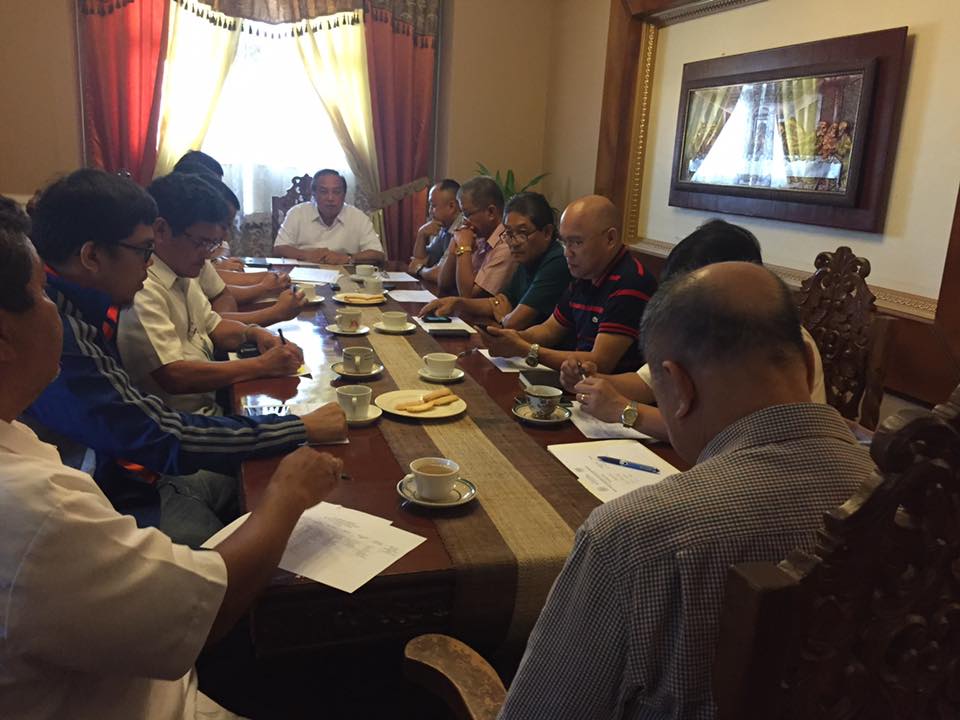
Gov. Edgar Chatto convened the Bohol Energy Development Advisory Group (BEDAG) on the next steps in ensuring quality, reliable, and affordable power for Bohol.
The group hashed out investor list and power source to discuss viability and distinguish investments that can address baseload and peakload demand for Bohol.
As for policy on which investment Bohol will accept, this is subject to qualification in terms of cost both for providers and consumers with special consideration on environmental factor.
BCCI’s Engr. Albert Uy, Argeo Melisimo, BIPC’s Inday Dominise, and City Councilor Beben Inting also joined the discussions for investment aspect.
The BEDAG is composed of representatives from the power sector as well as the planning, legal office and SP chair on utilities.

