by admin | Nov 10, 2017 | DTI Updates, Headlines
23 October 2017 – The Internet has introduced improvements in technology, communication and online entertainment – a tool which transformed the way people communicate and information is disseminated – but it is also incredibly useful for education and training purposes as well. Its widespread use has unlocked a substantial amount of information and knowledge to a broader range of people.
The Philippine Trade Training Center (PTTC)’s 4th Kapihan seminar held on October 23, 2017 focused on the recent advances and integration of Learning Management Systems, a software application to document, track, report, and deliver fully online educational courses or training programs.
A systems integration and application development company, ExcentOne CEO Dino Cavestany, centered discussion on the pros and cons of traditional education and eLearning. PTTC Trade Industry and Development Analyst Joseph Argente was also on hand to discuss introduction to computer programming.
Without the limitations of a classroom, eLearning can accommodate any size where training modules are more personalized and targeted, tailored fit to the needs of its participants and can be accessed instantly from anywhere. Not all courses, however, can be offered online. Technical courses such as Accounting for new startup owners and non-accountants are examples of e-learning courses. Other areas of e-learning are content immediacy, universality, and continuity. The cost of installing an LMS is primarily based on the nature of the content. Content that is hard to find is more expensive.
“When we talk about personalization, a lot of these e-learning sessions are more targeted in nature,” Cavestany said. “As opposed to, say, you go to school and you must take religion, social studies, math, science. A lot of e-learning courses that are available target very specific scenarios.”
An LMS also requires the use of media (video, audio, text support), interactive (registration forums, chat rooms, voice/video conferencing), and administrative (content creation and distribution, permission creation and assignment, performance management) capabilities. Some samples of LMS are Microsoft Virtual Academy, Wharton Online University, and Certiport.

by admin | Nov 9, 2017 | DTI Updates, Headlines
The Department of Trade and Industry (DTI demonstrates the massive potential of the grassroots level in Region 7’s food and non-food industries with the mounting of the One Town One Product (OTOP) Premium Product Showcase at the Paseo Solana, Ayala Center Cebu on November 17 – 19 this year.
DTI Central Visayas Regional Director Asteria Caberte says that the event will feature products of local micro, small and medium enterprises (MSMEs) that have undergone product development workshops conducted by the department under the OTOP Program.
Dir. Caberte adds that MSMEs participating in the OTOP Premium Products Showcase will also supply products for the Go Lokal stores, Tindahang Pinoy, trade fairs and other market access platforms used by the DTI.
The DTI official explains that the OTOP Program is a leveling up process that focuses on new variations, better products that have significant improvement in the areas of quality, design, standards, compliance, marketability and production quality.
Around 100 MSMEs in Central Visayas took part in the recent OTOP Next Gen Screening, Assessment and Triage (SAT) sessions in Cebu City where experts from the Design Center of the Philippines and from the private sector evaluated potential OTOP products.
For queries on the OTOP Premium Product Showcase, interested parties may call any of the following: Victoria Diaz, of DI 7 Regional Office at (032) 255-0036 -37, Vierna Teresa Ligan of DTI Bohol at (038) 5018260, Marivic Aguilar of DTI Cebu at (032) 2556971 / 2553926, Olivet Somido of DTI Negros Oriental at (035) 4222764, and Marlene Patria of DTI Siquijor at (035) 4809065. #
by admin | Oct 27, 2017 | DTI Updates, Headlines
The Philippines recently co-hosted with Chinese Taipei the “APEC Policy Dialogue on MSME Marketplace & O2O Forum” targeted at promoting the application of online-to-offline (O2O) business models and encouraging MSMEs to invest in innovation.
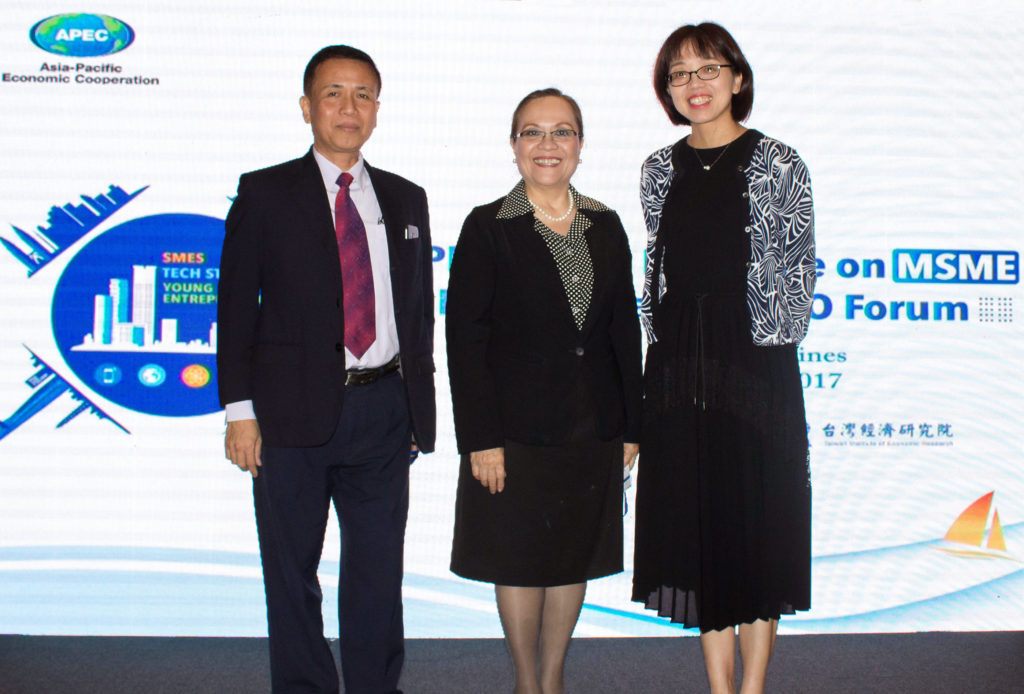
DTI Regional Operations Group Undersecretary Zenaida Maglaya (center), DTI Bureau of Small and Medium Enterprise Development Director Jerry Clavesillas (left), Chinese Taipei Ministry of Economic Affairs Small and Medium Enterprise Administration Deputy Director General Pei-Ti Hu
Since the inception of APEC O2O initiative in 2015, the Forum has showcased more than 200 best practices in the Asia-Pacific region.
For the Philippines, three innovative startups have won the O2O best practice awards namely: Medifi, revolutionizing healthcare with cloud based health profile management, video consultations, and medical imaging support; SnipePH, your one-stop solutions partner for employment engagement and business needs, and; recently we have BeamAndGo, specializing in consumer-related E-Commerce products and the first in the Philippines to offer a digital SMS gifting solution delivered as a text message.
“Technological innovations have the capacity to reduce costs, allowing ease of doing business which enables SMEs to access resources they need to grow and expand their business and accelerate the on-boarding of currently excluded markets into the global economy.” DTI Regional Operations Group (ROG) Undersecretary Zenaida Maglaya said.
According to the United Nations Conference on Trade and Development (UNCTAD), e-commerce helps local businesses access global value chains. It enables them to have a presence in foreign markets through exports and imports. This process leads to higher productivity because of more efficient use of technology, heightened competition, and greater consumer choice; and creates jobs as firms start to expand.
The Asia-Pacific region has the largest market share in the digital economy, accounting for 33% of total market scale but only a few SMEs in APEC are currently taking full advantage of new digital opportunities.
The role of private and public sector in supporting more SMEs to turn these opportunities into business will be a key driving force for economic growth.
“Now more than ever, it is becoming increasingly important to call for closer cooperation and stronger collaboration as we work towards helping SMEs become our partners in promoting inclusive growth. And we do so by making them competitive and resilient as they embrace the opportunities and challenges globalization brings.” Maglaya said.
Undersecretary Maglaya also highlighted the financial technology (FinTech) as one of the digital transformations in the MSME growth and development. For one, there is Acudeen Technologies, an online facility that provides accessible financing to underbanked SMEs in the Philippines by letting them sell their receivables from multinationals and blue chip companies to Acudeen’s Financing Marketplace. Within its first 7 months of launching, Acudeen has successfully transacted over 50M PHP worth of receivables with 0% default and only 1.5% repayment delay rate out of over 1000 transactions.
More than 80 stakeholders including Google, Cerebra Technologies Co. Ltd., Acudeen Technologies, and other participants from APEC economies attended the forum and participated in the discussion focusing on the current digital opportunities and challenges of MSMEs in the globalization.
Among the eight (8) innovative start-ups and MSMEs from seven economies who shared their experience of O2O innovation and technology, Markedshot from Singapore was recognized as the top performer and given the “APEC SME O2O Best Practice” award with qualification to attend the “2018 APEC O2O Summit” in Taipei. BeamandGo, the PH tech startup who won in the last O2O Forum in Viet Nam will likewise join Markshot at the 2018 APEC O2O Summit.
The Philippines, together with the Chinese Taipei, continue their efforts to enhance MSMEs’ digital competitiveness and resilience toward quality growth through the APEC O2O Initiative.
by admin | Oct 26, 2017 | Business, DTI Updates
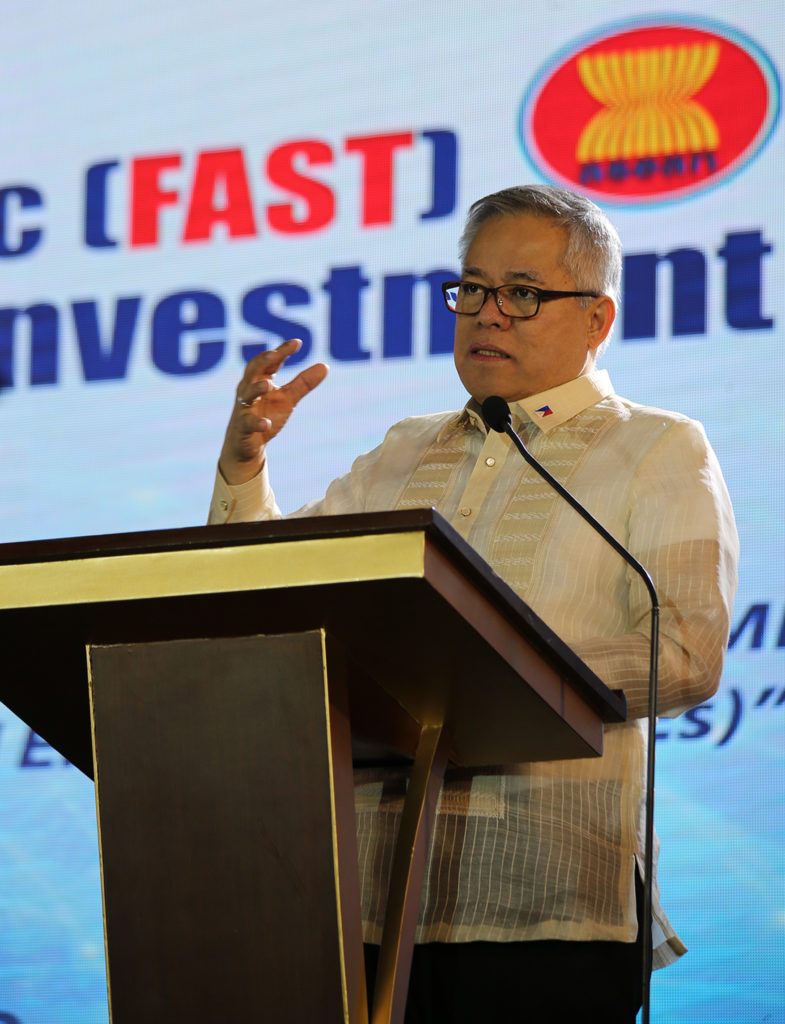
43 phil bussines con.exfo
MANILA – Department of Trade and Industry (DTI) Secretary Ramon Lopez emphasized the continuous cooperation and collaboration between the government and the private sector in promoting investments and achieving economic growth during the 43rd Philippine Business Conference and Expo on 19 October.
Speaking before officials and members of the Philippine Chamber of Commerce and Industry (PCCI), the trade chief discussed the “Focused and Strategic (FAST) Action Agenda on Investment“ initiative, which is a project of DTI and the Board of Investments (BOI) to link micro, small, and medium enterprises (MSMEs) to ASEAN and Global Multinational Enterprises (MNEs).
“With our goal to lower the income gap and uplift the lives of those at the bottom of the pyramid, it is our priority to link our MSMEs to bigger value chains, provide them the necessary tools to compete in the international market, and even export their products abroad,” said Sec. Lopez.
With the Philippines (PH) as the current host of the ASEAN regional meet this year, the FAST Action Agenda on Investment is a key deliverable of PH under the ASEAN economic pillar.
Sec. Lopez also underscored the potential of the country as an investment destination for both local and foreign investors, citing its export turnaround, improving manufacturing and industry sectors, young population, and market access to ASEAN and other trade partners.
PH’s Foreign Trade Agreements (FTAs) with ASEAN provides it with a 620-million market share, while the Regional Comprehensive Economic Partnership (RCEP) gives the country a 2.2-billion market reach.
The trade chief was also optimistic of the expansion of the trade preferences arrangements via the Generalized System of Preferences Plus (GSP+) of the EU and the Generalized System of Preferences (GSP) of the US.
Further, Sec. Lopez highlighted the 2017 Investment Priorities Program (IPP), a blueprint on the preferred sectors and investments entitled to incentives. The program includes the Inclusive Business (IB) model, which creates greater market access for MSMEs.
The IPP likewise covers the expansion of incentives for manufacturing activities and supports the government’s Manufacturing Resurgence Program (MRP), which creates solid and stable jobs for Filipinos.
“The DTI and BOI are committed to continue providing policy environment and programs that support investment promotion, and increase the participation of MSMEs in the regional and global supply chain”, Sec. Lopez concluded.
by admin | Oct 26, 2017 | ASEAN agenda, DTI Updates, National News
In the recently concluded Slingshot ASEAN led by the Department of Trade and Industry (DTI), winners for the Startup World Cup – Philippines Regional were announced to represent the Philippines and compete with the rest of the world in the upcoming Startup World Cup Grand Finale in Silicon Valley on May 2018.
Storm Technologies topped the ten finalists as it bagged the grand prize, which includes an all-expense paid trip to San Francisco and a chance to win $1,000,000 by competing in the Startup World Cup Global Finale. Storm Technologies is the largest flexible benefits and incentives firm in the Philippines. It serves over 100,000 employees across different industries.
Meanwhile, runners-up include Beam and Go as 4th runner-up; Zennya, 3rd runner-up; Qwikwire, 2nd runner-up; and Ayannah, 1st runner-up. All runners-up will be attending Startup World Cup Finale in Silicon Valley.
Startup World Cup Philippines Regional grand finals is a collaboration between DTI, Department of Science and Technology – Philippine Council for Industry, Energy and Emerging Technology Research and Development(DOST-PCIEERD), DENTSU X Philippines, Fenox Venture Capital Southeast Asia and Brainsparks. Startup World Cup on the other hand, is a global conference and competition that brings together the top startups, venture capitalists (VCs), entrepreneurs and world-class technology executives.
Organized by the Department of Trade and Industry, Slingshot ASEAN is one of the official events lined up by the ASEAN Committee on Business and Investment Promotion (ASEAN-CBIP) being chaired by DTI Undersecretary for Trade and Investments Promotion Group Nora K. Terrado.

In photo: Startup World Cup Philippines Regional grand prize winner, Storm Technologies with DTI Undersecretary Nora K. Terrado (2nd from right).
by admin | Oct 25, 2017 | DTI Updates, Major Events

The Department of Trade and Industry CALABARZON recently gathered the leading automotive industry players for the 1st Regional “Kapihan” for Automotive Industry in pushing for the agency’s Comprehensive Automotive Resurgence Strategy (CARS) program in Cabuyao City, Laguna.
Toledo said that the activities will start a collaboration between the government and private sector to integrate and push CALABARZON’s automotive industry towards an inclusive and prosperous Philippines.
“We, in DTI, really want to uplift the capacity and competitiveness of our MSMEs. We want them to be part of the value chain of the industry. Hence, we are asking for the participation and commitment of the industry players, specifically the private sector, and government agencies to make it happen. The 7M’s (mindset, mastery, mentoring, market, machine, money, and business model) of DTI Secretary Mon Lopez would be a good strategy to promote productivity and profitability,” said DTI CALABARZON Director Marilou Toledo.
The CARS Program aims to jumpstart the Philippine automotive industry and make the country an auto manufacturing hub in the ASEAN region. The Program also intends to raise the production level to a competitive scale by providing $1,000 per unit fiscal support for the production of three models with a 200,000-unit production requirement over six years and mandatory local production of body shell and large plastic parts. It is expected to amplify the Philippine workforce, strengthen industrial linkages and attract additional investments.
Participating companies were the Federation of Automotive Industries of the Philippines (FAIP), Chamber of Automotive Manufacturers of the Philippines (CAMPI), Philippine Parts Maker Association (PPMA), Motorcycle Parts Producers and Exporters Association (MCPPEA), Phil. Ecozones Association (PHILEA), Laguna Chamber of Commerce and Industry (LCCI), some government agencies such as the Board of Investments (BOI), UP National Center for Transportation Studies, Philippine Council for Industry, Energy, Emerging Technology Research and Development (DOST-PCIEERD), National Economic and Development Authority CALABARZON, Deptartment of Public Works and Highways CALABARZON, Department of Science and Technology CALABARZON, and the Japan International Cooperation Agency – Nomura Research Institute (JICA-NRI).
While the Philippines moved up to become the second fastest growing automotive market in the Southeast Asia at the start of 2017, its market is smaller compared with other ASEAN countries. Furthermore, its manufacturing capabilities are mostly oriented towards the domestic market rather than regional chains.

