by admin | Nov 15, 2016 | Features, Headlines, Local News / Bohol Balita, Major Events, Photo Story
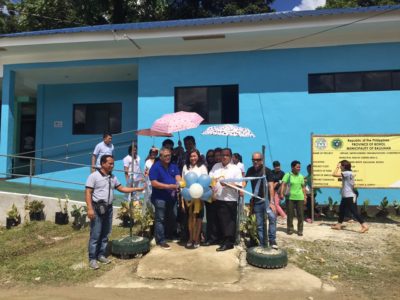
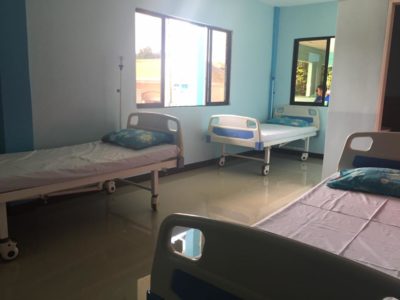
Gov. Edgar Chatto and Balilihan Mayor Pureza Veloso-Chatto with Department of Health Region 7 Director Dr. Jaime Bernadas lead ribbon cutting rites for the improved birthing center and TB DOTS center in Balilihan. The center is implemented under the Bohol Earthquake Assistance and Bottom Up Budgeting programs. Bernadas also shared available resource to further improve the health center- P1m from DPWH and P2m from DOH. A P10m infirmary is also to be established next. Bernadas said the calamity opened opportunities to support health facilities. National government he said calls for quality care for health at all levels at all stages in all ages, a priority agenda consistent with the development framework of the Provincial
by admin | Oct 28, 2016 | Features, Headlines, Local News / Bohol Balita, Major Events, World
USAID facilitates tripartite partnership in investment promotion in Bohol and Tagbilaran City
Tagbilaran City – The Bohol Provincial Government, the Tagbilaran City Government, and the Bohol Chamber of Commerce and Industry (BCCI) entered into a tripartite partnership to formalize their commitment to pursuing inclusive growth. Recognizing the need for a solid “one voice for one destination” vision in promoting investments, the partnership is anchored on a unified and enhanced investment promotions program for Bohol and Tagbilaran City.
“The government must work with the business sector, civil society, and other stakeholders to achieve sustainable development,” said Bohol Governor Edgardo Chatto.
“The private sector is an important driver of growth,” he added. “As the province prepares for the influx of more tourists and businesses with the opening of the new international airport in Panglao in 2018 and the completion of infrastructure projects in Tagbilaran City, the more we need to synchronize our efforts to reach our potential as an economic growth hub in the region.”
The partnership was the result of a series of workshops on investment promotion organized by the U.S. Embassy Manila’s U.S. Agency for International Development (USAID), through its Strengthening Urban Resilience for Growth with Equity (SURGE) Project, in Tagbilaran City. The BCCI will take the lead in aggressive investment promotions for the province and Tagbilaran City, drawing foreign direct investments that can bring in more jobs and revenues. Governor Chatto will issue an Executive Order to create the Tripartite Technical Working Group.
“The tripartite partnership signifies the public and private sectors’ commitment to building a mutually beneficial economic relationship that will help generate more jobs and wealth and ultimately uplift the lives of citizens,” said Jeffrey Lehrer, Director of the USAID/Philippines Office of Economic Development and Governance.
Tourism and investments
Tourism continues to be the competitive advantage of Bohol, given its status as one of the most popular tourist destinations in the Philippines. Tourism played a crucial role in the recovery of the province after an earthquake and a typhoon in 2013.
While the consecutive calamities caused a sharp drop in tourist arrivals, the province, with the support of international donors, invested heavily in its tourism recovery program, Visit Bohol 2015. As part of the project, Tagbilaran City allotted PhP15 million (US$308,412) for the construction of the Bohol Friendship Park, which is designed to become a major tourist attraction in the city. According to the Department of Tourism, the number of travelers to Bohol nearly doubled from 356,370 in 2012 to 602,257 in 2015. Governor Chatto expects to attract 1.7 million tourists a year when the new international airport opens in 2018.
According to the National Competitiveness Council’s rankings in 2016, the province’s competitiveness increased by 18 places among the country’s 74 provinces, advancing from a rank of 54th in 2015 to 36th. Meanwhile, Tagbilaran City’s competitiveness increased by 9 places, from 34th to 25th among the 110 cities in the country.
Tagbilaran City Government identified tourism development, revitalization of information and communications technology (ICT), and a rationalized infrastructure program as the priority areas for development in the next three years.
“Various infrastructure projects are already in the pipeline and we are optimistic these initiatives will bring in significant contributions to what we have today—specifically, attracting investments that will eventually generate more jobs in the city,” said Tagbilaran City Mayor John Geesnell “Baba” Yap.
Strategic directions for investment promotion
The tripartite partnership will revise the enhanced Bohol Investment and Promotion Center’s two-pronged strategic direction to support business registration and micro, small, and medium enterprise development, and at the same time attract big investors. It will also strengthen the capacity of the center through learning exposures in international investment promotions conferences and destinations. This alliance will work toward establishing an Investment Promotions Center to be led by the private sector, supported by the government, and registered with the Philippines’ Securities and Exchange Commission.
“We believe in the province and city’s economic growth prospects, and the business sector intends to bring it to greater heights. The province and the city have various investment opportunities to offer and we just need to set the stage for more investments to come in,” said Marietta Gasatan, Vice President for External Affairs of BCCI.
“I commend the involved partners for coming together to plan for Tagbilaran City and Bohol’s future investment direction. USAID is committed to support the province and the city in improving its business environment, which will gradually contribute to deepening the Philippines’ competitive efforts globally and locally,” said Lehrer.
Tagbilaran City is one of USAID’s six partner cities under the Cities Development Initiative (CDI). The SURGE Project, the CDI’s flagship activity, is developing conditions for broad-based, inclusive, and resilient economic growth in the six cities, and will soon expand to cover additional cities.
SURGE supported the Tagbilaran City Government in updating its Comprehensive Land Use Plan to integrate climate change adaptation, gender equality, and social inclusion. It also facilitated the expansion of the inter-municipal alliance, the Panglao Island Executive Council, into the Panglao Island and Tagbilaran Executive Committee (PITEC). The PITEC, represented by local government heads from the province and the cities of Tagbilaran, Dauis, and Panglao, is addressing common concerns in urbanization and in managing the impacts of the construction and operation of the new international airport. A provincial ordinance will be issued to institutionalize the PITEC.
Moreover, the SURGE Project and the local government are developing an action plan to streamline the business registration process to three steps to improve the city’s business enabling environment.
The International City/County Management Association (ICMA) is the main implementing partner for SURGE. ICMA is a global organization composed of more than 11,000 city, town, and county managers who work to professionalize local government management around the world.
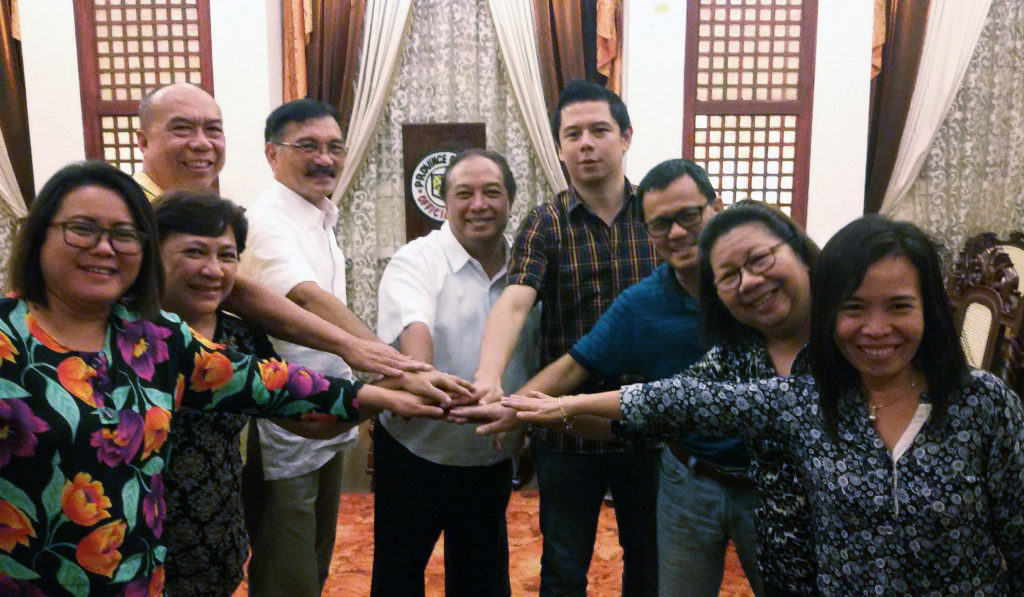
Tripartite partners strike an “all of one, one for all” pose to symbolize a solid partnership.
by admin | Oct 25, 2016 | Features, Headlines, Local News / Bohol Balita, Major Events
TAGBILARAN CITY, October 25 (PIA)–Nagpagawas na og pay rules ang Department of Labor and Employment (DOLE) isip pahinumdom sa pribadong sektor sa pag-obserbar sa saktong pay rules ug core labor standards sa Oktubre 31 ug Nobyembre 1 nga gi-deklarar isip special non-working days.
Ang DOLE nipagawas sa Labor Advisory No. 15, Series of 2016 o Guidelines on the Payment of Wages for the Special Non-Working Days on October 31 and November 1, 2016.
Ang Oktubre 31 (Additional non-working day) ug Nobyembre 1 (All Saints Day) gi-deklarar nga special non-working days base sa Proclamation 1105, Series of 2015.
Kun ang empleyado dili mosulod sa trabaho niining mga petsaha, ipatuman ang “no work, no pay” nga palisiya gawas lamang kun adunay paborable nga palisiya, praktis, o collective bargaining agreement (CBA) nga mohatag og sweldo sa special non-working days.
Kun mo-trabaho sa maong mga adlaw, ang empleyado bayran og dugang 30 porsiyento sa iyang inadlaw nga suholan sa unang walo (8) oras nga pagtrabaho (Daily Rate x 130% + COLA scheme).
Alang sa mo-trabaho og lapas walo (8) ka oras (overtime work), ang empleyado pagabayaran og dugang 30 porsiyento sa iyang inoras kun hourly rate sa maong adlaw (Hourly rate of basic daily wage x 130 % x 130 % x number of hours worked).
Kun mo-trabaho atol sa special day nga natunong sa rest day sa empleyado, bayran sila og dugang 50 porsiyento sa ilang inadlaw nga suholan sa unang walo (8) ka oras nga pagtrabaho (Daily Rate x 150 % + COLA).
Samtang alang sa pagtrabaho og lapas sa walo (8) ka oras kun overtime work atol sa special day nga natunong usab sa rest day sa empleyado, bayaran sila og dugang 30 porsiyento sa ilang inoras nga suholan (Basic daily wage x 150% x 130% x number of hours worked). (ecb/PIA7-Bohol)
by admin | Oct 24, 2016 | Features, Headlines, Local News / Bohol Balita, Major Events
Two former Japanese volunteers under the Japan Overseas Cooperation Volunteers (JOCV) Program of the Japan International Cooperation Agency (JICA) in partnership with teachers of the Tagbilaran City Central School Special Education Center established recently a support center for children and youth with special needs in Bohol.
Called the Babita House, the center aims to support children and young adults with disabilities by providing them vocational skills trainings that can help integrate them in the society.
Present during the opening of the support center were JICA Chief Representative in the Philippines Susumu Ito, and officials from the Kanagawa Prefecture in Japan, local governments of Tagbilaran City and Municipality of Dauis and representatives from the Department of Trade and Industry and Bohol Investment Promotion Center.
Japanese volunteers Akiko Sugiyama and Ruiko Wada were formerly dispatched in Tagbilaran City Central School SPED Center (October 2012-March 2015) and Department of Education (DepEd) – Tagbilaran City Schools Division (July 2013-June 2015) respectively.
“The support center reflects the commitment of JICA and the JOCVs in giving hope and opportunities to everyone,” said JICA Chief Representative in the Philippines Susumu Ito. “Through the activities of our Japanese volunteers, we hope to contribute to the Philippines’ thrust of building an inclusive society where a life of dignity is enjoyed by everyone.”
The Babita House, located in the Municipality of Dauis in Bohol, is a one-storey building that also houses dormitories for special children and young adults.
Data from the Philippine Statistics Authority (PSA) reported that of the number of people with disabilities in the Philippines, the number was higher for those in the ages 5 to 19 years old.
“We are happy to provide education to children with special needs and we hope that they will be able to enjoy a life without discrimination,” shared Japanese volunteer Akiko Sugiyama.
Sugiyama was among the many Japanese volunteers who returned to the Philippines to pursue advocacy work. This year, the Ramon Magsaysay Award, the equivalent of Asia’s Nobel Prize, recognized the JOCVs for their selfless work in building solidarity with the rest of the world.
In all, there were more than 1,500 Japanese volunteers dispatched to the Philippines under JICA’s JOCV Program to support various development areas.
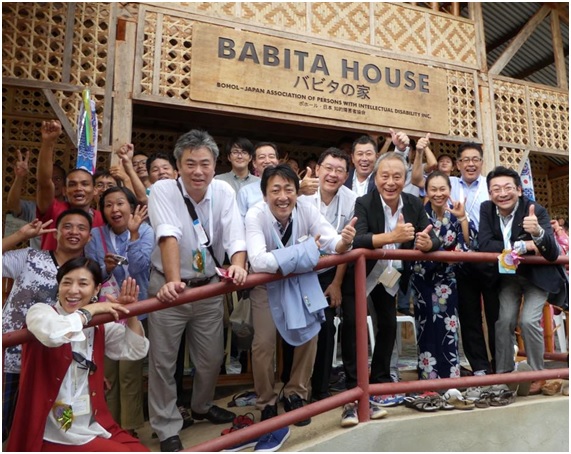
Former Japan Overseas Cooperation Volunteer (JOCV) Akiko Sugiyama (second to the right, in kimono) opens the Babita House in Dauis, Bohol, a support center for children and young adults with special needs. Officials from the Japan International Cooperation Agency, Kanagawa Prefecture in Japan, local governments of Tagbilaran City and Municipality of Dauis, and representatives from the Department of Trade and Industry and Bohol Investment Promotion Center attended the opening of the center.
by admin | Oct 22, 2016 | Features, Headlines, Local News / Bohol Balita, Major Events
OFFICE OF THE GOVERNOR
Effective Development Communications Unit
DOH trains municipal health teams for Community Based Drug Rehabilitation Program
“Who will save Bohol? It’s going to be us,”- Gov. Chatto
Municipal teams composed of the chief of police, municipal health officer, social worker, public health nurse, municipal local government operations officers, the president of the league of barangays, representative from the religious sector underwent 3-day training on Community Based Drug Rehabilitation Program from the Department of Health (DOH).
DOH is performing mandate to provide treatment and rehabilitation for drug “surrenderers” as part of commitment toward the “Health for All, All for Health” battle cry under the administration of Pres. Rodrigo Duterte.
The agency maintains drug use and addiction is a health concern. According to DOH, addiction is a disease. It’s a brain disease. It is brought about by imbalance of chemicals in the brain because of chemicals that you put in your body.
Following establishment of the Center for Drug Education and Counseling (CEDEC) at the Oak Brook Building by the Provincial Government in partnership with DOH and the Bohol Island Lions Club, Gov. Edgar Chatto welcomed the training for municipalities.
The CEDEC will be model for centers to be established across municipalities, the teams from each town now having undergone training from the DOH.
“Who will save Bohol? It’s going to be us,” Chatto stated to participants at the training, likening the response to the drug war to the comprehensive and collaborative response to when the earthquake happened in Bohol.
“We receive a lot of help and we thank the people who are helping us. But we are the ones who will take Bohol to greater heights,” the governor added.
Chatto said the community-based program ensures Boholanos owned and won the drug war through active involvement and collaboration.
The program is aimed at strengthening knowledge and better understanding on how they can properly assess the drug dependent/user surrenderers to ensure that proper recommendations can be made for them.
An important aspect is also the proper determination of the level of addiction of a patient so that needed intervention can be classified as needed.
Patients are also assessed according to whether they need to be treated as outpatient, provided with counseling by psychiatrist, or are required to be referred to a mental health institution or facility wherein their condition can be managed.
An aspect also includes assessment for referrals for livelihood or financial assistance.
The program also includes family support group as in some cases, family and financial problems can also be traced as reasons why people are hooked to drug addiction.
Also integrated into the program is the Masa Masid (Mamamayang Ayaw sa Anomalya Mamamayang Ayaw sa Iligal na Droga) program of the DILG, a barangay-based anti-criminality, anti-corruption, and anti-illegal drugs program which encourages multi-sectoral partnership to intensify the spirit of volunteerism at the community level.
The municipalities were divided into two batches in three simultaneous venues. The first batch included teams from Duero, Anda, Ubay, Pres. CPG, Talibon and Buenavista; Catigbian, Bilar, Carmen, Danao, Sikatuna and Lila; and Tagbilaran City, Dauis, Alburquerque, Dimiao, Garcia and Jagna
Batch 2 included Tubigon I, Calape, Loon II, Cortes, Balilihan I, and San Isidro; Candijay, Ubay II, Trinidad, Getafe, Inabanga, Tubigon II, Sierra Bohol Plaza Bullones, and Mabini; Batuan, San Miguel, Sagbayan, Clarin, Bien Unido and Dagohoy; Loon I, Maribojoc, Corella, Balilihan II, Antequera, Loboc, Sevilla and Alicia; and Baclayon, Panglao, Loay, Valencia, Jagna II, Guindulman, and Pilar. (Leah/EDCOM)
by admin | May 3, 2016 | Features
SORSOGON CITY – It was just another typical victory parade for Mayor Rodrigo Duterte.
Security personnel found their hands full turning back overzealous supporters after his chopper landed at the Balogo Sports Complex.
After the usual round of photo ops, Duterte’s caravan was met by a cheering throng just outside the complex gates.
Chants of the “Duterte!” filled the air, competing with the honking of motorcycles whose drivers would join the motorcade to the rally venue.
Applause and clenched fists raised along the way delivered the message that Duterte was in friendly territory. No one could miss the connection between candidate and his supporters.
Traffic grounded to a halt but the smiles of approval reassured Duterte that there were hardly any complaints for the minor inconvenience. After all, it was not everyday that the man who has become the symbol of change was in town.
Indeed, if there were spies from enemy camps around, they must have gritted their teeth in envy at the spontaneous red carpet welcome given Duterte.
If these people heard of the ridiculous accusations hurled at Duterte, they did not show it.
If they did, this was an unmistakable rebuke at the purveyors of lies out to derail the man they look up to as their last card against illegal drugs, criminalities and corruption.
Like nearly all of his sorties, the heat was unforgiving. And like all of his rallies, his supporters didn’t allow it to deprive them of the privilege to see him up close and personal.
At the first sound of Duterte’s voice, pandemonium broke loose at the rally site at the Provincial Capitol Park.
Eager to get a glimpse of their candidate, the crowd jeered at the privileged ones on stage with him, proof that they were here for him – and not for anything else.
Duterte delivered virtually the same speech he gave in all of his previous rallies which shows the universality of his message.
Except for some revisions every now and then, Duterte gave this audience the same treatment he gave the rest.
Duterte briefly responded to the plethora of accusations thrown at him, a man secure in the thought that his people are solidly behind him.
He did not show any irritation even when his enemies had thrown everything at him. Defiant and unbowed, Duterte explained why he did not immediately respond to the allegations.
When he said he did it on purpose because he want all those who wanted him destroyed to fall into the trap, the crowd roared in approval. It must have been agonizing for them then. It is a pleasant relief to hear Duterte wiggle himself out of it with ease.
The political rock star indulged his audience several minutes more after a howl of protest met his announcement that he would not be staying long.
It was only natural for one who was on the campaign trail to indulge the people he came here for.
On the other hand, no one can begrudge the people of Sorsogon the privilege of holding on to him as long as they can.
In all certainty, Duterte will no longer be a candidate more than a week from now.
Unless the cheaters prevail, he will be president the next time he comes to visit them.