by admin | Oct 24, 2016 | Headlines, National News
MANILA, October 24 (PIA)–Gipahinumdoman sa Department of Labor and Employment (DOLE) ang nagkalain-laing kumpanya kalabot sa pagpahigayon og random drug testing sa ilang mga empleyado.
Matud pa ni DOLE Kalihim Silvestre Bello III, istrikto kining ipatuman sa ahensiya base sa Department Order 53-03 kalabot sa mga sumbanan sa mga polisiya ug programa sa Drug-Free Workplace.
Nahisulod sa maong department order ang tanang naa sa pribadong sektor, bisan ang mga contractor ug concessionaires niini.
Gawas sa mga polisiya ug programa kalabot sa drug abuse prevention and control, giingong angay usab hingosgan sa mga sektor ang pag-implementar sa adbokasiya, edukasyon, pagbansay, drug testing program, treatment, rehabilitation and referral, ug monitoring and evaluation alang sa ilang mga empleyado.
Kun mogawas nga positibo ang usa ka empleyado, gitataw ni Bello nga dili angay tangtangon dayon sa trabaho ang apektadong empleyado ug angay tun-an ang resulta ug tinoon ang panginahanglan niini.
Gidugang pa sa Kalihim nga kinahanglang giyahan kini sa rehabilitation centers sa Department of Health (DOH) ilabi na kun unang higayon pa nga nag-positibo ang empleyado sa maong drug testing. (ecb/PIA7-Bohol)
by admin | Oct 24, 2016 | Headlines, Local News / Bohol Balita
TAGBILARAN CITY, October 24 (PIA)–Ang bag-ong hich-tech ID sa Philippine Postal Corp. madawat na karon isip valid ID sa tanang remittance centers, sa pagkuha og clearance sa National Bureau of Investigation (NBI), pag-apply og pasaporte ug uban pang transaksiyon.
Gawas niini, ang postal ID ma¬gamit dili lamang sa mga remittance centers apan apil na usab sa pagbukas og mga accounts sa bangko ug pagpirma sa mga dokumentong legal.
Kini human mismo ang Bangko Sentral ng Pilipinas (BSP) nag¬pagawas og direktiba sa tanang mga remittance centers ug bangko kalabot niini.
Sa improved postal ID, may biometric information sa card holders niini kauban na ang ilang pirma ug uban pang impormasyon sa ilang pagkatawo.
Garantisado usab nga dili ma-peke ang improved postal ID tungod kay may mga security features kini nga makita ug nakatago.
Ang kinahanglan lamang mao ang proof of identity ug proof of address aron makakuha og postal ID nga madawat sa Metro Manila sulod sa 15 ka adlaw ug 20 ka adlaw usab sa mga ubang lungsod ug probinsiya.
Sa mga isla ug lagyong dapit, e-deliver sa PhilPost ang ID sulod sa 30 ka adlaw.
Adunay 260 ka capture stations sa paghimo sa postal ID sa tibuok Pilipinas ug ang kumpletong listahan niini makita sa 1,300 ka buhatan sa PhilPost sa tibuok nasod. (ecb/PIA7-Bohol)
by admin | Oct 24, 2016 | Features, Headlines, Local News / Bohol Balita, Major Events
Two former Japanese volunteers under the Japan Overseas Cooperation Volunteers (JOCV) Program of the Japan International Cooperation Agency (JICA) in partnership with teachers of the Tagbilaran City Central School Special Education Center established recently a support center for children and youth with special needs in Bohol.
Called the Babita House, the center aims to support children and young adults with disabilities by providing them vocational skills trainings that can help integrate them in the society.
Present during the opening of the support center were JICA Chief Representative in the Philippines Susumu Ito, and officials from the Kanagawa Prefecture in Japan, local governments of Tagbilaran City and Municipality of Dauis and representatives from the Department of Trade and Industry and Bohol Investment Promotion Center.
Japanese volunteers Akiko Sugiyama and Ruiko Wada were formerly dispatched in Tagbilaran City Central School SPED Center (October 2012-March 2015) and Department of Education (DepEd) – Tagbilaran City Schools Division (July 2013-June 2015) respectively.
“The support center reflects the commitment of JICA and the JOCVs in giving hope and opportunities to everyone,” said JICA Chief Representative in the Philippines Susumu Ito. “Through the activities of our Japanese volunteers, we hope to contribute to the Philippines’ thrust of building an inclusive society where a life of dignity is enjoyed by everyone.”
The Babita House, located in the Municipality of Dauis in Bohol, is a one-storey building that also houses dormitories for special children and young adults.
Data from the Philippine Statistics Authority (PSA) reported that of the number of people with disabilities in the Philippines, the number was higher for those in the ages 5 to 19 years old.
“We are happy to provide education to children with special needs and we hope that they will be able to enjoy a life without discrimination,” shared Japanese volunteer Akiko Sugiyama.
Sugiyama was among the many Japanese volunteers who returned to the Philippines to pursue advocacy work. This year, the Ramon Magsaysay Award, the equivalent of Asia’s Nobel Prize, recognized the JOCVs for their selfless work in building solidarity with the rest of the world.
In all, there were more than 1,500 Japanese volunteers dispatched to the Philippines under JICA’s JOCV Program to support various development areas.
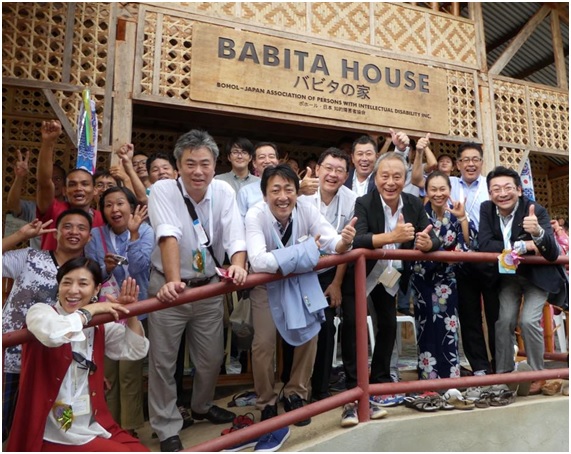
Former Japan Overseas Cooperation Volunteer (JOCV) Akiko Sugiyama (second to the right, in kimono) opens the Babita House in Dauis, Bohol, a support center for children and young adults with special needs. Officials from the Japan International Cooperation Agency, Kanagawa Prefecture in Japan, local governments of Tagbilaran City and Municipality of Dauis, and representatives from the Department of Trade and Industry and Bohol Investment Promotion Center attended the opening of the center.
by admin | Oct 22, 2016 | Headlines
TAGBILARAN CITY, October 17 (PIA)–Bohol’s blessings of wondrous tourism spots and beaches could be its edge in beckoning investors in information communication technology (ICT) and the business process management (BPM).
No less than the President of the Philippine Software Industries Association and another Boholano start-up provider have to pick on this edge of Bohol over other identified next wave cities (NWC).
NWCs are those which have been ranked by industry stakeholders as the next potential expansion sites for call centers and the ICT BPM industries, based on four parameters: availability of talents and skills, pleasant business environment, cost of operations and the presence of critical infrastructure.
But speaking at the recent Kapihan sa PIA, PSIA president Jonathan Lazurriaga bared that many of the prospective investors in the industry have seen the need for the provision of a balance work-life enjoyment for their workers.
Over this, Bohol startup company owned by entrepreneur Roy Bayonas quickly pointed out that the proximity of areas for recreation in Bohol from Tagbilaran is a huge edge over other areas.
BPM and ICT industries usually render tasks in shifts and would be largely using mental processes which tends to be draining, a time for winding down is a huge help, Bayonas explained.
Earlier, Governor Edgar Chatto has revealed a plan to convert the soon to be abandoned Tagbilaran City Airport into an Industrial and Information technology Park, which would only be a couple of kilometers from the heart of the city, and about 15 minutes from the beaches of Panglao.
Even now, Bohol sees an influx of call center workers who would slip out of their Cebu jobs during breaks and long weekends, preferring to hang out in the beaches or wander elsewhere to find their kind of adventure.
Moreover, Bayonas, who owns and operates PrintBit in Bohol said he used to work in a company in Manila which largely uses Boholano information technology specialists.
“IT graduates there are of the same quality with the graduates in Bohol,” he said, supporting Bohol as potential bright spot in BPM.
On the other hand, Tagbilaran has been on top in the Visayas on putting up a pleasant business environment.
The Department of Trade and Industry in Bohol, according to Regional Director Asteria Caberte, is putting up more Go Negosyo Centers: a hub for business consultancy and facilitation, making the prospect of locating in Bohol easier for investors.
Already with regional wage lower than the major cities in the region, Tagbilaran still keeps a low minimum daily rate, cheap power and water cost, affordable housing and cheap food, Bayonas added.
As to infrastructure set-up, telecommunications company PLDT Smart, as well as Globe have both finished putting up a network of fiber optic cables and connected them to Cebu and Cagayan de Oro, affording a faster and more reliable internet connection.
Over all this, Bohol industry stakeholder members of the ICT Council agree with PSIA that the recent president’s order to streamline business processes and for telecommunications companies to provide the necessary connection, that major changes could be coming.
This, according to Ben Skelton, Bohol ICT Council member could be a bright future prospect for Bohol and its ICT industry. (rac/PIA-7/Bohol)
by admin | Oct 22, 2016 | Features, Headlines, Local News / Bohol Balita, Major Events
OFFICE OF THE GOVERNOR
Effective Development Communications Unit
DOH trains municipal health teams for Community Based Drug Rehabilitation Program
“Who will save Bohol? It’s going to be us,”- Gov. Chatto
Municipal teams composed of the chief of police, municipal health officer, social worker, public health nurse, municipal local government operations officers, the president of the league of barangays, representative from the religious sector underwent 3-day training on Community Based Drug Rehabilitation Program from the Department of Health (DOH).
DOH is performing mandate to provide treatment and rehabilitation for drug “surrenderers” as part of commitment toward the “Health for All, All for Health” battle cry under the administration of Pres. Rodrigo Duterte.
The agency maintains drug use and addiction is a health concern. According to DOH, addiction is a disease. It’s a brain disease. It is brought about by imbalance of chemicals in the brain because of chemicals that you put in your body.
Following establishment of the Center for Drug Education and Counseling (CEDEC) at the Oak Brook Building by the Provincial Government in partnership with DOH and the Bohol Island Lions Club, Gov. Edgar Chatto welcomed the training for municipalities.
The CEDEC will be model for centers to be established across municipalities, the teams from each town now having undergone training from the DOH.
“Who will save Bohol? It’s going to be us,” Chatto stated to participants at the training, likening the response to the drug war to the comprehensive and collaborative response to when the earthquake happened in Bohol.
“We receive a lot of help and we thank the people who are helping us. But we are the ones who will take Bohol to greater heights,” the governor added.
Chatto said the community-based program ensures Boholanos owned and won the drug war through active involvement and collaboration.
The program is aimed at strengthening knowledge and better understanding on how they can properly assess the drug dependent/user surrenderers to ensure that proper recommendations can be made for them.
An important aspect is also the proper determination of the level of addiction of a patient so that needed intervention can be classified as needed.
Patients are also assessed according to whether they need to be treated as outpatient, provided with counseling by psychiatrist, or are required to be referred to a mental health institution or facility wherein their condition can be managed.
An aspect also includes assessment for referrals for livelihood or financial assistance.
The program also includes family support group as in some cases, family and financial problems can also be traced as reasons why people are hooked to drug addiction.
Also integrated into the program is the Masa Masid (Mamamayang Ayaw sa Anomalya Mamamayang Ayaw sa Iligal na Droga) program of the DILG, a barangay-based anti-criminality, anti-corruption, and anti-illegal drugs program which encourages multi-sectoral partnership to intensify the spirit of volunteerism at the community level.
The municipalities were divided into two batches in three simultaneous venues. The first batch included teams from Duero, Anda, Ubay, Pres. CPG, Talibon and Buenavista; Catigbian, Bilar, Carmen, Danao, Sikatuna and Lila; and Tagbilaran City, Dauis, Alburquerque, Dimiao, Garcia and Jagna
Batch 2 included Tubigon I, Calape, Loon II, Cortes, Balilihan I, and San Isidro; Candijay, Ubay II, Trinidad, Getafe, Inabanga, Tubigon II, Sierra Bohol Plaza Bullones, and Mabini; Batuan, San Miguel, Sagbayan, Clarin, Bien Unido and Dagohoy; Loon I, Maribojoc, Corella, Balilihan II, Antequera, Loboc, Sevilla and Alicia; and Baclayon, Panglao, Loay, Valencia, Jagna II, Guindulman, and Pilar. (Leah/EDCOM)
by admin | Oct 21, 2016 | Headlines, Local News / Bohol Balita
OFFICE OF THE GOVERNOR
Effective Development Communications Unit
Gov advances cruise tourism for Bohol
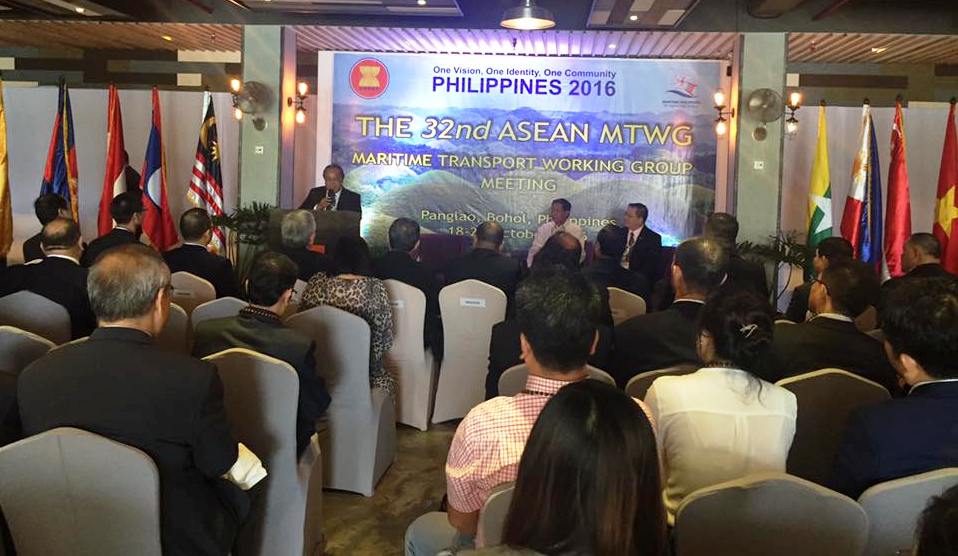
Gov. Edgar Chatto pushed for consideration of Bohol as one of tourist attractions and for its inclusion as on-shore itinerary at the opening of the 32nd ASEAN Maritime Transport Working Group Committee Meeting.
Welcoming delegates from ASEAN member countries as well as dialogue partners from China, Germany, India, Japan, and Korea, Chatto boasted of Bohol’s prime tourist spots as well as its culture and people as he encouraged delegates to become ambassadors for Bohol tourism.
Chatto expressed his strong support for the establishment and enhancement of the cruise corrider, as the ASEAN-Japan Cruise Promotion Strategy (AJCPS) was adopted during the 12th ASEAN and Japan trade ministers meeting back in November 2014.
He requested parties of the AJCPS to include Bohol as one of tourist attractions and as an on-shore itinerary as cruise ships have continued to dock in Bohol, the latest on October 10, where M/S Hanseatic, an international cruise ship of Europe-based Hapag-Lloyd Cruises, made a port call in Tagbilaran City, bringing 160 European tourists and 120 crew members and service personnel.
Policy pillars of maritime transport attended the 32nd ASEAN Maritime Transport Working Group Committee Meeting, led by Department of Transportation Usec. Philip Judan and MARINA Administrator Marcial Amaro, along with the International Maritime Organization, representatives from the Deutsche Gesellschaft für Internationale Zusammenarbeit (GIZ), ASEAN Ports Association, and Federation of ASEAN Shipowners’ Association (FASA).
The governor also highlighted Bohol’s resolve to develop international and domestic seaports to become globally competitive in the ASEAN vision of free flow of goods, services, capital, and investment by the year 2020.
According to Usec. Judan, the ASEAN Maritime Transport Working Group Committee Meetings have become starting point of the ASEAN maritime transport strategic plan or Kuala Lumpur Plan.
The framework for cooperation, he said, began with the 1st ASEAN single shipping market.
The discussions during the meeting focused on coordination of maritime objectives of ASEAN member countries, support for which was expressed by Chatto whose vision for Bohol strongly advances both domestic and global connectivity for areas of trade and commerce as well as tourism.
National government support was also expressed by Judan in behalf of Pres. Rodrigo Duterte as connectivity of the Philippines to ASEAN partners in both business and friendship are facilitated through maritime transport. (Leah/EDCOM)