by admin | Dec 26, 2015 | Opinion
By: Jerome Auza
It’s that time of the year again when kids are expecting to receive lots of toys and other gifts. My wife already had the usual Christmas day gifts all wrapped up, labeled and placed near the “belen”. I had promised to myself that I’ll not do any work the day before Christmas and spend as much time as I could with my kids.
My wife, an OB/GYNE, unfortunately was running the risk of not being able to get home on Christmas eve. Some of her patients at her maternity clinic were in labor. Her obligation as a doctor might prevent her from making the two hour trip back home from her clinic. Still, it was cool that she might be delivering babies on Christmas day. With baby Jesus born on Christmas day, what great honor to deliver babies on his birthday.
So what to do to entertain the kids? I was tempted to pass them the iPads but they’re still lagging behind their Kumon homework so they can’t their reward that easily. Then, I had an idea. Why don’t I show them what I used to do as a kid: make my own toys?
My three boys were still fast asleep late in the morning of December 24, 2015. I played trailer videos of the recent installment of the Star Wars saga with maximum volume and I had all three by my side in a few minutes. Then I asked them, “Do you want to make wood blocks so you can build stuff with them?” I got a very enthusiastic “yes” from all of them.
After the bathroom routine and breakfast, we headed out to a nearby hardware warehouse. As usual, we had a fill of the store’s free iced tea as we headed out to the far end to look for some wood. After making our selection, we bought three 8-foot long 1″ x 2″ pieces of smooth lumber. We also got some sandpaper and a small saw.
Back home, I showed them how to measure and mark the sections of the wood where I would cut. In a short while, their cousins joined in and before I could start cutting, they started jostling for position to get the first piece. I had to intervene a bit before someone starts crying.
Years of tapping keyboards does not make one a great carpenter. The demand was high (six kids in line) and supply was low (I was too slow in sawing the wood). One by one, the 6″ wood blocks were passed to the “owners”. I showed them how to smooth the edges out using sand paper.
My hands were aching using the tiny hack saw that was more of a toy saw rather than a real saw. Fortunately we had a real carpenter who was working on something at the house. He came to the rescue and finished cutting all the wood blocks in just a few minutes.
I didn’t realize it right away, but the kids had other plans for the wood blocks. I thought they’d just be putting them on top of each other and build crazy structures. They brought out their coloring pens and started drawing on the wood blocks. I could hear them talking about the Navy captain about to board the ship and the family members about to swim in the swimming pool that they will build. There were other stories and a few of them made me wonder where they got those ideas from. Some of the blocks were designated as the characters they talked about and they had drawn faces on them.
As more wood blocks become available, the ship was “built” and the swimming pool became “ready” for diving. It was satisfying to realize that the very simple wood blocks could stir up their imagination so much. For several hours that day, my little boys and their cousins imagined different structures, vehicles and many more with just some wood blocks and coloring pens. The wood blocks that were characters even started to “interact” with their other toys.
Reflecting on what happened that day, I realized that the best technology for play is the human brain. My kids have battery operated toys that become other characters when they run out of power. Their well played Plants vs. Zombies stuffed toys have become more than their original characters: one had “given” birth and another one “died” because it got old. Their imagination can run so wild and my wife and I would often laugh at their hilarious stories.
As an IT professional, one might expect that my kids are surrounded by high tech toys. While they do have some time to use their iPads and other gadgets, most of their play time is with real toys. I often tell them to play real games with their cousins. And just recently, I gave them wood blocks. I hope that real-time interaction with real things and real people will make them very capable to face the real world when they grow up. I also hope that when that time comes, we are still living in the real world and not in a virtual one.
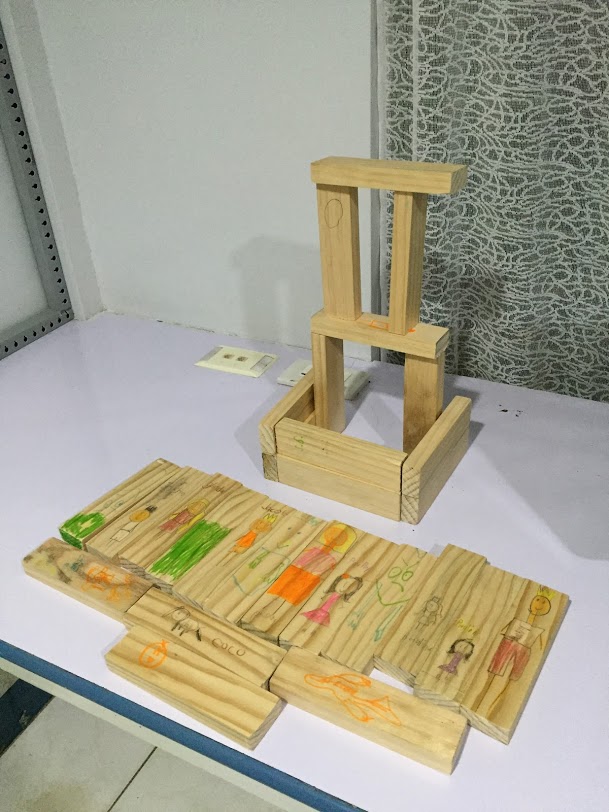
More than just woodblocks after the kids used the coloring pens.
by admin | Nov 20, 2015 | Opinion
By: Ben Emata
After several decades of observing hundreds of rallies and/or demonstrations in our country, I still could hardly comprehend how are things go around among the people who are quick to come into groups in a very short notice. They come from nowhere, from within the cities, from the markets, from the hills or somewhere from the rainbows. There are no truckloads of people much less ships, trains or planes that could take them to one point to form a large crowd angrily shouting slogan and battle cry like “get out Americans”, “Ibagsak”, “to hell”, “Resign so and so”, everything under the sun, etc. etc.
When the government law enforcers kill the kidnapper/murderers, they come to the streets and shout “violation of human rights” and “murder”. When our soldiers kill the rebels, again they are grouped instantly and they denounce the killings but when our soldiers are killed by the dozens, they are quiet and nowhere to be found – – maybe laughing. Certainly, I am not saying this is unfair to our military but if it is not, then a better term should be in hand for such incident. I even suspect these same rally professionals were the same groups that caused the driving out of the American military bases in Subic and Clarkfields. Now China is threatening us on the matter of the disputed seas in the Spratleys and we start to miss the strength of America.
I am truly astonished beyond imagination how these rallyists could come out in so short a time to denounce or condemn things that are good for the general public at times. The APEC summit now in our country which could bring benefits for us had been subjected to negative rallies, condemnation or whatever. Some of these people just do not assess or evaluate the situation and blindly go into actions. This result to unfairness and plain ignorance if not stupidity.
It sometimes appear that our, country is governed by demonstrations as it listens to its demands or anything they could forcefully ask. Of course, I understand that rallies are allowed in our Constitution as a way to express ourselves or show our grievance against the system but sometimes it is irritating because of its frequency that result in excessive monotony. The worse things is some of the participants in the mass action destroy public property, plants and ornaments in public places and other things that make us sorry. Further, some of these rallies are organized not for public interest but for the purpose of putting up nothing but just disturbance. No positive result just negative undertaking.
As far as I can remember, there were no rallies in our country many years ago. This was unknown and unheard until the matter took place in America on the issue of racism which was tolerable and acceptable. Today, I could hardly hear of rallies in the continent and elsewhere in European states as well as in Canada and other places. It was quickly copied by our compatriots but the sad thing is we do it almost every week and without good reason. To many people, it is a nuisance. Mendiola Street near Malacanang has become the permanent site of actions. Sometimes I think there is business behind some of these rallies – – I mean some institutions or foreign interests spend for the purpose.
And because we look at them as an exercise of a freedom, we just leave them without even asking the groups their real intentions. It is detrimental to public safety, a nuisance and plain irritating. I urge the government to put up some kind of resistance and at least require the groups to explain their objectives and what good they can bring to the public before they grab a microphone and shout. Absolutely, freedom is beautiful if exercised well in accordance to law but if adulterated by dirty and bad motives, it becomes a non-sense action that must be prevented.
We don’t have to wake up someday to realize that some of those noises in the streets are prelude to catastrophe or devastation of our nation. That some of these supposed actions are designed to create confusion and divide the citizens that would eventually destroy our integrity and honor. These early, we should be alert and try to see through the hole of a needle what is behind around us. We should be aware that things have changed and some people far from us are out to disturb our sovereignty and honor by introducing things unknown to us. BEN EMATA Bennex News Service
by admin | Nov 7, 2015 | Opinion
By: Jerome Auza
To the embarrassment of many Filipinos, the “laglag bala” or “tanim bala” scandal at NAIA became viral throughout the world on social media. The scheme involves planting of bullets in a passengers bag before or during the x-ray inspection. The passenger is then threatened with a being filed a case for illegal possession of ammunition. Because the passenger wouldn’t want to miss the flight, he or she is then offered an option to pay money in order to be cleared.
The matter became viral as more and more people who were became victims to the scam publicized their own experience on social media. Unfortunately, the national government’s response is slow and most of the time, just sending to the public the wrong message.
It has been featured in various international news networks. There is even a newly developed mobile app game that is a parody to this modus operandi. In Japan, someone created a parody of the scheme in a comedy show.
Here are some statements from our government:
“It’s just an isolated case.”
“Put issues in the proper context.” – referring to the thousands of passengers going through the airport without problems versus the “few” being victimized.
“Allegations of laglag-bala or bullet-planting scheme must be validated first before the government takes the necessary long-term actions”
Add to this a callous comment from a presidential candidate endorsed by the current administration: “Kung nagpasok ka ng contraband sa airport, paano naging problema ng gobyerno ’yun?”
This just creates the impression that the government isn’t giving this issue a priority. They should have responded more swiftly at high priority. The APEC conference is happening later this month with government officials from the APEC members traveling through NAIA. Now with this issue gaining international attention, the government needs to exert much more effort to assure the safety of travelers.
Meanwhile, a plastic wrapping service at the airport is happy with the brisk business every day as more people line up to have their luggage wrapped in clear plastic to avoid being victimized.
I travel fairly frequently and my last trip in October was a stressful one as I had to be extra watchful as I stepped out of the plane and got into the NAIA terminal. My very early morning flight deprived me of sleep. So while waiting for my connecting flight, I was fighting to stay awake. I wanted to ensure that my bags were not going to be planted with contraband.
With all the fees and travel taxes I have to pay, I can’t even relax at the airport anymore. I use a very well traveled backpack that has several pockets that are fairly easy to access. The laglag bala operators can easily slip in a bullet in one of those pockets. I should replace it with a much secure bag.
What our government should realize is that social media will spread news very fast across the Internet. Specially if it is bad news. It should respond differently and much faster compared to the way they do now. It should carefully draft its statements so that they are seen as serious in solving an issue. Their recent statements created the impression of a “wait and see” attitude which is unacceptable for the public.
The government may have huge influence over the traditional media firms but they can’t control the community of social media users and independent bloggers who would just voice out their opinion immediately. An inappropriate statement from the spokespersons can be taken out of context unintentionally or intentionally to the disadvantage of the government. They won’t have any influence at all on the international news agencies.
Downplaying the issue is simply an incorrect response because just one tanim bala incident out of thousands of passengers is enough to sow fear among travelers. Maybe our government officials need training about social media so they understand the impact of their actions or inaction on issues similar to the laglag-bala scheme.
by admin | Oct 24, 2015 | Opinion
by: Jerome Auza
The country’s longest running noon time show Eat Bulaga has broken the world record on number of tweets for its hashtag #ALDubEBTamangPanahon on October 24, 2015. As of this writing, the number of tweets in 24 hours have exceeded 36 million, surpassing the 35.6 million tweets for the #Worldcup hashtag. This is a milestone for the local entertainment industry and my congratulations go to the cast and management of Eat Bulaga.
Why is the ALDub segment of the show so popular? On the surface, it’s just a love story with a major obstacle and a cast of comedians. Behind the scenes though, the Eat Bulaga team have brilliantly developed the story in a way that it appealed to virtually everyone.
In a previous article, I talked about Eat Bulaga’s first major tweet record of more than 11 million tweets.
During the episode on October 24, Lola Nidora finally gave permission for the pair to be together without the “1 foot” distance requirement because it was now the right time or “tamang panahon”. Fans of the show burst with joy when the Alden and Yaya Dub finally were allowed to hold hands and even hug. Lola Nidora had been forbidding them to even touch each other.
In subtle ways, the show is showing its audience how young people should behave especially if there is attraction between a boy and a girl. Lola Nidora reminds Alden and Yaya Dub about trust, patience and waiting for the right time. I commend Eat Bulaga for being very responsible in handling the popularity of the ALDub love team. There was not even a hint of inappropriate actions. The love team held hands and hugged, but they never kissed because they promised to Lola Nidora that there will be no kiss on that day.
And I think this is why many Filipinos are attracted to the show. It is wholesome. It is clean fun. The whole family could watch it. It reminds us of traditional values in a subtle but effective way. We may be in a very modern world, with state of the art technology in our pockets, but we really want to stick to traditional values.
The “Tamang Panahon” episode was even used to raise funds for the building of libraries throughout the Philippines. The ticket sales on the first day it was announced was in itself a record for Ticket World. 100% of the sales would go to the library fund.
On the technical side, what does it mean if Eat Bulaga could set Twitter records? For one, it becomes a very solid proof its popularity and thus it means it can demand a very good price for ad placements. Being a trending topic on Twitter means the show will get even more exposure on the web as people who have not heard of Eat Bulaga will see the hashtags and could get curious and see the information. The topic then gets even more viral over the Internet.
The recent TV ratings conducted by independent firms are all in favor now of Eat Bulaga compared to other shows. Add to that the popularity on Twitter, Eat Bulaga and the ALDub tandem will surely get worldwide attention. Who knows what endorsement deals they can get later on? Already there are hints of them being featured in regional magazines in Asia.
The ALDub phenomenon is a great case study in marketing, specifically in digital marketing where social media was effectively used. Businesses interested in how to get their products and services popular on the Internet can get a lesson or two if they study the methods used by Eat Bulaga. Or they can just do it the easy but expensive way: hire Alden and Yaya Dub as their endorsers.
by admin | Oct 10, 2015 | Opinion
By: Jerome Auza
The Philippines will conduct next year its third national election that uses automated machines to count the ballots. In the past two elections, accusations of electronic cheating abound but such accusations are very hard to prove without a manual count of the ballots. Manual counting, of course, is not feasible due to the massive cost involved and the huge logistics resources required. But is electronic cheating of the PCOS machines possible at all?
Of course, whatever method is used for counting the ballots, there is a way to engage in cheating. The PCOS machines are not excluded. Even if the PCOS machines and the system behind it are somehow built to be 100% cheat-proof, the cheating can happen outside of the system in the form of vote buying, use of government funds for campaigning and other tactics that can be done on election day to reduce or increase the voters able to vote for a certain candidate.
But is the so-called “E-Cheating”, where the numbers are manipulated electronically in the official tally, be possible at all? Republic Act No. 8436, the law covering the automated counting of ballots, does not explicitly specify the means to prevent electronic fraud. While giving copies of the ballot count to different parties and agencies can be deemed as a way to prevent fraud, the process is not protected if the cheating is done prior to the printing of the election returns.
Would the random manual count audit help detect electronic fraud? Unfortunately, in the way it was implemented in the 2013 national election, the answer is no. The reason is that the list of randomly selected precincts where the manual audit will be conducted is published days before the election. This may seem fine because the precincts are randomly selected. However, this process becomes pointless because the precincts to be audited are already known. So what would the cheaters do? Simple, exclude those precincts from ballot count manipulation. So when the audit is done, those precincts will show a very accurate match between actual votes and the machine count.
The selection of precincts for random manual audit should be done AFTER the printing of the ballot counts is done. This will make the work of COMELEC more challenging but this is the right way of doing it. They should just provide resources for this method. This was the way the audit was done in 2010. Why it was changed in 2013 is strange but it could also be intentional so that cheating can be done.
So how can cheating be done if the random manual audit is done the same way as in 2013? The process is a bit complicated but can be done because the PCOS machines are capable of being online to a central system. It can only be done with the participation of people familiar with the system and have access to the PCOS software.
First, the software that runs the PCOS machine checks at the central system if the machine is among those listed for random manual count audit. If it is, then the software will count the ballots without manipulation of the results. Second, if the machine is not for audit, the software will access the central system for the list of manipulated results it will print. Then it will print the manipulated results in several copies. Each group receives their copies which will then match the results tallied at the national level.
Even if the PCOS software source code is reviewed by independent agencies, the actual software loaded on the PCOS machines are not readable to humans so it can be manipulated and programmed to be able to implement the cheating scheme.
With the incorrect random manual count audit procedure in 2013, the process above can be done without a trace. To avoid it, COMELEC should do the selection of precincts for random manual audit after 90%, or some significant percentage, of the PCOS machines have submitted and printed their results. That way, any electronic manipulation can be detected by the audit. Candidates should insist to COMELEC that they do this procedure correctly so that electronic manipulation of votes would be much more difficult to pull off.
The coming national elections in 2016 will be a very significant event in the country, more so with the growing clamor for real change in the way the government is run. Filipinos are tired with election promises that are forgotten until it’s time to make promises again. We’ve been doing the same thing before: electing a popular candidate based only on his popularity and perceived “integrity”. Many voters do not consider the candidate’s track record of performance.
The good thing is that the citizens are now actively participating in scrutinizing our candidates. Social media has exposed politicians with a severe lack of discretion. Candidates who have questionable backgrounds or have participation in corrupt practices are revealed.
Our next president has an insurmountable challenge in running the country, ensuring economic growth, keeping peace and order and protecting the country’s boarders. A candidate with strong credentials, a sensible platform, proven track record and can show actual results of his leadership should be selected. Popularity is never enough of a qualification.
We should be very vigilant in May 2016 to ensure any means of cheating can be eliminated or at least minimized.
by admin | Oct 3, 2015 | Opinion
Filipinos may experience some level of improvement on our Internet access service as PLDT and Globe are already in talks on an IP peering agreement between the two telcos. IP peering means that Internet traffic originating from Globe going to PLDT and vice versa will no longer be routed through international peering exchanges. In other words, local traffic will be kept local.
There are no commitment dates though but at least this is already a step into the right direction.
Already PLDT has signed into an agreement with DOST’s Philippine Open Internet Exchange (PHOpenIX) which will improve access to government websites.
Majority of the data traffic accessed in the Philippines originate from North America and Europe. So aside from local IP peering, the telcos should also increase data caching within their networks to reduce the data traffic through the international fiber optic networks. PLDT has announced they will increase their caching capability next year.
Also we are awaiting for a third player in the telco industry to start operations. The new player is Telstra, an Australia based telco, who will enter into the Philippine market in partnership with San Miguel Corporation. The presence of a third player may spur better competition and thus better service and lower prices.
It remains to be seen if the Philippine telcos can keep up with the data demand. Users access images, videos and audio content which have larger data sizes compared to just plain text data. Our use of Facebook, Youtube and other multi-media heavy websites ad applications will continue to increase. This will put more pressure on our telcos to increase capacity while the users will continue to raise their expectations.

