By: Jerome Auza
A year after that fateful day on October 15, 2013, we commemorated our resilience, thanked again everyone who helped, and remembered those who perished. The solemn pealing of the bells and sounding of sirens on at 8:12AM on October 15, 2014, brought many people to tears. I missed it by a few minutes unfortunately, so I had to content myself with the videos posted on Facebook and Youtube. Nevertheless, goosebumps were felt and I reminded myself how lucky my family was because we were all safe and our 33 year old house stood up against its greatest challenge.
I vividly remember the first day my wife and I joined some relatives to do our first relief mission to Maribojoc. Plaza Marcela had just opened so we bought some bread, canned goods, water and toiletries then headed out to Abatan bridge. I also brought along a few solar panel kits that I manged to purchase in Tagbilaran. We crossed the river on one of the Bohol Dragon Boat rafts since Abatan bridge was badly damaged. The dragon boat teams of Bohol volunteered to paddle back and forth the river for free.
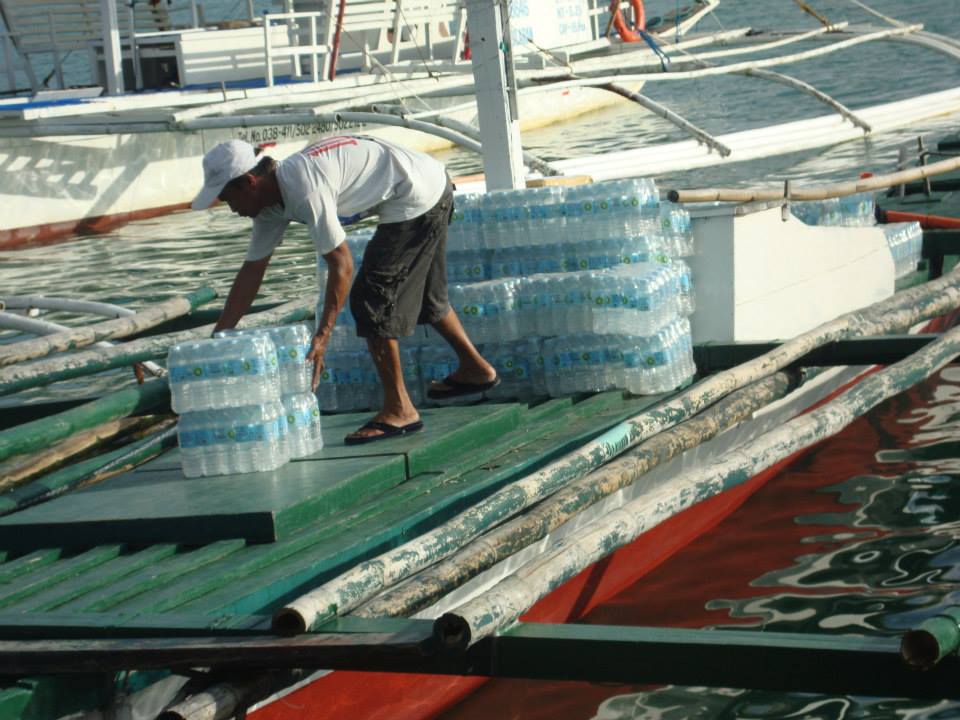
On one of the boat trips made to bring the donated goods to Maribojoc.
As we got up the makeshift wharf on the other side, we were met by our relatives who helped us get the goods to the pickup truck. Unfortunately, the roads were severely damaged also and there was only one route available towards our relative’s house and while passable, the driver had to navigate through the cracked areas. To make matters worse, a heavy downpour started. It dawned on me how bad the situation was.
After dropping the goods and having bread and sardines for lunch (from our own relief goods of course), we went around the center of Maribojoc, met the mayor, witnessed first hand the controversial Red Cross relief operations, felt a good number of aftershocks, surveyed the now-leveled San Vicente Parish and listed to the stories of our friends and relatives. I setup the solar panel kits which provided light to the house where the mayor stayed (his own house was damaged). The kits also charged cell phones at the command center.
As we headed home, my wife and I decided we should help, not only our relatives, but as many people as we can.
We started a campaign on Facebook for donations, texted our friends and relatives and organized a way of delivering relief goods efficiently to Maribojoc. Fortunately, the LGU of Maribojoc had a very organized team handling the relief goods distribution. It still had a functioning wharf in spite of the damage on many sections so we decided to bring the goods via Tagbilaran seaport to Maribojoc wharf.
In the next few weeks, we made several trips across Tagbilaran Straight and delivered several pallets of drinking water, a few tons of rice, hundreds of canned goods, several boxes of medicines, three more solar panel kits and many more.
It’s hard to imagine what if we didn’t have the technology we use to communicate today. How long would have donations arrived? How much more effort would we exert in order to organize trips to deliver the goods? Would the response be as massive as it was?
Because there were many other groups doing relief efforts, there were times we shared vehicles, all communicated through Facebook and text. We could feel everyone’s resolve to help fellow Boholanos in hard to reach areas, especially before the government and foreign aid could arrive.
One year after the earthquake, we should also be thankful that our progress in technology has allowed us to communicate in spite of calamities. We should think of ways that we can ensure in the future that we can keep our communications devices powered up in order to ensure continued communication when disaster strikes.
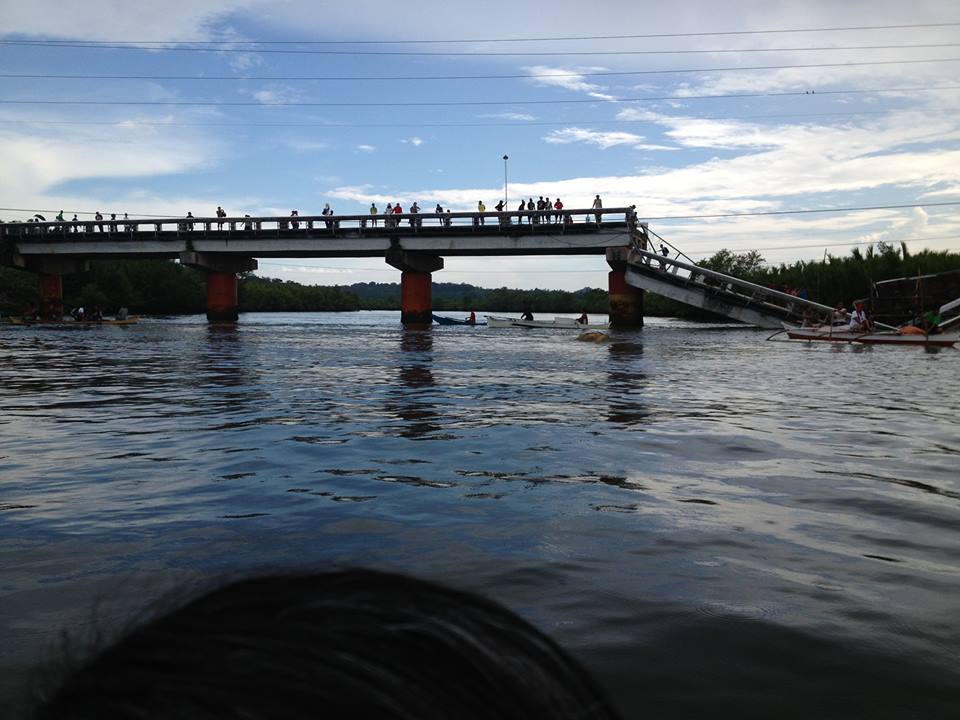
The damaged Abatan Bridge which has become a symbol of the urgency for many people to bring relief goods to isolated places.