by admin | Sep 15, 2017 | ASEAN agenda, Business
The Philippines launched the APEC MSME Marketplace, an online platform to promote trade and internationalization of micro, small, and medium enterprises (MSMEs), during the 24th APEC SME Ministerial Meeting held in Ho Chi Minh City, Viet Nam on 15 September 2017.
“The APEC MSME Marketplace aims to enable MSMEs to participate in meaningful global trade, and in the process harness their ingenuity, boost their competitiveness, and achieve prosperity and inclusive growth in the Asia-Pacific,” said Philippines Department of Trade and Industry (DTI) Secretary Ramon M. Lopez.
The online platform which is a cross-border business-to-business (B2B) platform is part of the Philippine commitment to implement the Iloilo Initiative: Growing Global MSMEs for Inclusive Development, which was earlier adopted by the APEC SME Ministers in 2015. It seeks to provide bigger voice and better opportunities for APEC MSMEs.
Accessible via www.apecmsmemarketplace.com, the APEC MSME Marketplace which will showcase products and sellers, and trade facilitation services, is the result of the collective efforts of the 21 APEC member economies to contribute to the shared vision of mainstreaming the MSMEs into the global economy.
Lopez added that growth can only be meaningful if it is inclusive and sustainable and this is a priority objective under the Duterte administration.
“This is also the enduring vision of the APEC MSME Marketplace, its reason for existence,” he said.
The portal aims to: (1) facilitate business networking and matching involving MSMEs and large enterprises; (2) enhance MSMEs awareness on trade regulations and encourage participation in policy development; and (3) improve knowledge sharing and capacity building for MSMEs.
To engage the MSME sector to help build sustainable and inclusive growth in the region, the APEC MSME Marketplace is being implemented in three phases.
On its first phase (2016-2017), the Marketplace created linkages to key information by member economies and other available resources, particularly on trade regulations and business support services. In its current phase (2017-2018), more site functionalities are being developed. This includes, among others, the provision for MSMEs to join the directory of exporters.
For the third phase (2018-2019), APEC is working on increasing the trade facilitation capability of the Marketplace through more business matching activities.
Users and stakeholders are encouraged to provide feedback to help improve the site as the region’s trading environment continues to evolve.
Through the Marketplace, MSMEs are well placed to leverage on the endless and exciting opportunities to go global and penetrate more markets.
“The challenge now is to continue to take the innovation and trade agenda forward by leveraging on strategic partnerships that will enable MSMEs to gain the most benefit,” Lopez added.
He called on all APEC member economies to work for closer cooperation and stronger collaboration as they work toward fulfilling their commitment to MSMEs: to help them become competitive and resilient as they embrace the opportunities and challenges globalization brings
by admin | Sep 15, 2017 | Photo Story
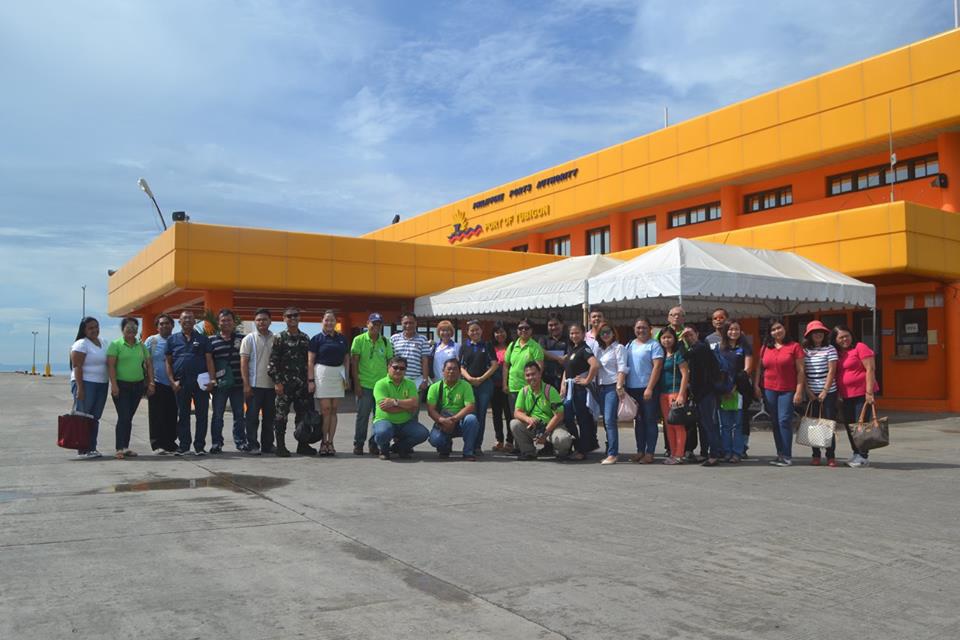
AUDIO-Bohol Bisita Opisina. The members of the Association of United Development Information Officers in Bohol (AUDIO-Bohol) during their ‘Bisita Opisina’ and agency familiarization program at the Port of Tubigon on Sept. 14, 2017. The group also joined the PIA-Bohol launching of the ASEAN Information Kiosks at the departure area of Tubigon Port on the same date. (ecb/PIA7-Bohol)
by admin | Sep 14, 2017 | DTI Updates
Spearheading promotion efforts under the blooming economic relations with China, Department of Trade and Industry (DTI) Undersecretary for Trade and Investments Promotion Group Nora K. Terrado led the Philippine Delegation to the 14th China-ASEAN (CAEXPO) and 14th China-ASEAN Business and Investment Summit (CABIS) held from 12 to 15 September at the Nanning International Convention and Exhibition Center (NICEC) in Guangxi Province, China.
Comprising the Philippine contingent of over 100 participants are local export companies, Investment Promotion Agencies (IPAs) such as the Board of Investments (BOI), Bases Conversion and Development Authority (BCDA), Subic Bay Metropolitan Area (SBMA), Clark Development Corporation (CDC), and the Mindanao Development Authority (MINDA) as well as businessmen and government sector representatives aiming to promote Philippine tourism and business opportunities to the huge Chinese and Southeast Asian market.
“This is an opportune time for the Philippines to fully present its potential as an investment destination to the Chinese market. It is also a chance for Philippine exporters to meet with potential partners and buyers of their products and services and see how they can maximize the booming trend in China,” said DTI Undersecretary Terrado.
The country’s contingent in China highlighted the Philippines’ trade potential through an exhibit of products and commodities from various sectors, including home, fashion and wearables, gifts, handicraft, personal care, and food.
Moreover, the Philippine participation also gave spotlight to this year’s Philippine featured destination, the province of Aurora. Tagged as the “Province of Charm”, the Aurora provincial government led by Vice Governor Rommel Angara, presented its booming tourism industry and economic potential particularly its agriculture sector.
“High on our agenda as we send Philippine trade missions abroad is opening more opportunities for countryside development. That is why we are happy to introduce Aurora province to the Chinese and Southeast Asian market as it has tremendous potential in the tourism and agriculture sector,” explained Terrado.
Currently, Aurora’s growth is primarily driven by agriculture. The sector employs approximately half of its population with about 49,991 hectares or 15% of the provincial land area classified as cultivated farmlands. Major crops include rice, coconut, coffee, bananas, root crops, corn, citrus fruits, peanuts, and abaca. The province is also a major producer of the Philippine’s coconut distilled alcoholic drink known as “lambanog,” and “tuba” which are made from the sap of coconut tree flowers.
Terrado served as the key speaker at the China-Philippines Production Capacity and Investment Cooperation Forum co-organized by the National Development and Reform Commission of China and the National Economic and Development Authority (NEDA) of the Philippines.
Meanwhile, a Philippine Investment Promotion Conference was also held at the sidelines of the CAEXPO on 13 September, jointly organized by DTI Board of Investments, Center for International Trade Exhibitions and Mission (CITEM) and Philippine Investment Promotion Agencies (IPAs).
The China-ASEAN Expo (CAEXPO) is co-sponsored by Ministries/Department of Commerce or industry and trade of China and the 10 ASEAN member states and was organized by the People’s Government of Guangxi Zhuang Autonomous Region. It is considered as the second biggest trade event in China, with a total exhibition space of about 122,000 sqm. This year’s CAEXPO had 4,600 exhibition booths with around 57,000 visitors.
CAEXPO has grown into an event of special international influence and plays an important role in promoting the China-ASEAN friendly cooperation and building the 21st Century Maritime Silk Road.
For the 14th CAEXPO, the theme is to “Jointly Build the 21st Century Maritime Silk Road, Promote Regional Economic Integration through Tourism,” highlighting the vast potential of tourism industry between ASEAN and China. Through this international trade fair, China eyes to connect and boost its investments in ASEAN countries and provide infrastructure networks particularly for micro, small, and medium enterprises (MSMEs) to participate in the global value chain.
Philippine participation at the 14th CAEXPO is in partnership with the Philippine Department of Trade and Industry and in close collaboration with The Philippine Consulate General and the Philippine Trade and Investment Center in Guangzhou.

The Philippine country pavilion at the 14th China-ASEAN Expo and 14th China-ASEAN Business and Investment Summit in Nanning, Guangxi, China. Leading the Philippine delegation is DTI Undersecretary for Trade and Investments Promotion Group Nora K. Terrado (5th from left) with Philippine Consulate in Guangzhou Consul General Marie Charlotte Tang (2nd from right) and Philippine Trade and Investment Center – Guangzhou Commercial Counselor John Paul Inigo.
by admin | Sep 14, 2017 | ASEAN agenda, Business, Malakanyang Updates, National News
Malaysian investors bullish in investing in PH
PASAY CITY—At the sidelines of the Philippine (PH) hosting of the 49th ASEAN Economic Ministers’ (AEM) Meeting and Related Meetings on 8 September, Department of Trade and Industry (DTI) Secretary Ramon Lopez convened a bilateral meeting with his Malaysian counterpart, Minister for International Trade and Industry Y.B. Dato’ Sri Mustapa Mohamed.
The Philippines (PH) and Malaysia (MY) discussed various measures to enhance trade and investment relations including regional economic integration.
MY requested PH participation/support in its ASEAN internship program as a way to improve people-to-people interaction among college students. Under this program, interns will have the opportunity to gain experience in an ASEAN company.
PH, meanwhile, sought MY’s support in the development of the Halal industry through various capacity building initiatives, including trainings and internship. PH also followed up on the proposed cooperation in palm oil, given that this can be instrumental in developing key areas in Mindanao. MY indicated that it is working very closely with Indonesia in addressing the various issues facing the industry, including the environmental lobby in the EU and taxes.
PH requested MY to participate in the business matching activities for micro, small and medium enterprises (MSMEs) as part of the activities for PH chairmanship.
MY underscored the need for a united ASEAN in moving forward with Regional Comprehensive Economic Partnership (RCEP).
In parallel development, MY investors remain bullish on pouring in more significant investments in the PH given the country’s robust economy buoyed by heavy spending in infrastructure projects, expanding market with a large young population and growing middle class, and the administration’s firm resolve to further ease the cost of doing business in the country and manage the peace and order situation in Mindanao.
A proof of such confidence was the recent (6 September) launching of the Malaysia Chamber of Commerce Inc. (MCCI) in Manila. Led by Malaysian Minister for International Trade and Industry Dato’ Sri Mustapa Mohamed, MCCI serves as MY’s business network group in PH, advancing the concerns and interests of the growing MY investors in PH.
Sec. Lopez, who also serves as the Board of Investments (BOI) Chairman, is pleased with the vote of confidence of MY businessmen in PH.
“During President Rodrigo Duterte’s visit to Malaysia in November 2016, Malaysian business leaders expressed confidence in the many investment opportunities in the Philippines,” said Sec. Lopez, adding that these businessmen expressed interest in investing in infrastructure, mass transportation development, building of regional centers, joint ventures in agribusiness, halal-certified products, and high value post-harvest processing facilities.
“Malaysia has always seen the Philippines, particularly Mindanao, as an investment destination of choice because we are neighbors, and we share almost the same culture,” he added.
Meanwhile, MCCI President Edward Ling said that MY companies are keen on investing in PH particularly in the sectors of information technology, construction, energy, manufacturing, and retail.
“We are very encouraged by the seriousness of the administration in addressing the concerns of both the current and potential investors in doing business in the country. We will relay this to our Malaysian investors for them to pursue more investment missions in the Philippines,” he said.
MY has huge investments globally. In PH, MY investments have been on a steady growth in the recent years. Approved MY investments by all the investment promotion agencies (IPAs) reached Php219.038 billion in 2016.
In the first eight months of 2017, MY investments registered with all IPAs reached Php26.242 billion. Of these figures, total BOI-registered MY investments amounted to Php4.33 billion from 2012 up to January to August 2017.
Top MY investments in PH are in the industries of agriculture, forestry and fishing; manufacturing; power; water supply, sewerage, and waste management; construction; wholesale and retail trade; transportation and storage; information and communication; financial and insurance activities; real estate activities, and administrative and support activities.
by admin | Sep 11, 2017 | Business, DTI Updates
Manila FAME, the Philippines’ premier lifestyle and design event, is set to make waves again among international and local buyers as it returns on October 20-22 with a range of new show features and artisans in a showcase of the country’s rich cultural heritage and design ingenuity.
The 66th edition of Manila FAME will strip down to its roots to present a show built upon the intertwine of the country’s rich cultural heritage and design excellence and the promotion of Philippine products. Artisans from across the country will showcase their best products at the World Trade Center Metro Manila and the Philippine Trade and Training Center in Pasay City across the three-day event.
“For this edition of Manila FAME, we put focus on how our culture has influenced generations upon generations of Filipino artisans. Manila FAME has always stood as a canvas to which the best of Philippine lifestyle and design talents embellish their work to showcase the country’s vibrant and multi-layered cultural heritage,” said CITEM Executive Director Clayton Tugonon.

Led by Paris-based design specialist Nelson Sepulveda, New Generation Weaves pays homage to Philippine indigenous and natural materials.
No less than eight show features will be included in the upcoming show. New Generation Weaves, a staple of Manila FAME for the past three editions, will return with Paris-based design specialist Nelson Sepulveda at the helm. Sepulveda will work with more than 30 small and medium enterprises to invoke harmony and balance through Philippine craftsmanship and the beauty of natural raw materials.
GREAT Women Project 2 will also return to highlight the works of women artisans across the country. The project was launched by the Philippine Commission on Women (PCW) in partnership with the DTI Project Management Team and is funded by the Canadian International Development Agency.
World-renowned designer Tony Gonzalez will also have his own curated setting that will marry the strengths of each Manila FAME participant to create a versatile collection made to match a variety of material requirements, techniques, and price points. Design Commune: Patterns and Palettes will be presented in four themes: Blues and Whites, Ethnic Nomads, Green Tinted, and Natural Black and White.
“Small and medium enterprises from across our country will join us in October to showcase the best artisanal products the Philippines has to offer,” Tugonon added. “Through Manila FAME, we will work towards supporting the success of our artisans and uplifting the Philippine brand internationally.”
—
The Center for International Trade expositions and Missions (CITEM), the export promotions arm of the Department of Trade and Industry (DTI) is the proud organizer of the Manila FAME – the second longest-running trade show in the Asia-Pacific, and the only trade event in the Philippines approved by Union des Foires Internationales, a Paris-based association of trade fair organizers founded 90 years ago in Italy.
Manila FAME is a bi-annual business sourcing platform of export ready and finely crafted furniture and home furnishings, holiday gifts and décor, and fashion accessories. It showcases the best of Philippine design and craftsmanship. For more information, please visit http://www.manilafame.com/
by admin | Sep 11, 2017 | Business, Negosyo Center Updates
GDME Fruits and Vegetables leads PH highland farmers to global market

Overlooking a carrot and romaine fields in one of the highland vegetable terraces of Maria’s Farm, situated on over 2,000 above sea level (ASL) in the town of Kibungan, Benguet.
The province of Benguet has been making a mark in the international market as a sourcing hub for premium agricultural products, such as fruits, vegetables, coffee, and other highland crops.
With more than half of its residents or 100,000 farmers toiling on more than 30,000-hectare farms scattered in vegetable-producing towns, Benguet is living up to its moniker as the “Salad Bowl of the Philippines.”
But the farmers from the province, including most areas in the Cordillera, has yet to realize their full market potential in the lucrative export industry. This difficulty contributes to the economic disadvantage of Cordilleran farmers as the region’s agriculture sector records the least contribution to their economy, despite employing 46 percent of the labor force or 348,000 of its total 766,000 abled bodies.
“The lack of drive from our farmers to export much of it has got to do with their local and limited mindset,” said Maricel Hernaez. “Many of our farmers in the Cordillera are producing crops with the idea of harvesting it only either for their own household consumption or for selling at the local vegetable trading post.”
Taking Philippine fruits and vegetables from highlands to overseas

Ms. Maricel Hernaez, owner of GDME Fruits and Vegetable Trading
A former overseas filipino worker (OFW), Hernaez came back to the Philippines with a dream: to abolish the domestic-centric mindset of the Cordillera farmers and help them penetrate the international market.
Born and raised in a farming family in Cordillera, her life-mission sprung during her service as a domestic helper for five years in Singapore, where she has keenly followed the sky-rocketing prices and huge demand for highland fruits and vegetables.
“Grabe ang taas ng presyo ng gulay sa Singapore, for example nalang ‘yung isang malaking patatas minsan umaabot ng two dollars at pati ‘yung cabbage nasa mahigit one dollar ang 250 grams. Dito sa Pilipinas, nasa limang piso lang ang patatas na malalaki at yung cabbage, isang kilo na katumbas ng one dollar mo,” she shared. “Kung produkto lang naman ang paguusapan, competitive ang galing sa Pilipinas pagdating sa laki at kalidad.”
In her last working year as a domestic helper, Hernaez met up with the Philippine Trade and Investment Centre (PTIC) in Singapore to seek guidance on her plan to become a vegetable and fruit exporter. In March 2015, she came back to the Philippines and immediately established her company, GDME Fruits and Vegetables Trading, naming it after her parents: Gilbert Domerez (father) and Mercy Espara (mother).
“My parents who made a living through farming have inspired me to pursue this agenda,” she elated. “They are the foundation of my goal of nurture the country’s agri-export market by tapping the promising farming communities in Cordillera.”
A tall order
Having no land to call her own, Hernaez has been operating GDME Fruits and Vegetable Trading for the past two years as its sole networking, monitoring, and marketing officer for grassroots farmers across the Cordillera region.
In her networking initiatives with the local farmers, it has always been a challenge for her to explain, innovate, and change some of their farming methods and even their products to suit the demand of the global market.
“Going one by one with the farmers, I always explain that we have the tools to compete with other countries. We are situated at a higher elevation with the perfect soil and climate. Most importantly, our farmers are hard-working,” she stressed. “But, I tell them we should comply with food standards and certifications. I also encourage them to plant the crops that are in-demand because if we plant crops that no one wants to buy then it will just go to waste.”
Without a formal academic background in agriculture, she has always been looking for fresh ideas and new ways on how to improve her technical know-how on the export industry by attending seminars and partnering with government agencies, such as the Department of Agriculture (DA) and the Department of Trade and Industry (DTI).
“I never missed opportunities where I can learn new things. Last May, I joined IFEX Philippines, together with our farmers, where we encountered people who are willing to help us grow,” Hernaez said. “We were also glad to meet foreign buyers that are really interested in our fruits and vegetable products.”

Hernaez points to one of the field of Marie’s Farm where a variety of crops are planted all year round, such as potatoes, cabbages, carrots, romaine, and radish.
Now GDME Fruits and Vegetables Trading has partnered and has been consolidating the yield of more than 60 farmers in communities located in the municipalities of Kibungan, which is considered the “Little Alaska of the Philippines,” as well as in Mankayan, and Kabayan.
Among her community partners are the Bosingan Multi-Purpose Cooperative, Mankayan Young Farmers, Maria’s Farm, and the Bashoy Kabayan Multi-Purpose Cooperative.
Fresh from the highlands, they offer different varieties

Patches of sugarloaf Cabbages at Maria’s Farm
and cultivars of potato, radish, carrot, chayote, cucumber, cabbage, Chinese cabbage, tomato, romaine zucchini, sugar beets, bell pepper, broccoli, cauliflower, onion leeks, snow peas, and green beans.

Fresh, newly uprooted potatoes
“In our farm, we are able to grow fruits in huge sizes. For instance, in our cabbages, we are cultivating the scorpio F1 hybrid and sugarloaf varieties. When fully grown, these varieties can reach an average net weight of 2 kilograms each, while your regular lowland cabbage varieties only reach 1 kilograms each. Our is twice the size,” she said.
Her partner farmers are also cultivating strawberry, lemon, parsley, cilantro, kale, mint, basil, alfalfa, arugula, red radish, young corn, fennel leaves, and okra.
They also have some of the iconic Cordillera processed goods, such as sweet and sour chili sauce, strawberry jam, peanut butter, and kimchi.
Hernaez said an exporting farmer will be able to earn at least 15 pesos more per kilo of their harvest. She added: “Some might even go double the price when depending on their reception on our quality and demand.”
“With these many products, we are targeting the demand in Singapore and other nearby ASEAN countries, as well as those in the Middle East,” she added. “We are also open to offers from other buyers across the globe that can be beneficial to the livelihood of our farmers.”
Cordillera farmers moving forward
 While the high elevation augments the harvest, it also makes highland fruits and vegetables prone to risks of climate change, making its price highly volatile.
“We know that there is a demand for our agricultural products, but the next step is how we can corner that demand? With our talks with people that we met on IFEX Philippines, we should be able to do it if we set our fruits and vegetables at stable prices and produce them at a sustainable rate. It’s a challenge for us here in the highland considering the ever-changing weather conditions,” said Hernaez.
Faced with this predicament, Hernaez is trying to hit two birds with one stone in creating a viable year-round crop rotation system: working on identifying the in-demand varieties crops that are a tolerant to extreme weather and are resistant to pests and diseases.
“With this method, we also can minimize the use of synthetic chemicals and inputs, or apply good farming practices which involve the balanced application of organic and chemical inputs,” she explained.
The former OFW also continues to widen her network to increase their agriculture supply and product selection, allowing small-scale farming communities to accommodate bulk orders from foreign buyers.
At the same time, she is helping Cordillera farmers secure the Good Agricultural Practices (GAP) certification—an accreditation promoted by the ASEAN community and is unanimously recognized in the international market.

Fifty-nine-year old farmer, Dolores Igme, shows their jumbo-sized winter melon or ash gourd. Igme is one of the farmers supported under the export initiative of GDME Fruits and Vegetable Trading
Out of the 78 GAP-certified farms in the Philippines, only 4 farms are from Cordillera.
According to the Department of Agriculture – Bureau of Agriculture and Fisheries Standards (DA-BAFS), GAP Certification ensures that a farm is not only in the quality of his crops, but in all aspects of farming.
The GAP standard requires a scrutiny of the history of the farm site and its prior use; the type of soil, and its compatibility with crops and seed sources; the judicious use of pesticides and fertilizers, whether chemical or organic; the sources of potable water for irrigation and washing of crops; the harvest and post-handling procedures; the health and hygiene of the farmer and handlers, and other factors.
“Gusto kong makita sa mga farmers if they can eat their products raw and fresh, ‘yun na kasi uso din because there are a lot of vegetarians. ‘Yung iba kasi they have a lot of pesticide to the point na hindi na pwede makain kasi maamoy or matapang yung chemicals. At least with GAP [certification], we can be one stop closer to this goal,” she said.
Aside from GAP certifications, GDME Fruits and Vegetable Trading is also working to secure Halal certifications for the community farmers as they are targeting the demand for halal fruits and vegetables in the Middle East, particularly in Dubai and U.A.E.
Though the Philippine National Standards for Halal (PNS 2067: 2008), Halal products are at par with international standards to enhance the competitiveness of local industries, and to ensure product quality and safety for the consumers.
“GDME Fruits and Vegetable Trading is committed to prime Cordilleran farmers to become export-ready in the global market so that they would grow together with the company and the booming Philippine food industry,” she said.
…
If you are interested on premium fruits and vegetables from the Cordillera, please contact Ms. Maricel Hernaez (Owner of GDME Fruits and Vegetable Trading) at 0950-525-1170 or e-mail her at gdmetrading@gmail.com.
“Every published story helps PH companies and brands gain local exposure that will boost the country’s exports. Thank you in advance.”
by admin | Sep 9, 2017 | EDCOM News, Kita ug ang Gobernador, Major Events
Two of Bohol’s tourism gems, Balicasag and Pamilacan Islands, now have power 24 hours a day, 7 days a week.
Gov. Edgar Chatto and Panglao Mayor Nila Montero led switch on ceremony for 24/7 power in Balicasag Island on Monday.
They were joined by NAPOCOR Department Manager Engr. Pete Llorente, BOHECO 1 General Manager Engr. Dino Roxas, Cong. Rene Relampagos represented here by Archie Lungay, 302nd IB Commander General Arnulfo Matanguihan, and Philippine Navy Col. Jorge Ibarra.
On Tuesday, Chatto and Pamilacan Brgy. Capt. Crispo Valeroso led switch-on ceremony for 24/7 power operations in Pamilacan Island.
They were joined by Baclayon Kagawad. Derwin Cuajao who represented Mayor Benny Uy, NAPOCOR department manager Engr. Pete Llorente, BOHECO 1 Engr. Mejorada Glenn Mejorada, Archie Lungay representing Cong. Rene Relampagos, and barangay officials of Pamilacan.
This kicks off 24/7 energization of Bohol Islands under the Small Power Utilities Group (SPUG) of NAPOCOR, a commitment of the Department of Energy under Sec. Al Cusi and NAPOCOR president Pio Benavidez.
Chatto lobbied for the round the clock power supply for the islands during the 34-country Asian Cooperation Dialogue on sustainable and reliable power in Bohol in August, where Cusi himself visited both islands. After which, Benavidez directed Llorente to implement 24-hour electrical service to the two islands.
When he was congressman of the first district, Chatto placed Cuaming and Hambongan in Inabanga; Mantata-o in Calape; Cabilao in Loon; Balicasag, Panglao; Pamilacan, Baclayon; and Bag-ong Banwa, Batasan, Bilanglangan, Mocaboc, Pangapasan, and Ubay in Tubigon under NAPOCOR-SPUG, the switch on for which was during his birthday, February 21, 2008 in Cabilao.
The incorporation of the twelve islands in the missionary electrification program of NPC-SPUG, entitled electricity consumers in the islands to financial support from the Universal Charge for Missionary Electrification (UC-ME) pursuant to R.A. 9136 or the Electric Power Industry Reform Act, commonly called the EPIRA Law, where the assistance to consumers shall come via NPC-SPUG’s sale of electricity at a subsidized rate.
This significantly brought electricity cost way below P25/kWh rate.
For residents of Balicasag and Pamilacan Islands, round the clock power is a fulfillment of a long-time dream, expressing their gratitude to Chatto and NAPOCOR team.
Chatto and NAPOCOR-SPUG officials are mapping out what islands to be fully energized next.
Llorente bared NAPOCOR-SPUG is eyeing the same for islands of Bilang-Bilangan Dako, Bilang-Bilangan Diot, Hingutanan East and Hingutanan West, Malingin, Maomawan, and Sagasa in Bien Unido as well as Cataban in Talibon for 2018.
The 24-hour power program in Bohol islands will be thru generators or solar power, or a mix of these technologies, seen to enhance economic productivity and growth and to improve living condition. (Leah/EDCOM)
by admin | Sep 9, 2017 | Tech Talk
We often get questions about who exactly can join Startup Weekend Bohol but the answer is always the same: everyone! May you be a designer who likes to create logos and graphic designs, or a developer who likes coding for web applications or mobile apps, or a business owner hoping to test out his/her newest business venture in a controlled environment, everyone has a place in Startup Weekend.
Many of the previous participants also had marketing, real estate, academe, and government backgrounds; we even got some engineers and high school students! As long as you are somebody who’d like to learn how a company is created and how a product is developed over a weekend, you’re the right person for Startup Weekend.
Since this year’s theme is “tourism”, we are also especially inviting people who are in the tourism sector: Tour guides, travel agents, ticket vendors, even tour bus drivers! The objective of the event is to come together and create something that’ll improve or assist both the local and international tourism industry, may it be a business or a new community, and we certainly can’t do it alone if we don’t have insight from the actual people on the field.
Feel like you have nothing to contribute? Most of the time, it’s all in your head! We’ve had participants come in feeling shy about what they can give to their teams but in reality, they end up being the most valuable resource the team can have. It is your experience, your perspective and insights, that make you an essential part of the team. So step up and stand up and get ready to give it your all for a weekend that’ll change your life! Come to Startup Weekend Bohol Tourism Edition!
The event is in partnership with the Department of Tourism, Provincial Government of Bohol, and the Bohol Investment Promotion Center. It is sponsored by Uniform Solutions, PrintBit, Gwion, and Sea Drake Island Cruises (we are still open for sponsorships!) . The participants at the event will also be mentored by Michael de Vincent Edwards, Aimee Lim, Tina Amper, Ben Skelton, and Peter Watkins. With them are judges Mark Phillips, Vicky Wallace, and many more startup ecosystem supporters.
Startup Weekend Bohol Tourism Edition will be in September 29-October 1, 2017 at the Bohol Bee Farm Panglao. If you’d like to register and stay updated, text Zion at 09084213938 or e-mail us at bohol@startupweekend.org and find us on Facebook at https://www.facebook.com/StartupWeekendBohol/
by admin | Sep 6, 2017 | Photo Story
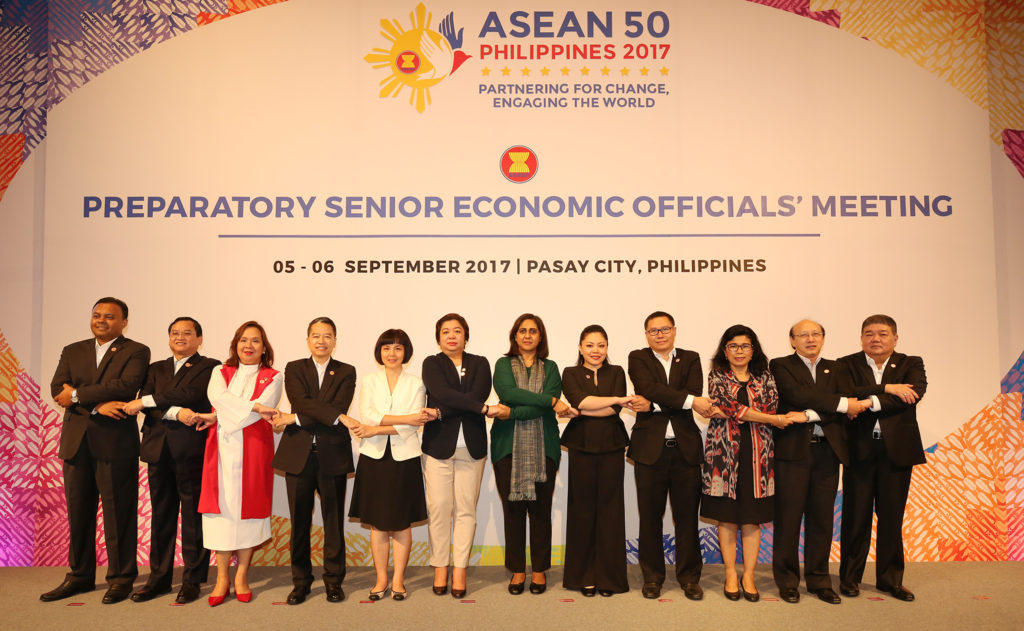
PREPARATORY MEETING FOR THE ASEAN ECONOMIC MINISTERS’ MEETING COMMENCES. Senior trade officials from 10 ASEAN Members States (AMS) gathered for a two-day preparatory meeting (5-6 September 2017) to refine points of discussion and agenda items that will feed into the 49th ASEAN Economic Ministers’ (AEM) Meeting and Related Meetings to be held on 7-11 September 2017, hosted by the Philippines, as chair of ASEAN 2017. The AEM meetings will focus on the strategic measures to pursue an “inclusive and innovation-led growth” thru increasing trade and investment, integrating the micro, small and medium enterprises (MSMEs) in the global value chains, and developing an innovation-driven economy. (From Left to Right) Malaysia – Ministry of International Trade and Industry Deputy Secretary General Datuk Isham Ishak, Myanmar – Ministry of Planning and Finance Director General Tun Tun Naing, Philippines – Department of Trade and Industry Bureau of International Trade Relations Director Ann Claire Cabochan, Thailand – Ministry of Commerce Department of Trade Negotiations Director General Boonyarit Kalanamit, Viet Nam – Ministry of Industry and Trade Deputy Director General Nguyen Thi Quynh Nga, ASEAN Senior Economic Official Chair and Philippine Department of Trade and Industry Assistant Secretary Anna Maria Rosario Robeniol, Singapore – Ministry of Trade and Industry Director-ASEAN Division Alphana Roy, Brunei Darussalam – Ministry of Foreign Affairs and Trade Deputy Permanent Secretary Norashikin Johari, Cambodia – Ministry of Commerce Director General Sim Sokheng, Indonesia – Ministry of Trade Director of ASEAN Negotiations Donna Gultom, Lao PDR – Ministry of Industry and Commerce Director General Laohoua Cheuching, and ASEAN Secretariat Deputy Secretary General Hong Hin Lim.
by admin | Sep 6, 2017 | Business, National News
MAKATI—There is a way to make artificial intelligence (AI) work for the sector of the business process outsourcing (BPO), amidst threats that this technology posts on our major services industry, the country’s trade chief said.
A product of the fast pace changes in technology, AI has presented itself more than just a new technology but as a threat to the current employees servicing the service export industry and the BPO, including the contact centers.
“Let us retool and reposition the nature of the current jobs in the industry,” said Department of Trade and Industry (DTI) Secretary Ramon Lopez, in the course of pessimistic prediction that AI could potentially diminish 45 to 50% of the approximately 1.2 million Filipino employees of the BPO industry.
Sec. Lopez cited these possible solutions coming from his recent collaboration with Dr. Dado Banatao, a renowned Filipino technology entrepreneur based in Silicon Valley, in order to minimize the impact of AI on job displacements. Together with the Department of Science and Technology (DOST), the Commission on Higher Education (CHED), the Philippine Association of State Universities and Colleges (PASUC) and the Unite States Agency for International Development (USAID), the group is currently working on building an inclusive, innovation ecosystem (government-academe-industry network) that will infuse science and technology, and innovation in industries including agriculture and services.
The AI technology enables computers to provide answers or solutions to problems raised in contact center transactions. Through programming, and deep learning technology, several databases are processed at faster speed and the computer processors are able to respond and recommend actions to callers.
“We need to train affected BPO employees and strategically orient them on the emerging technology requirements of the industry that will enable them to continuously improve job performance. In other words, making use of technology in their jobs rather than being displaced by it,” said Sec. Lopez.
“In simpler terms, we will endeavor to make this new technology work for them,” he added.
The trade chief said that intensive education and training programs for those in the industry should be developed soon by the academe, government and industry innovation ecosystem to ensure least manpower displacement.
He also underscored the need to develop an inclusive, innovation-led industrial ecosystem that will upgrade the competitiveness of the Philippine core sectors, including the services sector, in a bid to improve productivity, output generation. This is in line with President Rodrigo Duterte’s agenda to build competitive industries that will generate more jobs and income, reduce inequality and give a more comfortable life for every Filipino, according to Sec. Lopez.
DTI and DOST will lead the convening of all enablers in the innovation ecosystem to map out the overall framework and programs to be implemented.
“There is a need to strengthen curriculum towards computer science, engineering, data science and AI application design, among others. This effort is also deemed to be inclusive as disqualified BPO applicants and retrenched agents will be retrained for AI application development that will eventually enable them to get jobs,” Sec. Lopez concluded.
by admin | Sep 5, 2017 | Business, National News
The Department of Trade and Industry (DTI) will conduct a Public Consultation on the proposed Department Administrative Order (DAO) on the Revised Rules and Regulations Implementing the Business Name Law this coming September 14 from 8:00 to 11:30 in the morning at the Marco Polo Hotel, Nivel Hills, Apas, Cebu City.
According to DTI, the said DAO aims to further streamline and simplify procedures on business name registration to make DTI frontline service truly efficient and business-friendly.
In view of recent developments, particularly the government’s Ease of Doing Business Program, revision of Rules and Regulations on the Business Name Law has been made to keep it aligned with the said program, by consolidating several DTI issuances relevant to Act No. 3883.
A copy of the draft DAO may be downloaded from the DTI (www.dti.gov.ph) and PBR (business.gov.ph) websites for your information.
Considering that participation to the public consultation is on a first come-first-serve basis, those interested are encouraged to confirm attendance with Regina Verame at MaReginaVerame@dti.gov.ph or call telephone number (032) 255-0036/ 37 local 302 not later than September 12, 2017.#
Attachments area



