
The past few years, solid state drives or SSD have gradually become optional or even standard storage device on laptops. SSDs have data input/output speeds of several hundred megabytes per second and virtually no delay on first time access to the device. This is many times better than the traditional hard disk drives or HDD which also have a big disadvantage: moving parts. The spinning media on the HDD limits its I/O speed, requires much more power than SSD and is often the reason for HDD failures.
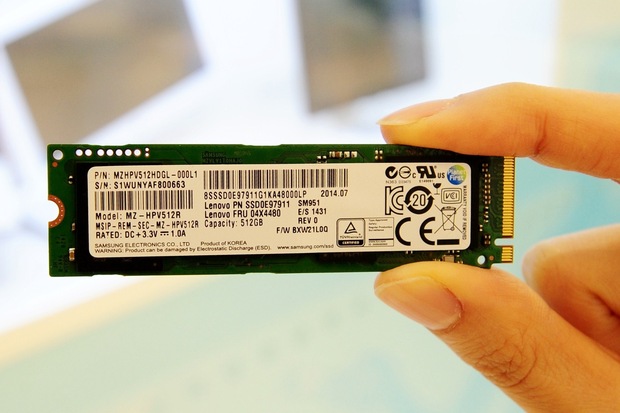
Photo credit: Samsung
SSDs are manufactured using integrated circuit technology that require no moving parts. When SSDs were new in the market, they were quite expensive and the storage capacities were only in the megabytes range. They also suffered reliability issues and have a limitation on how many times write operations can be done on each memory cell.
The current capabilities of manufacturers such as Samsung have lowered the cost of SSDs, improved its reliability and greatly increased the capacity.
Currently, 4TB capacity SSDs are already available, although the commonly available capacities would range from 128GB to 512GB. Most computers would have significant performance improvement just by replacing the HDD with an SSD.
Samsung recently announced its latest SSD technology which has an I/O speed of 2.15GB per second while using very little power. Imagine data on a single DVD being copied on an SSD in about 2 seconds. It is that fast. Because of the very low power consumption, mobile devices would definitely benefit and allow more battery life.
Cloud computing service providers are offering SSDs on its virtual private servers which has greatly improved application performance. With cloud computing industry currently growing and the popularity of mobile devices, SSD technology will surely continue to improve in performance and capacity, while getting cheaper.
