by admin | Nov 4, 2018 | Headlines
Only 55% of the drug “surrenderers” in Bohol, made true their promise to reform.
This as only 21,896 of the 39,336 drug “surrenderers” in Bohol voluntarily underwent the screening test to determine their level of substance dependence which is the first step to treatment and rehabilitation.
At the Kapihansa PIA last week, Center for Drug Education and Counselling (CDEC) Bohol representative and nurse Van Merriam Borja revealed that considering that the drug rehabilitation program in Bohol is voluntary in nature, not everyone went through the protocol to determine the proper intervention to officially get them back to the mainstreams.
As to what happens to the remaining 45%, CDEC said owing to the voluntary nature of the rehabilitation program, they cannot force everyone to get through the rehabilitation protocols.
But, over this, police authorities said when they have a list of those who surrendered, they would continue with the surveillance and pursue regular police operations for those who would continue with the drug trade and business.
Bohol adopts the World Health Organization approved protocol called Alcohol, Smoking, Substance Involvement Screening Test-Brief Intervention (ASSIST-BI), a validation tool to determine levels of substance dependence to put up the fitting intervention based on the level of substance use.
After the ASSIST-BI, “surrenderers” are classified according to risks: low, medium and high risk, Borja explained.
Only those who are identified as high risk are set for psychiatric evaluation or confinement to a rehabilitation facility as keeping them in the society could be disastrous to them and to the community, CDEC said.
Those high risk have triggers that could easily sway them back to the dependence, so that interventions have to be such that they would be kept off the triggers that could bring them back to lose control of themselves.
Borja said about 114 clients have been identified as high risk and 13 persons who use drugs (PWUDS) now doing after care after completing 6 to 8 months.
As to low and medium risks, drug offenders are referred to barangay and municipal anti-drug abuse councils which have programs specific rehabilitation programs.
CDEC has conducted Matrix Intensive Outpatient Programs (MIOP) in line with the option for community-based rehabilitation and has capacitated 47 towns and the city on psychological education and psychosocial rehabilitation, Borja shared.
In the gravity of the drug affectation considering the 39,000 “surrenderers” and the dire need for facilities to serve the number, Bohol has opted to use the Community Based Rehabilitation Program without walls (CBRP-WOW).
In the current race to declare Bohol as drug free, CDEC, which keeps track of the drug rehabilitation programs implemented by the municipal and barangays, has endorsed 573 barangays for the Regional Oversight Committee, which is the over-all authority to declare clearance from drug problems.
The rest are either being deliberated as to their compliance to the drug clearance parameters set by the Regional Oversight Committee: an inter-governmental body that looks into the degree of risk a barangay has in reference to drugs and other substances’ abuse.
CDEC also clarifies that barangays with drug offenders or “surrenderers” undergoing rehabilitation would not be cleared unless they complete the 6-8 months for the high risk, 5 months for the moderate risk and 3 months rehabilitation for the low risk. (rahc/PIA-7/Bohol)
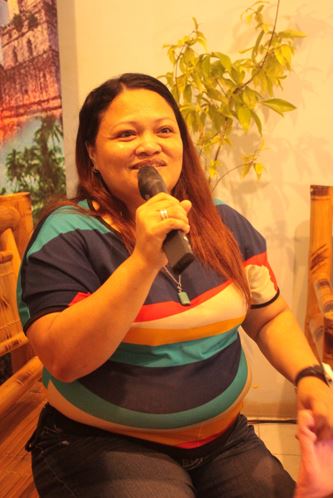
CDEC’s Van MirriamBorja updates Kapihansa PIA on the status of Bohol’s drug rehabilitation programs under the CDEC. (rahc/{IA-7/Bohol)
by admin | Nov 3, 2018 | Headlines
TAGBILARAN CITY, Bohol, November 3 (PIA)—In a bid to put a cap to the already spilling measles and rubella threat in Central Visayas, as well as the possible resurgence of the wild polio virus in the region, the Department of Health in Region 7 (DOH-7) brings a simultaneous region-wide supplemental immunization activity (SIA) for measles with its LigtasTigdas campaign and oral polio vaccine, the plus.
Intending to get to kids 6 weeks to 59 months, LigtasTigdasPlus is the government’s response over the monitored increase of measles cases in Central Visayas, according to Ruff Vincent Valdevieso and the DOH team during a coordinative meeting with the Bohol media and the region-wide SIA held at the Bohol Tropics Resort last week.
The region-wide immunization intends to contain the spreading measles, which had broken out in Zamboanga last year and is now being monitored in Dumaguete City and in Negros Oriental, according to DOH nurse Ruff Vincent Valdevieso.
With 112 of the 305 measles cases reported by disease reporting units (DSU) across the region coming from at least 5 of the towns and cities in Negros Oriental, observers have theorized that the airborne viral disease could have spread from Zamboanga to Negros via its boat trips.
Of the region, the disease did not spare Cebu, which now has 25 cases. Lapaulapu and Mandaue cities each had nine and eight cases.
Meanwhile, Siquijor did not escape the measles scourge.
Larena and Maria, of the mystical islands had 17 and 10 measles cases respectively.
In Bohol, of the 12 cases monitored, only one case has been confirmed after laboratory tests, but the single case can easily spread the virus with the patient sneezing or coughing, or by direct physical contact of the patient.
Along this, Board member Cesar Tomas Lopez, who sits as assistant provincial health officer, believes that mobilizing the purok system could be a huge help in the simultaneous immunization activity.
“As to the governor’s instructions, we have set up a system for facilitated and more efficient service delivery with each barangay keeping an average of 7 puroks,” Dr. Lopez shared.
Each purok owns a point person for each sectoral concern and the health concern is among them.
The ultimate target is to get to the kids in the age bracket, says Dr. Cortes during the press conference which happened after the media meeting.
While the SIA seeks to get to the 6 weeks to 59 months kids, children beyond the age group can still avail of the immunization, DOH authorities said.
Another DOH campaign riding on the LigtasTigdas is also trying to get to kids who are exposed to the resurgence of wild polio virus.
The immunization by oral polio vaccine drops, alos promises to protect kids from the resurgence of the polio virus that potentially cripples and renders a person immobile for life.
In 2000, the Philippines has since kept a polio-free status, the country is still on guard against the cases of wild polio strains that could easily reverse the Philippine status as polio free.
As neonates are the most vulnerable, infants a month and two weeks can already be given.
In the campaign, the DOH intends to get to 85-95% of the age groups targeted, Dr. Cortes said. (rahc/PIA-7/Bohol)
by admin | Nov 2, 2018 | DOH Updates, Headlines
TAGBILARAN CITY, Bohol, November 2 (PIA)—Still reeling from dengue which has parents worried, another risk may just be already in Bohol with a potential to wreak havoc to communities.
This is measles and rubella.
An airborne viral and highly contagious disease that gets fatal when its complications are not properly taken care of, measles is capable of infecting people exponentially.
That means a person infected with the virus can pass the disease to at least 20 persons who happen to personally touch the patient, or are within the vicinity when the carrier coughs, or sneezes, according to Department ofHealth Center for Health Development (DOH CHD).
A disease with no treatment, or until it leaves, medical practitioners can only manage the complications brought about by the disease or it becomes fatal,according to Dr. Jeanette Pauline Arellano-Cortes.
But there is only one thing communities can do to keep off from infection: immunization, she stressed.
Measles manifests itself as skin rashes, fever, cough, runny nose and inflammation of the eyes.
When it complicates and is not properly managed, measles van lead to diarrhea, dehydration, pneumonia, encepahalitis, blindness and hearing problems.
Although preventable by immunization, measles, with its complication is still the leading cause of death among preventable diseases, Dr. Cortes added.
In 2017, DOH authorities declared a measles outbreak in Zamboanga, and another outbreak was noted in Luzo, according to Ruff Vincent Valdevieso.
With proximity to Zamboanga, DOH-7 Regional Epidemiology and Surveillance Unit sounded the alarm over what they perceive as danger signs of possible entry of the virus in the Visayas.
A regular boat trip services Dumaguete and Zamboanga.
According to data from the RESU, from January this year to October 27, there has been a total of 305 cases of measles monitored in Central Visayas.
Of all the cases, 15% or 45 patients are from Dumaguete, 28 or 9.1% from Bacong Negros Oriental, 5.9 % or 17 cases from Sibulan, still in Negros Oriental and in LarenaSiquijor where 5.5% of the cases were monitored, RESU7 said.
Cebu City this year has some 25 measles cases monitored, this is 8.1% of the cases here.
The disease has also caused one death, based on reports from different disease reporting units (DRUs) of the DOH.
In 2016, the same period saw 45 cases and no deaths, that is why this year, health authorities say this year’s cases is 582% higher, Valdeviesa who is a nurse, reported.
RESU 7 also pointed out that the ages of their monitored cases ranged from 5-60 years old.
While Bohol Province has but yet 12 suspected measles cases, there is only one laboratory confirmed measles case and another rubella case, the regional center for disease monitoring shared.
But with a twice daily sea trips from Dumaguete to Tagbilaran, what are the chances that the disease could be spread in Bohol?
High, health authorities said.
To respond the alarming situation, DOH now brings a region-wide supplemental immunization Activity (SIA) in Central Visayas from October 22 to November 23.
Dr. Cortes explained that the Measles Containing Vaccines (MVC), a vaccine that has been used since 1970s would be used in the month-long activity.
Target are children from 6 weeks (one month and 2 weeks) to 59 months or four years and 11 months, according to DOH.
An immunized child is a child already freed from measles and the costs of getting sick and treatment is still way over the trouble of bringing your child to the nearest health center, Dr. Cortes reminded everyone. (rahc/PIA-7/Bohol)

MEASLES ALERT. Assistant Provincial Health Officer Dr. Cesar Tomas Lopez and Dr Jeanette Pauline Arellano Cortes explains the need to get the LigtasTigadasPluss immunization program for Bohol going. (rahc/PIA-7/Bohol)
by admin | Oct 29, 2018 | Headlines
Heads and representatives of the pillars of criminal justice system (CJS) in Bohol jointly manifested their intent to a better coordination among them towards speedy disposition of cases by signing in the Commitment of Stakeholders capping the day-long round-table conference October 26, at the Belian Hotel.
Organized by the Department of Justice (DOJ) Parole and Probation Office (PPO) in coordination with the Bureau of Jail Management and Penology (BJMP), the round table conference intends to consult with the key pillars on how each one can efficiently manage and perform their mandates by ironing out issues and concerns leading to the goal of speedy resolution of cases, says PPO 7 Regional Director Georgette Paderanga.
Present during the conference were representatives of the community, law enforcement, the prosecution, the courts and the corrections.
Leading the concerns which the PPO brought up was the problem with court referrals.
PPA, which maintains 22 parole and probation offices in the region, has reported an upsurge in drug cases clients in the past years.
This is largely due to the Supreme Court issued plea bargaining in drug cases to enable drug offenders to avail themselves of such arrangement.
Although the plea bargaining framework is not allowed in drug cases where the imposable penalty is reclusion perpetual or death, or under Section 5 of Republic Act 9165 (Comprehensive Dangerous Drugs Act.) which penalizes sale, trading, administration, dispensation, delivery, distribution andtransportation of all kinds of dangerous drugs, a plea bargain to a lesser crime can be accepted.
For example, the new framework says an accused charged with violation of Section 11 of RA 9165 for possession of dangerous drugs where the quantity is less than five grams (shabu, opium, morphine, heroin and cocaine, and less than 300 grams in case of marijuana) owns a penalty of 12 years and one day to 20 years in prison and fine P300,000 to P400,000, the accused can plea bargain to a violation of Section 12 on possession of equipment, instrument, apparatus, with a penalty of six months and one day to four years in prison and a fine ranging from P10,000 to P50,000, cited PPO administrator Dr. Manuel G. Co, during his pro-round table conference message.
With the plea bargain, courts are then mandated to refer the accused eligible for probation to the PPO.
PPO Tagbilaran City Aileen Rose Dumalesaid her office gets several court referrals but these do not have complete documents.
A referral without complete documents could hamper the PPO assessment of the application for probation.
Moreover, while the courts send in referrals, these do not come with thenotation that petitioner of the probation should report to the PPO within 72 hours.
Other PPO offices also said that when there are referrals that arrive, the petitioners do not have home addresses, which makes it hard for the probation officers to conduct initial investigation if they do not know where to start.
Former City Police chief George Vale who represented law enforcement pillar admitted that in some cases when the accused apprehended for a crime is non local, the accused often uses aliases or fake addresses and the police may not be able to know if the information is false.
With this, the information forwarded to courts would sometimes contain no addresses, or false names.
For the courts, the office of the Provincial Prosecutor also admitted that the increase in cases caused delays in the submission of post investigation reports, a fact that several of their referrals to the PPO may not have with them file folders this important document.
The courts also insisted that as per mandate, the delay in the submission is also due to the delayed inter-office referrals as these have to be thorough, substantial and complete investigations and accompanying records.
On these, the pillars of the justice system agreed to work on the motion for extensions, and a fixing of the processes in the documentation processes that includes a verified address to solve the issues of the PPO initiated investigation for approval of probation applications.
The PPO also informed everyone that in several cases when the accused who have served part of their sentences are released based on recognizance.
PPO RD Paderanga said some officials who vouch for thesereleases do not even know the person they are supposed to have under their supervision.
“This is dangerous as they can be liable when the persons they accept commit new crimes or escape from their temporary custody,” the lady probation officer said.
Over all these issues, the round table capped the day with the signing of commitment to assist the PPO in the resolution of their issues and concerns affecting the effective and efficient delivery of their services to the public.
In the commitment, representatives of the pillars of criminal justice also pledge to do to the best of their abilities to perform in accordance with their mandates. (rahc/PIA/Bohol)
by admin | Oct 27, 2018 | Local News / Bohol Balita
Becoming soldiers in a different kind of war, troops of the 302nd Infantry Brigade adopts a new kind of shooting skills.
At least 28 officers and men of the 302ndInfBde joined the skills enhancement in shooting, not with their rifles to neutralize the enemy, but with the camera, to put in more good news in these times when most you see in the newspapers are the trivial and non-inspiring.
Since Bohol was declared insurgency free in 2010, the soldiers left her in Bohol shifted to a new kind of battle: that of helping communities rise from the cowering fear with the trauma of war and the government services that came but only in trickles.
Instead of wielding rifles, the soldiers picked on shovels and spades to repair impassable barangay roads, dangerous sections of trails and put up culverts to address flooding and the eventual rutting of the roads making them tough to maneuver by vehicles.
In some areas, along with the Army Engineering Battalion, soldiers wield saws and hammer, buildings schools but putting up the labor counterpart to stretch government budget for school buildings.
Then, they also fix school fences, barangay halls, waiting sheds, put up tap water stands with their trowels and masonry skills, or they use no hunting knives but paintbrushes for painting jobs in government and public infrastructures needing these services.
Reeling from a past when soldiers were accused of being abusive and had indiscretions that are publicly known, the radical change has to happen in time, according to Captain KhadaffyTawantawan, Civil Military Officer of the 302ndIBde.
And yet just as the army has transformed its image into community workers as an avenue for peace work, their activities remain unknown and is filed only in military lockers.
With this, the brigade, which performs the administrative supervision of the army and citizens armed forces for geographical units in Bohol intends to bring these community empowerment accomplishments to the mainstream, and this time, becoming photojournalists would be a good start.
Along this, the brigade requested the Philippine Information Agency for the training, which the PIA also obliged.
Other than PIA basic media skills, which includes photojournalism which are offered for free, the PIA in Bohol also trains communities in literary, arts, sports and disseminates information on key government programs and projects. (rahc/PIA-7/Bohol)




