by admin | Oct 27, 2018 | Headlines
TAGBILARAN CITY, Bohol, October 26 (PIA)—Traffic related incidents are getting fewer and fewer through the months from a very high 10.9 incidents per day in March to 5.6 daily average in September, or a 51.37% reduction rate in the last six months.
According to consolidated police reports delivered by Bohol Provincial Police Chief at Camp Francisco Dagohoy during the recent joint Provincial Peace and Order Council (PPOC) and Anti-Drug Abuse Council (PADAC) meetings at the Conference Hall of the People’s Mansion, Police Senior Superintendent Angeles Geñorga showed that in March, Bohol’s traffic related incidents (TRI) peaked at 338 cases.
It may be recalled that Bohol police started implementing the Philippine National Police’s anti-crime Operation Plan Sita (OPLAN SITA), where Camp Dagohoy mandated all police stations to put up road checkpoints to check on the driver’s compliance to traffic rules and safe driving policies.
By April then, crime statisticians at Camp Dagohoy immediately noticed the 73 TRI less in the monthly non index crime trend.
By June, with the continued police operations and their increased presence in the streets, the 266 TRI cases in May drastically dipped to 215; some 51 TRI cases less.
In July, the police traffic operatives and the entire force stepped on the brakes for traffic accidents in Bohol as they staved off 19 more incidents in the monthly average.
TRI in July totaled 196, according to the presentation which Pssupt. Geñorga showed to the two councils in a joint meeting.
When the traffic incidents reached 190 in August, observers surmised that it could be the end of the downward slide as apparently, the decrease has tamed off.
In September however, council members saw an even better police performance in imposing discipline and order in the streets, as shown in the recorded decrease of cases.
The dipping trend in traffic related incidents also embellishes the 13% decrease in the monthly average crime volume for the island province from last month to September.
That means, from 324 crime cases in August, the cases plunged to 287 in September, according to Supt. Geñorga.
The data however did not include traffic related incidents.
Earlier, in previous meetings, some council members have asked the police to separate the index and non-index crimes especially traffic related incidents.
The request was to determine how much of the traffic related incidents are bloating the crime data and marring the true peace and order situation in Bohol.
And true enough, without TRI, the average monthly crime rate in Bohol slipped from 23.50 to 20.81.
And just as authorities now look at the stricter compliance in the helmet law and the traffic code, police data showed that there has been a decrease in motorcycle accidents from a high 198 in March to a down trending 137 in September.
With the helmet law strictly implemented since the beginning of March, Boholanos have found that from 198 cases of motorcycle accidents in the same month, 142 of those involved were injured, 45 unharmed and 11 died.
This September, of the 137 motorcycle accidents, 89 involved in the accident were injured, 43 were unharmed and deaths were now down to five. (rahc/PIA-7/Bohol)

ANGEL ON THE STEERING WHEEL. With Bohol Police Chief Angeles Geñorga, Bohol has seen not just a drastic reduction in index crimes but also in the alarming traffic related incidents that have happened mostly involving illegal drivers, unregistered vehicles and dis-order in the streets. (PIA-Bohol)
by admin | Oct 22, 2018 | Headlines, Local News / Bohol Balita
JAGNA, Bohol, October 18 (PIA)—Now, here is good news to all member-borrowers of the Social Security System funds who have past due calamity or salary loan early renewal program (SLERP), or member-borrowers with past due short-term loans in calamitydisaster-stricken areas, the SSS Loan Restructuring Program (LRP) or better known as SSS Loan Condonation Program has been extended.
Initially offered until October 1, 2018, the SSS LRP has been extended until April 1, 2019, according to SSS Information Officer Michael Ian Mission.
Speaking during the out of town Kapihansa PIA held at DyPJ in Jagna, Bohol, Mission said the extension should provide member-borrowers who have unpaid loans, ample time to avail of the condonation of penalties offer.
SSS clarified that when one applies for an SSS loan, it is not the contributed premium that one borrows, but rather part of the SSS funds.
Members who have been default in paying for their loans have reasoned out that it is wrong for SSS to ask them to pay as what was borrowed was the SSS Premium.
This is a wrong notion, SSS authorities said.
According to the SSS, the money you borrowed from the SSS comes from the funds and is not necessarily the contributed amount, that a failure to pay will necessitate the full sum including the accumulated penalties and interests taken off from the member’s retirement or death benefit.
“That is why if you have a long overdue SSS Loan, the SSS Loan Condonation is your chance to pay,” clarifies Mission.
As one applies for the LRP, the accumulation of penalties and interests on his outstanding Loan will stop, or at least until one again defaults in paying the agreed amount and schedule of payment of the restructured loan.
With the penalties waived, the amount of obligation will be smaller.
As per policy, SSS would demand an unpaid loan or outstanding balance from the SSS Pension, that a retiree may not get his initial months of pension until it can fully pay for the borrowed and unpaid amount.
The SSS said, one thing about being able to pay for the loan is the possibility of getting another loan in times of need.
Earlier, the SSS offered the LRP from April 2 to October 1, 2018.
Recently however, the SSS decided to extend the program some more to serve the majority of its member borrowers who did not know of the offer of condonation of penalties until recently.
Moreover, SSS Bohol informs the people of Jagna and its catchment area that soon, an SSS Service Desk would soon be put up in the first class port town.
The service desk would make the SSS Services regular for Jagna-anons, Mission said.
In the past, SSS assigned an SSS Service Desk Officer to visit Jagna twice a month to facilitate and perform SSS service processes. (rahc/PIA-7/Bohol)
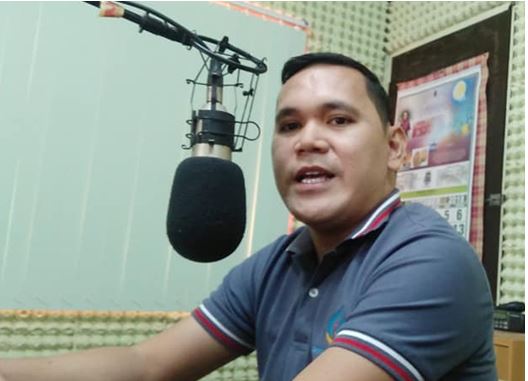
SSS information officer Michael Ian Mission announces the extension of the SSS loan Restructuring Program which was supposed to end by October this year. The SSS LRP would be until April 1 of next year. (rahc/PIA-7/Bohol)
by admin | Oct 22, 2018 | Headlines
By: Doris Isabel J. Racho
TAGBILARAN CITY, Bohol, October 20 – In consonance with the Philippine Organic Act of 2010, which seeks “to promote, propagate, develop further and implement the practice of organic agriculture in the country” the Department of Agriculture (DA) through the Agricultural Training Institute (ATI) continuously conduct training and extension activities geared towards organic farming.
Recently ATI Region VII conducted training on Internal Control System (ICS) to 30 organic farmers and agriculture technicians from the different parts of Bohol on October 16-19, 2018 at ATI-7 Regional Training Center, Cabawan District, this City.
ICS system which is part of the certification process to be complied by the organic producer to be certified.
It has been known that Organic Act stressed for the promotion of community-based organic agriculture systems which includes farmers’ produced purely organic fertilizer such as compost, pesticide and other farm inputs, together with a nationwide educational and promotional campaign for their use and processing as well as adoption of organic agriculture system as viable alternative.
The 4-day training involved lecture-discussion, structured learning exercises, workshop, critiquing and evaluation and mock-up demo of ICS installation with the members of the approving body, quality control and inspection committee doing the participatory guarantee system process at JQL Farm, Luyo, Dimiao, Bohol.
Said farm is a Learning Site applicant of ATI-7.
ICS training was aimed to produce more organic certified producer, increase the availability of organic certified products and to protect the consumers from fake organic producers.
Participants were encouraged to re-echo the training to other farmer or farmer leaders and to come up with a re-entry/action plan as part of training output.
The pool of resource persons wereJannelGeconcillo and Merlissa I. Garcia who were Negros Island Certification Services (NICERT) Inspectors, while Andrew M. Macaambac acted as project officer and assisted by Jun Alguin Oliver of ATI-7.

ICS Participants and Training Management Team with ATI-7 Center Director Carolyn May O. Daquio, PhD. in the middle front row. (ATI-7)
by admin | Oct 21, 2018 | Local News / Bohol Balita
CANJULAO, Jagna, Bohol, October 18 (PIA)—It comes out in rather weird colors: malunggay (horseradish) green, squash yellow, camote top purple, but for all these, it is basically dried pancit (noodle) similar to your regular canton.
From there, all the similarities end. And then comes the big difference.
Yaning’s Pancit used to be your ordinary neighborhood egg noodles.
Produced from a kitchen backroom in this bustling town, the egg noodles industry now has its own common service facility, but that is getting ahead of the story.
Its manufacturers: a family toiled through years to earn and send their kids through college. And to make both ends meet. When the going gets tough, they produce a little bit more to get enough for the spending needs after the matriculation.
For extra hands, this family hires their jobless neighbors.
And as quickly did the neighbors learn egg-noodling the hard way, the faster they were also dipped into the groove in the food production job.
That started a little livelihood that would soon grow and attract more and more Jagna residents who see the healthy promise getting money for food and other needs.
All of that, thanks to a lady named Yaning.
Living from making egg-noodles, Yaning and her husband got into the business, as loyal as clockwork. The neighbors, then two or three, pitched in for the extra hands. Through the years.
With all Yaning’s kids finishing college, all from the egg-noodles that they are selling, it was not hard for the neighbors to get into the production.
Before Yaning died, she left the business to the neighbors.
Not any longer, from the basic egg noodles hatched to greatness of the new nutri-pancit, through the introduction of innovation.
“You know pancit has a certain come-on to the kids. We see that, as an opportunity to put in the blend some nutritious ingredients. These are usually the ones parents would find it hard to make their kids eat,” says Dominiciana Jamora, the animated operations manager as she is in her high stool perch, hands gesturing loosely, details the hardships they have to surmount to get where they are now.
“It is more of providing alternatives to parents who have a hard time convincing their kids to eat nutritious food,” Jamora added, information spilling from her in a steady stream of words and hand gestures.
Data from the Provincial Nutrition Council showed that Bohol kids are still threatened by malnutrition.
“The witty blending of naturally nutritious ingredients to the noodles could be a good start in solving some problems,” although slowly, PNC members admit.
“They are eating, not really caring about what they are getting as long as it is pancit,” Jamora said triumph in her voice.
A resident of Tubod Monte, Jamora, 57 manages the noodle production from their Common Service Facility (CSF) built by Jagna for the use of the association of local noodle makers.
She, along with women leaders of small, micro and medium enterprises under the Jagna Sustainable Micro Enterprises Development (JaSMED) met at a newly constructed Common Service Facility (CSF) for tableya, the native chocolates which the town also produces after their world renowned calamay, here in a hilltop plant overlooking the barangay and the town center with the blue Mindanao Sea in the distance.
“Among the JaSMED-assisted products is Yaning’s Pancit,” discloses JaSMED Unit head Marilou Naldoza, who has kept close tabs on the 16 micro, small and medium enterprises that the local government unit of Jagna and with the assistance of government agencies, have been producing mostly food products.
Two members of the JaSMED however chose to be in candle and in rags products development.
As to the nutria-pancit, Jamora, who has since led the egg-noodle-now-nutri-pancit business is on to more innovations to make their product a channel for income to her 76 members.
We are now tryiong to help solve at least three problems: malnutrition, family incomes and sending our members to school.
One of their members, Jamora shared, used to work on the calamay industry, as a cardboard box to keep her clothes.
Now, she said she has a good cabinet for her to keep her clothes in her room.
“Most of our members are out of school youth and students by day, noodle factory workers at night, she pointed out,” as she squirms and twists on the high stool she was perched during the causal talk.
Her excitement betrayed her as much as her animated responses to the questions showed.
“We have to continue with the noodles [factory], this has become livelihood for our people and in turn serves the town,” she shared.
The business has also helped not just for making sure people have money, it has also helped their young members finish their studies.
“From this, four of our members have finished college: a seaman, a police man and two teachers,” Jamora, grinning from ear to ear, revealed.
“We thought there’s more to just being egg-noodles, so with the help of the Department of Agriculture, Science and Technology, Agrarian Reform, Trade and Industry and the LGU, we blended squash, malunggay, camote tops and just anything nutritious that can be put in, anything that mothers can use to give their kids the proper nutrition they would need at their ages,” she said in Cebuano.
The green noodles are malunggay, the golden yellow is squash and the purple-violet is camote tops, Jamora illustrated.
And since egg-noodling has become a livelihood to some community members, the LGU and several government agencies pooled resources to put up a CSF, to make sure that there is an established standard for the way things have to be made to keep the Jagna brand, Naldoza explained.
Of all Bohol towns, not many have set up their MSMEs like Jagna, Naldoza added.
For the nutri-pancit, the coop manager said they are now producing 144 packs of 250 grams daily, this would be sold at P45.00, and the sales is starting to increase.
The increase is even noted despite the fact that Jamora’s group is still processing their Food and Drugs Administration (FDA) registration.
We are getting many orders, some as far as Davao, but until we can get the FDA certification, we might just keep the production, she said.
Jagna nutri-noodles rank among the leading products of the town; the biggest being calamay, tablea, cookies, and noodles. (rahc/PIA-7/Bohol)

Jagnanutri-noodles are among the products on display by members of Jagna Sustainable Micro Enterprises Development (JaSMED). The noodles, which uses nutritious food as among its additives are either from malunggay, squash, carrots and camote tops.
by admin | Oct 21, 2018 | Headlines
BIABAS Guindulman, Bohol October 13 (PIA)—House of IT (HoIT), an information technology business support provider arrives here to a community dressed to the occasion.
Coming in to this village occupied by surviving members of the Eskaya tribe, seven Hoit representatives arrived to this community perched on top of the mountains of Guindulman, some 20 kilometers from the town center, to hand over the instructional materials for the Eskaya teachers.
HoIT, in one of their corporate social responsibility projects, decided to produce digitized visual aids to help grade school teachers here and in a few more isolated villages teach back the quaint Eskaya language and their system of writing.
Eskaya, a mountain dwelling tribe in Bohol owns patches of land here as the government awarded them their ancestral domains, explains National Commission of Indigenous Peoples (NCIP) Bohol head Sisinio Amplayo Jr.
Eskaya has communities in nearby Taytay, Duero, Lundag, Pilar, Cantaub Sierra Bullones, and Cadapdapan and Tambongan in Candijay, NCIP said.
Amidst the threat of losing its unique language, teachers here race with time to teach grade school kids the rudiments of the Eskaya script, using crudely prepared flipcharts, shared Eskaya timama sundon (head teacher /supervisor) Julieta Vizcayda.
Seeing the individually prepared instructional materials in their initial visit to the community, HoIT leaders decided to do the digitized instructional materials for Biabas and Tambis Elementary School’s 80 pupil-learners and 5 Eskaya teachers.
HoIT, in partnership with Aninaw House of Artists commissioned artists to replicate the flipcharts in a bid to standardize the teaching materials.
In coordination with the Department of Education, NCIP and the Philippine Information Agency in Bohol, HoIT took over a year to complete the teacher’s visual aids amidst validation from Eskaya communities and their teachers.
That day, October 13, the community gathered at the village center: tarpaulin tents stood in the basketball, a banqueting table spread with native food, the village string band of banjo, banduria, guitar, ukulele and a bajo de arco provided rustic music.
Eskaya sundon (chieftain) Jovino Datahan, Biabas Barangay Chairman Cleofas Pabon, teachers from the village’s two elementary schools and mothers clad in kimonas greeted the guests, ever appreciative of group and their project.
On the stage pinned as event backdrop is the customary Eskayan greeting: Griyalo Lotarber Remoy Biyabe, which means Welcome visitors.
On the basketball court, grade school boys in neat dark short pants and red shirts form a single file while the girls in pleated blue skirts and red shirts flanked them, smiles painted over all their faces.
Some elder pupils came in white blouse and blue skirts, and at least two pairs came dressed in the customary Eskaya costume for the Sinarliston, a traditional dance still performed in these mountain communities.
Several children also came in golden yellow skirt or loose pants and printed kimono blouses, a costume that stood out in the green environment.
HoIT representative Lachmae Reboton, amazed and overwhelmed by the warm welcome could not hold her excitement.
The community sang the national anthem and Awit sa Bohol in full Eskaya conducted by school teachers while Eskayan officials delivered their speeches and messages in the customary tribal language.
“I can’t believe we would arrive to such a grand welcome,” Reboton, a first timer in Biabas blurted out and delighted that the kids and the entire community spared time to accept the instructional materials.
“Thank you House of IT and your team,” Vizcayda who oversees the teaching of the Eskaya said as she meticulously reviewed the scripts that characterize the Eskayan writing.
Included in the digitized materials turned over to the community are the Eskaya alphabet, colors, household pets, colors, taste and household utensils.
HoIT also gave about 60 coloring activity books to the schools, given in simple turn-over a few hours later.
Barangay and tribal council members also came home with at least some HoIT mugs, HoIT umbrellas for teachers, classroom wall clocks and other tokens.
Also turned over were the digital layout in compact discs, in case the community wants to print some more of the donated materials. (rahc/PIA-7/Bohol)



