by admin | Apr 3, 2017 | DTI Updates, Headlines, National News
The Philippines, through the Department of Trade and Industry’s Export Marketing Bureau (EMB) and Philippine Trade and Investment Center (PTIC) – Kuala Lumpur, is set to take part at the Malaysia International Halal Showcase (MIHAS) 2017 on 5-8 April in Kuala Lumpur, Malaysia.
After years of absence at MIHAS, the Philippines is back with 30 Philippine companies that will showcase Halal-certified products at the Philippine Pavilion. Joining the business delegation are companies from the food (27) and non-food (3) sectors.
Products to be showcased will vary from food and beverage, processed meats and snacks, to cosmetics and personal care. With its Philippine Export Industry development program, Philippines’ participation at the said trade show is the biggest to date.
“The Philippines takes this opportunity to introduce itself as a major supplier of Halal compliant products to the world. We are here to take part in the global Halal initiative and to bring about innovative products that will complement the global Halal ecosystem. The Philippines brings together the strong collaboration of Halal stakeholders in the Philippines with the deliberate approach under the recently passed Philippine Halal Export Promotion and Development Law (Republic Act 10817),” said DTI EMB Director Senen M. Perlada.
DTI-EMB confirmed the participation of San Miguel Purefoods Company, Inc., Mega Global, Century Pacific Food Inc., and Palmstore, among others.
The PTIC – Kuala Lumpur has also expressed confidence in the success of the Philippine’s participation, especially with the keen interest shown by businessmen in Malaysia to visit the Philippine Pavilion and meet the companies.
“We have gained recognition in the industry with businesses and business organizations, culinary schools, hotels, food manufacturers, and wholesalers alike, expressing excitement to see what the Philippines can offer in terms of Halal,” said PTIC Kuala Lumpur Commercial Attache Katrina Banzon.
Philippine Halal products to Malaysia is estimated to be around USD 86.7 Million in 2016, with a five year compound annual growth rate (CAGR) of 26.80%.
MIHAS is considered the world’s largest Halal event. It offers networking and business proposition for Halal exhibitors and buyers. According to its records, it welcomed over 22,000 trade visitors from more than 70 countries and generated record sales beyond RM1 Billion for 600 exhibitors.
MIHAS is hosted by Ministry International Trade and Industry, organized by Malaysia External Trade Development Corporation (MATRADE) in association with Halal Industry Development Corporation (HDC) and Department of Islamic Development Malaysia (JAKIM).
Philippines’ DTI EMB and PTIC-Kuala Lumpur invite everyone to visit the Philippine Pavilion at MIHAS 2017.
Other participating agencies include the Department of Agriculture, Mindanao Development Authority, Zamboanga City Special Economic Zone Authority & Freeport and DTI Regions 5 and 9.
by admin | Apr 3, 2017 | DTI Updates, Headlines, National News
Mexico City – The Department of Trade and Industry´s (DTI) Philippine Trade and Investment Center (PTIC) in Mexico, with support from the Philippine Embassy in Mexico, together with COMCE, the Mexican Business Council of Foreign Trade, Investment, and Technology recently discussed Philippine business opportunities in an organized roundtable on Philippine Business Opportunities in Mexico.
Participated in by over 30 Mexican businessmen from the logistics, autoparts manufacturing, business development, and agro-food products sectors, the event highlighted opportunities for trade and investments between the Philippines and Mexico.
Ambassador Eduardo Jose A. De Vega graced the event by highlighting the history of Mexico-Philippine trade relations and the importance of the current activities of the Philippine government to reactivate them.
Meanwhile, the Embassy´s Commercial Counselor and head of PTIC Mexico, DTI´s Vichael Angelo D. Roaring, presented current bilateral trade relation between the two countries and the opportunities, advantages, incentives and the optimum environment that the Philippines has developed to become a competitive destination for foreign investments and a source of exports of quality products.
“The Philippines continues to be a strategic business location in the Asia-Pacific region, being not only a 100 million market but as a gateway for over 500 million market of the ASEAN,” highlighted Roaring.
Juan Pablo Garcia, Director of Corporate Affairs of CEMEX, gave a testimonial and a case study of CEMEX´s experience of setting up and doing business in the Philippines. With CEMEX’ presence in more than 50 countries, Garcia cited the Philippines as one of its best places for doing business for its manpower and enabling business environment. Garcia also pointed out CEMEX´s plans to venture in the low-cost housing sector in the Philippines, a preferred business sector of the DTI’s Board of Investments 2017 Investment Priorities Plan (IPP).
Jorge Barbosa of ProMexico, a trade promotion agency of Mexico, presented opportunities that Mexico offers to the Philippines in terms of investment, as well as the potential of the Philippine market for Mexican companies in the fields of processed food, beverages, frozen fruits and vegetables, auto parts, home appliances and creative industries, and the potential for investments in ports, infrastructure, auto parts, call centers and entertainment industries.
Also present to discuss the strengthening relations between the Philippines and Mexico are Ambassador Enrique Michel Santibáñez, former Ambassador of Mexico in the Philippines, and current COMCE president for the ASEAN; and Alberto Varelo of AMEXCID, a Mexican government agency for International Development Cooperation. On the other hand, Philippine Embassy Vice Consul Mikhail de Dios discussed cultural ties of the two countries.
The event served as an avenue for networking between Mexican businessmen and Philippine officials. PTIC Mexico held one-on-one consultations with the participants to work on their specific business interests with the Philippines.
by admin | Mar 28, 2017 | DTI Updates, Headlines, National News
PASIG CITY—Department of Trade and Industry (DTI) Secretary Ramon Lopez and European Union (EU) Ambassador to the Philippines Franz Jessen affirmed the long-term partnership of the Philippines and the EU on trade and development with the completion of the third phase of the EU-Philippine Trade Related Technical Assistance project 3 (TRTA 3) on 28 March.
“By working on trade-related issues through the project, the EU and the Philippines collaborated on strengthening the framework for trade policy for inclusive growth, and enhancing our capacity to implement a competition policy and a national quality infrastructure that would protect consumers and improve compliance with international standards,” Sec. Lopez said during the closing ceremonies of the third phase of the EU-Philippine TRTA3.
“This will also help increase our access to international markets, and facilitate cross-border movement of goods,” he added.
“We are committed to support the strengthening of Philippines’ integration into the world economy, and to contribute to the country’s inclusive growth goals,” Ambassador Jessen said, with the EU already committing EUR 6.1 million for a fourth phase of the programme.
The EU has been supporting the Philippines with trade-related technical assistance since 2005. TRTA 3, the third phase of the program (2014-2017), aimed to build capacity among stakeholders for the Philippines’ integration into the international and regional trading and investment system. The project components covered Trade Policy, Competition Policy, National Quality Infrastructure, Sanitary and Phytosanitary Conformity, and Trade Facilitation.
The trade chief explained that the program worked with both public and private sectors to actively participate in global trade.
“Trade is a lever for economic growth, job creation, and poverty reduction. As ASEAN chair in 2017, the Philippines also recognises the strong implications of trade for regional cooperation and stability,” he said.
A highlight of the TRTA3 closing program is the launch of the Philippine Rapid Alert System for Food and Feed (PhilRASFF), a state-of-the-art web-based alert system for food authorities to immediately respond to food safety incidents. These include contaminated food products found on the Philippine market or at the Philippine border, as well as food-borne disease outbreaks involving marketed products.
In cooperation with the EU RASFF, ASEAN RASFF and the International Network of Food Safety Authorities (INFOSAN), the PhilRASFF system enables competent authorities to file notifications and exchange information–whether as a result of inspections or through foreign notifications–on consumer complaints or companies reporting food safety incidents.
PhilRASFF will also strengthen the capacity of the Philippines to efficiently tackle food safety risks and to contribute to the overall safety of food marketed in the ASEAN. The PhilRASFF was implemented by the TRTA 3 in partnership with the Philippines Food and Drug Administration (FDA).
Trade Undersecretary and TRTA 3 Steering Committee Chairman Rodolfo Ceferino said that the collaboration of stakeholders contributed to the successful outcomes of TRTA3 activities.
“A pro-active government, the collaboration of our development partners, and stakeholder participation in decisions that would affect trade, would combine to shape Philippine competitiveness,” Undersecretary Ceferino said.
The TRTA3 covered a wide range of activities supporting the country’s priorities, including supporting the development of the Philippine Export Development Plan (PEDP), strengthening the capacity of the DTI and relevant government agencies on trade policy and trade negotiations, as well as hands-on training and capacity-building for staff at the departments of Agriculture, Health (Food and Drug Administration), Justice (Office for Competition), and Finance (Bureau of Customs).
Other highlights of the TRTA3 closing program included testimonials from beneficiaries on protecting the value of Filipino traditions and promoting women’s role in the economy by devising a collective trademark for the famous T’nalak cloth as well as working with the Bureau of Fisheries and Aquatic Resources to combat illegal fishing.
TRTA3 success stories can be downloaded at http://www.eutrta3phils.org/uploads/2/4/8/1/24810749/traderelatedtechnicalassistanceproject3.pdf
*******
DTI – OSEC, Public Relations Unit
4/F Industry and Investments Building, 385 Gil Puyat Avenue, Makati City 1200, Philippines
Tel. No.: (+632) 895.3995 |897.6682 local 207 | Fax No.: (+632) 890.4517
E-mail: PRU@dti.gov.ph
www.dti.gov.ph
Enabling Business, Empowering Consumers
by admin | Mar 27, 2017 | DTI Updates, Headlines, National News
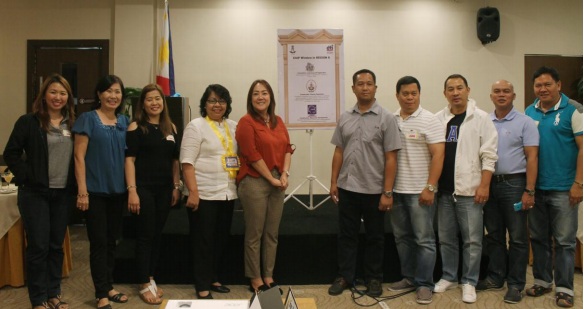
Construction Industry Undersecretary Atty Ruth B. Castelo, together with DTI Region 8 Director Cynthia Nierras forefronted the unveiling of the 8th CIAP Window in Tacloban City on Monday, March 29 2017. The one stop window facility will cater to licensing, arbitration and training needs of aspiring local contractors in the comforts of their regions. (Pictured from L-R: Philippine Contractors Association Ormoc Chapter Contractors; DTI Region VIII Director Cynthia Nierras; CIAP Undersecretary Ruth B. Castelo; PCA Ormoc President Jonathan Bautista; PCA Leyte Chapter Victorio Esperas; PCA Leyte Chapter Contractors)
Tacloban City – With the target to increase competency, the Construction Industry Authority of the Philippines (CIAP) opened a one-stop window facility in Tacloban City last March 20, 2017 to cater to licensing, arbitration and training needs of aspiring local contractors in the regions.
Undersecretary for CIAP Atty. Ruth B. Castelo, together with DTI Region VIII Director Cynthia Nierras fore fronted the opening of the event to enhance the access and delivery of CIAP services in the provinces.
Services that can be availed at the newly opened facility include construction licensing and registration issued by Philippine Contractors Accreditation Board (PCAB); handling of contract claims, arbitration and mediation for disputes arising from contract concerns administered by Construction Industry Arbitration Commission (CIAC); and signing up for various training programs under the Construction Manpower Development Foundation (CMDF).
PCA Leyte Chapter President Engr. Victorio Esperas, Jr. and PCA Ormoc Chapter President Jonathan Bautista graced the event by welcoming such initiative and declaring their support for the project. Also present in the event are TESDA Regional Director Cleta Omega, and representatives from Department of Science and Technology (DOST), Department of Agriculture (DA), Philippine Statistics Authority (PSA), National Housing Authority (NHA), Department of the Interior and Local Government Region VIII, National Economic and Development Authority, Social Security System, PhilHealth, Department of Public Works and Highways and Home Development Mutual Fund -Tacloban.
“By bringing our services to the regions, we’re enabling our contractors to save incidental expenses incurred in fare and accommodation. Filing will be easier and ultimately, we can reduce red tape and eradicate fixers.” said Undersecretary Castelo in her keynote speech.
Usec Castelo also added that for the first time in the history of the industry, President Duterte’s administration acknowledges the fact that the construction industry is a vital factor in development along with other industry sectors’ efforts.
“CIAP, the DTI, Regional Offices and stakeholders are working together to provide our valued Filipino contractors with first-rate services in the comforts of their regions.” Usec Castelo ended on a high note.
There are also service windows currently assisting in Regions I- La Union, III-Pampanga, V-Legaspi, VII-Cebu, X-Cagayan de Oro, VII- Davao and Cordillera Administrative Region.
CIAP is an attached agency of the Department of Trade and Industry that promotes, accelerates and regulates the growth of construction industry in the country.
It has five implementing boards namely; the Philippine Contractors Accreditation Board (PCAB), the Philippine Overseas Construction Board (POCB), the Philippine Domestic Construction Board (PDCB), the Construction Industry Arbitration Commission (CIAC), and the Construction Manpower Development Foundation (CMDF).
by admin | Mar 25, 2017 | Headlines, National News
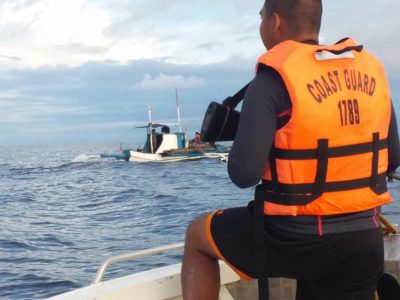
TAGBILARAN CITY, March 24 (PIA)—By operation of law, the government forfeits a motorboat and over a thousand board feet of iron wood, considered among the hardest hardwood in the country, apparently illegally shipped from the only place where these species thrive in Surigao.
Environment authorities also filed illegal possession and transport of prime rare hardwood, on an undocumented and motorboat overloaded with the hot lumber.
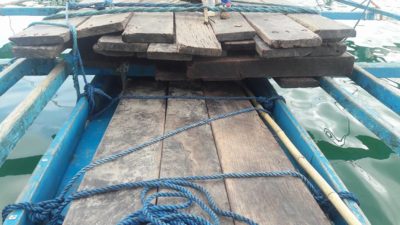
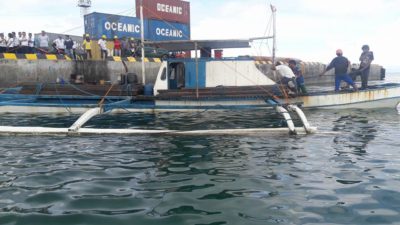
Acting on intelligence reports, elements of the Philippine Coast Guard assigned in Panglao led by Seaman 1 Ralph Barajan intercepted an undocumented motorized banca loaded with 81 pieces of hewn magkono (mancono) Xanthostemon verdugonianus (Naves), March 13, 2016.
The lumber is considered by foresters as the hardest of all Philippine hardwoods, considered rare and sparsely distributed, the species can be seen mostly in the so-called “magkono triangle.”
This is an area in the country formed by the Dinagat Island in Surigao mainland, Homonhon Island in Eastern Samar, and a very small area in Babatngon, Leyte.
The PCG team led by Barajan and comprised of seamen Wilfredo Jubac, Dionevic Flores and Gian Carl Buenaobra boarded the boat, and finding possible illegal cargo, arrested its five crewmembers.
The PCG found the crew incapable of showing documents of the shipped lumber, and the boat.
The PCG team tagged along a Philippine Navy and Philippine Army back-up.
Upon the arrest of boat captain Lolito Tiu (42), Rulie Orcullo (30), Jade Villamor (28), Jundel Dizon (24) and Jerryboy Flores (22), the arresting team escorted the suspects to the local Department of Environment and Natural Resources office in Cortes.
In Cortes DENR Office, authorities made a proper inventory of cargo and disposition of the arrested personalities and their undocumented boat used in the apparent criminal activity.
In the inventory were 81 pieces of hewn mancono lumber of assorted measurements with a total volume reaching 1,836.98 board feet equivalent to 4.33 cubic meters.
Also forfeited for the government as the law prescribes, is a white and blue motorized banca, a bolo, a chisel, DENR records show.
Subsequent information revealed that the DENR in Bohol has filed appropriate charges, through Assistant Provincial prosecutor Aida Digaum-Langcamon.
The suspects are now detained at the Panglao Police Station, since the boarding incident happened in the Panglao police area of jurisdiction.
In matters like this, what does the laws say?
In the Philippines, as early as 1904, via Act No 1148, authorities have regulated the use of public forests and has classified the mancono as among the group of hardwood trees in the country including acle, baticulin, betis, camagon, ebony, ipil, lanete, molave, narra, tindalo, and yacal.
As such, former Bohol PENRO Nestor Canda says a tree cutting permit is needed prior to cutting, the permit among the papers needed as a DENR requirement for the person getting the transport permit.
Section 68 of Presidential Decree 705 says cutting, gathering and or collecting timber or other products without license shall be guilty of qualified theft as defined and punished under Articles 309 and 310 of the Revised Penal Code.
In its primer, the DENR Forest Management Bureau said even possession of lumber or forest products without documents under existing forest laws and regulations is already a violation.
In fact, even the removing of the timber and other products from the forest needs a license agreement or permit issued by either the DENR secretary or his representative, in this case, the PENRO of the area where the timber was cut.
The DENR permit can either be in the form of timber license agreement, timber production sharing agreement, private land timber permits or special permits as the agency deems necessary.
For transporting forest products, the DENR lists the following documents necessary to make the transport legal: Certificate of Timber Origin, Auxiliary invoices, sales or commercial invoices, logs supply contract, Forestry Officer’s mark, and Certificate of Transport Agreement. (rahc/PIA-7/Bohol)
by admin | Mar 24, 2017 | DTI Updates, Headlines, National News
MAKATI – The Department of Trade and Industry (DTI) and Kultura, the country’s largest retailer of homegrown products, signed an agreement on 24 March to open Go Lokal! stores in SM Makati.
DTI Secretary Ramon Lopez, together with Industry Promotion Assistant Secretary Rosvi Gaetos and DTI 4-B Regional Director Joel Valera signed the agreement with Kultura represented by its Senior Vice-President for Operations Ivy Frances Yap and Merchandising Head Fatima Uy. This partnership allows Kultura to operate and manage Go Lokal! in order to provide greater market access to micro, small, and medium scale enterprises (MSMEs).
Go Lokal! is a design-led concept store and market platform showcasing modern and indigenous quality products crafted, designed, and created by innovative Philippine micro, small, and medium enterprises (MSMEs). It is mostly found in consumer-frequented locations as a mainstream distribution channel for world-class products while offering value for money to consumers. Go Lokal! is a public-private collaboration and serves as avenue for incubation, marketing, and branding for the best of Philippine MSME products including the next generation One Town One Product (OTOP) offerings.
“Kultura and Go Lokal! are complementary avenues to help our local MSMEs gain retail foothold in the Philippine domestic market. We are pleased to open a Go Lokal! together with Kultura as a testament of our collective thrust of inclusive growth and development of our MSMEs.” said Secretary Ramon Lopez.
The trade chief also said that aside from providing market access for MSME products, the Go Lokal! is a platform for new entrepreneurs to test the marketability of their products without fear of losing out on rental and commercial costs because their Go Lokal! experience is free-of-charge.
Kultura is the leading brand for uniquely Filipino products.
“Kultura has become a showcase of local artistry and craftsmanship and furthers its advocacy by partnering with the DTI for its Go Lokal Project, providing a venue for the distribution and promotion of products sourced from MSMEs,” said Ms. Ivy Yap.
Its Go Lokal pop-up store opens in April and will run throughout the year at the 2nd level of SM Makati.

DTI, SM’S KULTURA SIGN DEAL TO OPERATE GO LOKAL! Department of Trade and Industry (DTI) and Kultura, the country’s largest retailer of homegrown products, signed an agreement on 24 March in Makati to open Go Lokal! stores in SM Makati. Go Lokal! is a design-led concept store and market platform showcasing modern and indigenous quality products crafted, designed, and created by innovative Philippine micro, small, and medium enterprises (MSMEs), mostly found in consumer-frequented locations as a mainstream distribution channel for world-class products while offering value for money to consumers. A public-private collaboration, it serves as avenue for incubation, marketing, and branding for the best of Philippine MSME products including the next generation One Town One Product (OTOP) offerings. DTI Secretary Ramon Lopez (R), together with Assistant Secretary Rosvi Gaetos and DTI-4B Regional Director Joel Valera signed the agreement with Kultura represented by its Senior Vice-President for Operations Ivy Frances Yap (left) and Merchandising Head Fatima Uy. The trade chief said that aside from providing market access for MSME products, the Go Lokal! is a platform for new entrepreneurs to test the marketability of their products without fear of losing out on rental and commercial costs because their Go Lokal! experience is free-of-charge.