by mikocanares | Dec 26, 2012 | Features, Opinion
Travelling within Tagbilaran City is such a trouble and a great discomfort that I would rather stay at home than go somewhere else. If I have a choice, I wouldn’t go to the city centre where the banks are located or report to my office at Step Up Consulting Services. It would seem that as I drive, I can hear the shriek and the cry of the poor car coupled sometimes with my son’s loud “ouch” when I hit a pothole large enough to have his head banged against the windows.
Every person who lives in Tagbilaran City will understand when I say that Tagbilaran nowadays seems like a city left to rot. I highlight three reasons below why I say so.
 POINT 1
.
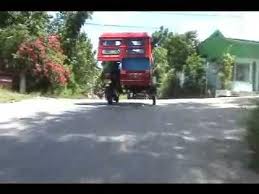
Tagbilaran roads are outrageously bad, the streets within the city center are dirty caused by mud on rainy days or by dust when the sun is out. If you live somewhere in Janssen Heights and would like to go to the St. Joseph Cathedral, you can never have a smooth ride except when you travel through the Dampas-Mansasa Road down to VP Inting St. and back to CPG East Avenue’s occasional potholes.
In the city government website in February 2010, an article appeared that was entitled “Mission Accomplished” . I quote the news item below:
“When Mayor Dan Neri Lim assumed office last 2004, only 15% of the roads in Tagbilaran City were in good working condition. Majority of the city roads were rocky and dilapidated.
According to City Engineer Pianicita Castolo, the city roads have been untouched for almost thirty years.
Thus the improvement and rehabilitation of these city roads started as soon as Mayor Dan Lim took office. Almost 68 million pesos were spent for the improvement, rehabilitation and maintenance of these city roads which started last 2004.”
Reading this article from history sounds like a joke, especially when you read it alongside a
Bohol Chronicle article in April 2012 calling for the implementation of road projects. According to the article, the city government appropriated Php282 million for road projects in the 2012 budget. But you get to wonder where this money is spent. The only improvement I can see in the last week is the filling-up of potholes along B. Inting and G. Visarra Street with low-grade anapog that will get the streets muddy during heavy rains.
POINT 2. Water is still a big problem. At our place in Dampas, water pressure is low at different parts of the day and there is intermittent service interruption. In other parts of the city, water service is not available as both Bohol Water Utilities Inc. and the City Rural Waterworks System are unable to increase service coverage.
In December 2011, Bohol Chronicle reports that:
“The Tagbilaran City Waterworks System is faced with limitations causing the deteriorating water service to its water subscribers in the city
Newly installed waterworks chief Engr. Servando Acedo admitted the increasing complaints on the water service is due to the limited pumping units amid financial constraints in putting up new water sources.
Acedo, who previously was assigned at the City Engineering’s Office, now heads the waterworks vice Engr. Wellington Pilongo who is reportedly on a “forced leave.”
Acedo said that as of now, the city waterworks has 19 pumping units with two out of service. However, he said that even if the 19 units will function, it is still no enough to satisfy the water consumers in the city.”
The 2010-2013 Executive Legislative Agenda admits this growing problem in the city and targets a 24/7 adequate supply of potable water in city households. Its almost the end of term of our city government leaders and this target seems to be nothing but a wild dream.
 Point 3. Tagbilaran’s solid waste are still thrown in Dampas’ open dumpsite
. Everytime the garbage truck passes through our house for the regular waste collection, I become intensely worried, as I know where the waste will go. Back in 2008,
UN Habitat reports that “The city generates about 92.6 tons (92,668 kgs.) of solid waste daily. Households are the biggest waste generators with 38.5 tons (41.46% of the total volume of waste). They are followed by general merchandise stores with 15.5 tons and the public markets with 14.6 tons per day.” The figures are probably double now, as the projection for population is over 3% every year from 2008, besides the fact that tourism figures and business establishments have increased significantly since the 2008 study.
Back in October 2011, Bohol Chronicle reports that “The 2.6 has. garbage facility has been recommended closed due to large areas of exposed waste that could leak leachate into ground water and drainage systems aggravating the present health situation of surrounding communities.” This, amidst complaints from nearby towns like that of Barangay La Libertad, Baclayon whose residents complained after the nearest accessible road leading to the city was blocked by mountains of garbage reportedly strewn across the roads.”
What then is the future of Tagbilaran City?
It is alarming that these three problems, bad roads, water supply, and solid waste can very well kill the economic advantage that Tagbilaran holds as an entry point to Bohol’s tourism destinations. But then, no one seems to be hearing. Despite how much has been written in Bohol newspapers, how loud the discussion gets in the radio, not one among our leaders has taken action.
This post is written by Michael P. Cañares. This is also available at http://www.boholanalysis.com.
(photos taken from http://i.ytimg.com/vi/e_M_QEPkdrM/0.jpg and http://sin.stb.s-msn.com/i/26/68887DF64629626E59864479208.jpg)
by magnolia_eic | Aug 3, 2011 | Headlines, Local News / Bohol Balita, Opinion
TAGBILARAN CITY, Aug. 2 (PIA)–ANDAM si Presidente Benigno Simeon Aquino III nga motabang alang sa gitinguha nga kaugmaran sa lalawigan sa Bohol isip bugti sa gihatag nga landslide nga kadaugan sa mga Bol-anon kaniya sa milabay nga piniliay. Gipadangat sa mga Bol-anon sa Presidente ang mga nag-unang isyo sama sa dugay nang gipangandoy nga katukoran sa bag-ong tugpahanan sa lungsod sa Panglao, ang
water waste disposal ug ingon man usab ang solid waste ug uban sa mga proyekto sa imprastraktura sama sa kadalanan.
Ang katukoran sa bag-ong tugpahanan sa Panglao ang kanunay nga giduso nilang Gov. Edgar Chatto ug Kongresista Rene Relamapagos sa unang distrito nga mahatagan kini og suporta sa pamunoan ni Aquino taliwala sa nagka-problema nga naghuot nang tugpahanan sa Tagbilaran City Airport. Sa gihimong project briefing sa gilaraw nga New Bohol Airport, ang Presidente nagkanayon nga ang maong P8.4 bilyon airport sa lungsod sa Panglao maoy nag-unang agenda sa unang pagduaw niya dinhi sa lalawigan sukad Hunyo sa miaging tuig.
Gipanglantawan sa kagamhanan nga ang gilaraw nga bag-ong tugpahanan makahatag og mas maayong serbisyo sa nagkadaghang bisita sa lalawigan.
Gawas sa pag-accommodate sa gagmay nga aircrafts sama sa Airbus 319 ug Airbus 320, ang 2.5 kilometer runway maka-accommodate usab ug mas dagkong abyon sama sa Airbus 330. Gikonsidera usab ang mga foreign regional flights sa paghuman sa maong tugpahanan. Adunay kinatibuk-ang 2,291,802 ektarya nga luna ang nakuha na nga naglangkob sa upat ka barangay sa lungsod sa Panglao diin tukoran ang maong tugpahanan. Aduna pay gitinguhang isabot-sabot nga dugang 57.31 ektarya alang sa bag-ong pasilidad. (PIA-Bohol/ecb).
by magnolia_eic | Aug 28, 2010 | Opinion
On a delayed trip on the Oceanjet from Cebu to Tagbilaran on August 25, 2010, the passengers were startled by a lady foreign tourist who fell on the floor and hit her head quite hard on a metal object.
Luckily, there was a doctor, a nurse and several kind hearted citizens who stood up and helped her recover from a fainting spell. But the crew seemed unable to respond properly to the emergency because they could not produce an emergency kit, saying they only had Biogesic on board. There wasn’t even a stretcher. Fortunately the doctor was bringing along her stethoscope and she was able to check her vital signs.
Her male companion, through the little English he knew, was able to communicate with the volunteers and provided the doctor with some medical history.
A little later, an improvised bed was finally made with blankets and towels from the passengers. A crew member removed padding from a chair and this was used as a pillow.
Amidst the chaos, the other volunteers tried to contact the hospitals to request for an ambulance so the patient could be immediately checked because her head was probably injured by the impact. Their attempts were unsuccessful.
As the boat neared the pier, the captain was able to arrange for the port police to use their vehicle as an ambulance.
The event underscored the need for a centralized emergency response unit in Bohol that could receive calls and evaluate for authenticity of the emergency and then organize the teams that should respond. This would be not only be important for Boholanos, but also to tourists who wouldn’t have a clue on who to contact for emergency situations. This unit should also respond not only to medical emergencies but also to fire, crime and other forms of emergency.
The technology to setup such emergency response unit is already available. Let’s hope one will soon be organized for Bohol.
by admin | May 16, 2010 | Opinion
Noynoy’s battle cry ‘Kung walang corrupt, walang mahirap’ should also be the nation’s battle cry now that the senator is about to be our next president. Perhaps among the country’s biggest source of funds for corruption down to the local level is the so called ‘Pork Barrel’.
Noynoy should abolish the Pork Barrel and never allow any form of replacement or compromise. That will remove so much corruption plaguing our country. Even if it removes only half of corruption, it would already be a huge improvement.
The first ever automated elections removed any possibility of dagdag bawas during counting but the elections itself was still marred by vote buying, coercion, mudslinging and other forms of deceit to influence voters illegally. However, it was already a great step towards a better democracy as it removed one big evil: dagdag-bawas.
By taking away the pork barrel, one big source of corruptible government funds will be taken away. And that is one great step towards achieving the state of the nation according to Noynoy’s campaign battle cry.
by admin | May 12, 2010 | Election 2010, Opinion
Gibo is seen by his supporters as the ideal candidate for a president who possesses credentials that are superior to most other candidates. I believe his campaign strategy was the cleanest and should be a model for all politicians. But he remained at a dismal fourth place.
Unfortunately for Gibo, he had too many factors going against him. First, his party association with Gloria made him a suspicious candidate due to alleged corrupt practices by Gloria. No matter how he avoids being seen with her, his party itself made him highly suspect of being simply a Gloria successor to corrupt practices. Although Gibo clearly showed no tendencies to be corrupt, the suspicion was too great for most people.
Second, Gibo’s campaign slogan ‘Galing at Talino’ may actually have worked against him. In a focus group study by the Institute of Philippine Culture (IPC) (http://pcij.org/stories/the-poor-vote-is-a-thinking-vote/), the poor or the ‘masa’ value educational attainment but are highly suspicious of superior education. Because the poor takes the bulk of the vote, this may explain his very poor ratings in surveys and in the election itself.
Third, his party suffered defections which reflected negatively on his leadership capability. While the defections may not have been his fault, his poor ratings disillusioned key Lakas party mates. The defectors may have brought more voters away from Gibo.
Fourth, Noynoy successfully created a bandwagon effect with the surveys highlighting his winning chances and by saying that he should be voted so that one’s vote is not wasted and helping Villar and Erap possibly win. The voters may have agreed to the message that a vote for Gibo instead of for Noynoy would increase chances that either Villar or Erap would win. These two candidates were already effectively labeled as corrupt by the Noynoy campaign team.
Lastly, Gibo may have fared better if he waited for the next elections and occupied a few key government positions between now and 2016. He may have entered the game too soon.
But Gibo showed that politics can be different compared to the usual mudslinging festival we are used to during campaign periods. Conceding gracefully to Noynoy, Gibo, along with the other presidential candidates, showed political maturity that the Filipinos long for.
The automated ballot counting was a huge success despite all the criticisms that COMELEC got and minor failures and glitches happening with the PCOS machines. With very little time to do any anomalous manipulation of the results, the automation helped ensure a credible and peaceful elections.
The Filipino people should not forget the people behind the automation, COMELEC, Richard Gordon (author of the automation bill), Gloria (who pushed for the implementation of the automation despite all the suspicion of another ‘Garci’ episode), PPCRV, NAMFREL and other volunteer groups. We own them our gratitude for this historic event that earned us respect from other countries.
This is a sign that the Filipino after all, is ready for a positive change, the kind of change that Gibo campaigned for.
by magnolia_eic | May 6, 2010 | Election 2010, Features, Opinion
Many reacted to what was considered a “hasty” statement by Liberal Party Standard bearer Benigno”Noynoy” Aquino on calling for a people power if he loses in the May 2010 Elections.
This has caused disagreement between Cardinal Rosales and some church militants. The former considers the idea “crazy, crazy, crazy” whilst the latter thinks it is just right once the situation calls for it.
President Estrada has also expressed his dismay on such statement saying that the LP bet should not assume victory and that he should practice humility like that of his mother, former President Cory Aquino.
Supporters answer by saying Noynoy was misunderstood. Nevertheless Noynoy should watch what he says more as the election draws nearer and nearer.