
By: Jerome Auza
Embedded computing enthusiasts have reason to celebrate in November 2015. Raspberry Pi Foundation, the developer and manufacturer of the Raspberry Pi embedded computers, announced the immediate availability of the latest model of the Raspberry Pi series of products. The Raspberry Pi Zero is available for $5 per unit and the specs are quite decent for the price:
A Broadcom BCM2835 application processor
1GHz ARM11 core (40% faster than Raspberry Pi 1)
512MB of LPDDR2 SDRAM
A micro-SD card slot
A mini-HDMI socket for 1080p60 video output
Micro-USB sockets for data and power
An unpopulated 40-pin GPIO header
Identical pinout to Model A+/B+/2B
An unpopulated composite video header
A very small form factor at 65mm x 30mm x 5mm
Eben Upton, Raspberry Pi Founder, announced the availability of the Raspberry Pi Zero on his blog at https://www.raspberrypi.org/blog/raspberry-pi-zero/ on November 26, 2015. He said that the cost of the computer is important in increasing the chance that people will get involved in programming.
The Raspberry Pi Zero runs on Raspbian, an operating system based on the Debian Linux distribution. The application possibilities on a Raspberry Pi Zero are endless. As long as the application doesn’t required extensive processing power, very large memory or lots of fast storage, it can be done on the Raspberry Pi Zero.
This development comes at the time when the buzzword “Internet of Things”, essentially a machine-to-machine network, is very popular. In the very near future, it will be possible to link up various appliances, equipment, devices, sensors, cameras and many other things so that these can perform many tasks in an automated manner based on the user’s input or pre-defined behavior. One of the barriers of the Internet of Things is the cost of the processing unit. At $5 each, the Raspberry Pi Zero may be the wrecking ball to break this barrier.
In education, it can be used to help students learn about programming and interfacing of computers to external inputs and outputs. For hobbyists, this could enable them to tinker with more applications that may eventually lead to very useful ones.
As of this writing though, most of the online stores that sold the Raspberry Pi Zero are out of stock already. Upton expects that supply will be able to catch up with demand soon.
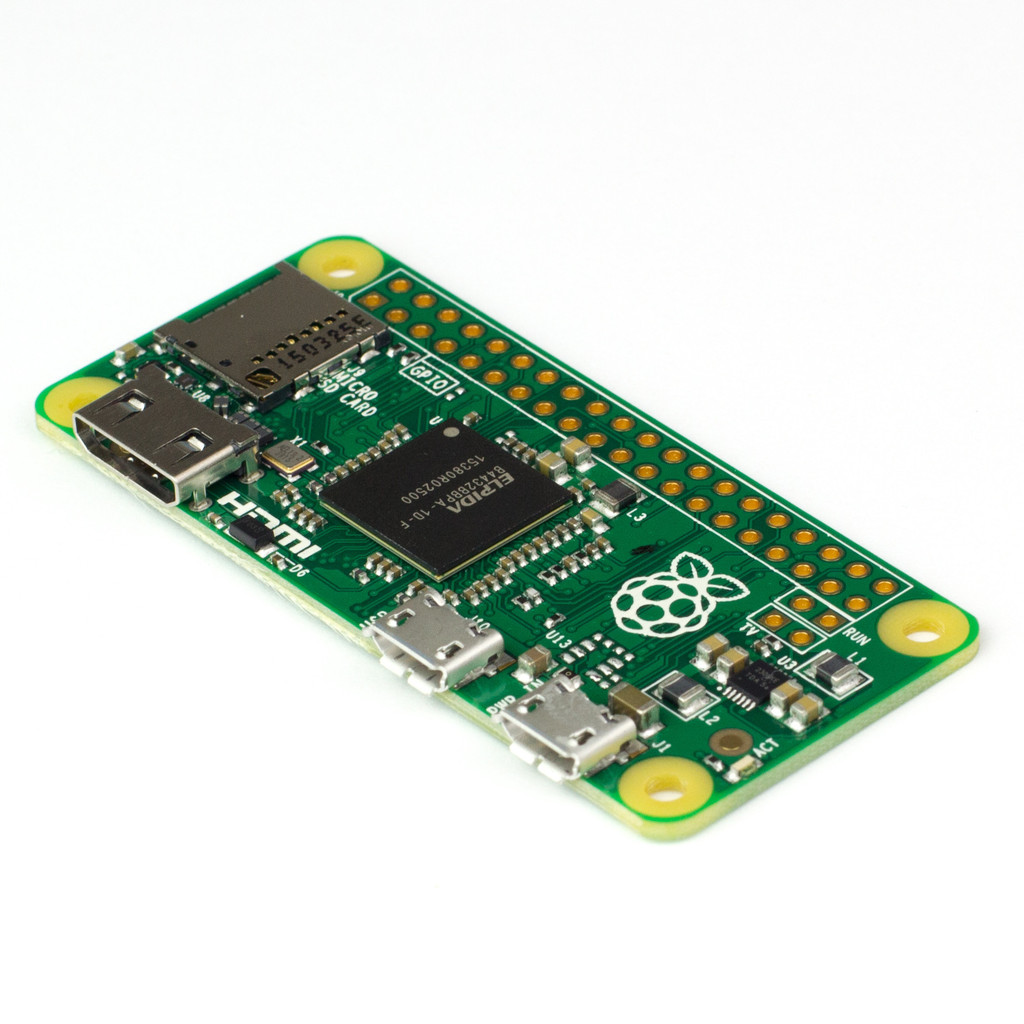
The $5 computer: Raspberry Pi Zero.
