by admin | Jul 25, 2017 | DTI Updates
TAGBILARAN CITY, July 25, (PIA)–Times when wealth of materials that the Philippine Statistics Authority (PSA) has in its disposal and left buried in a drawer somewhere would be gone soon.
Seeing that there is so much information that could help Boholanos come up with smarter decisions, PSA Provincial statistician Jessamyne Anne Alcazaren has invited the Philippine Information Agency in Bohol to help them come up with solutions to make these research materials accessible to the community.
There, the PIA in Bohol conducted its basic news writing workshop for all the employees and on the job trainees of the PSA, July 24.
The workshop, held inside the PSA office Monday had employees submitting drafts which the whole team also edited and corrected to be a mock press release.
The writeshop also delved on the treasure trove of data which the PSA in Bohol keeps but has hardly been exposed.
The PSA has been as mandated, primarily responsible for all national censuses and surveys, sectoral statistics, the consolidation of selected administrative recording systems and compilations of national accounts.
An agency that functions as the central authority in government primary data collection, the office in Bohol deploys enumerators and researchers for the conduct of periodic censuses, according to the PSA website.
These include data on population, housing, agriculture, fisheries, business and industry.
They also collect and compiles data for analysis to come up with statistical information relating to economics, social, demographic and general condition of the people in communities.
But most of the data collected here only gets submitted to Manila and is seldom presented to the people.
These surveys also make the data on the various aspects of socio economic life including agriculture, industry, trade, finance, prices and marketing information.
PSA enumerators gather the base data for incomes and expenditures, education, health care, culture and social situations for government planners and the public in general.
With the PSA empowered to release these data through press digestible materials, it might not be long when these can better be used by people in making better and well informed decisions. (rahc/PIA-7/Bohol)
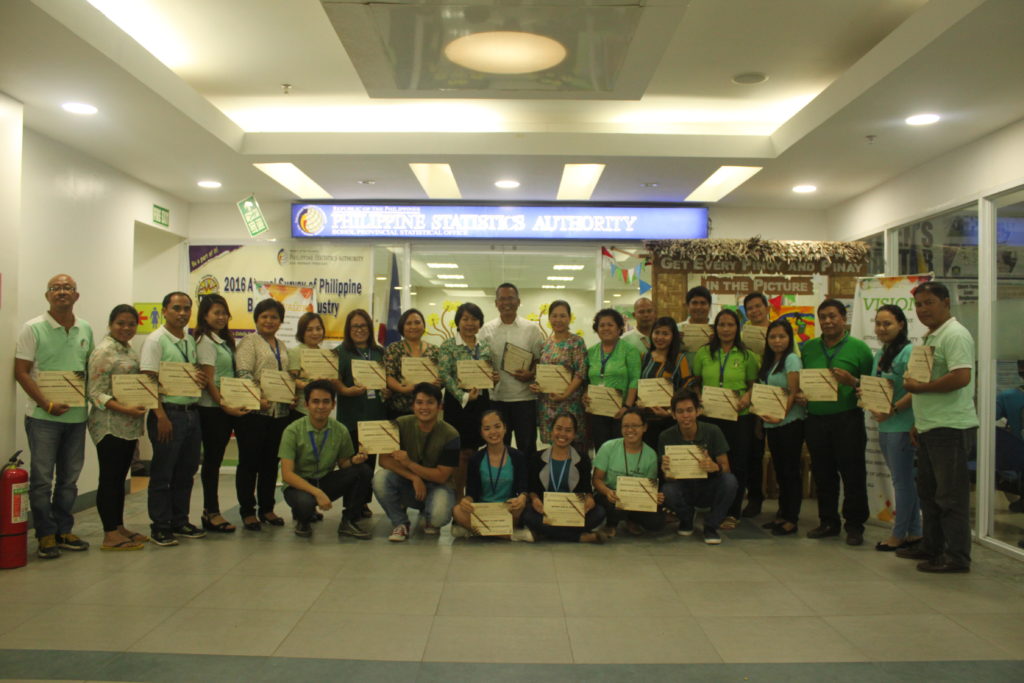
Helping make data and information accessible to the Filipinos, the PSA taps the PIA in its news writing workshop to empower researchers and census enumerators to translate their data into stories which people can easily understand. (rahc/PIA-7/Bohol)
by admin | Jul 25, 2017 | DTI Updates, National News
In its effort to increase trade and investment opportunities from various markets, the Philippine Department of Trade and Industry (DTI), represented by the Philippine Trade and Investment Center (PTIC) in Toronto, is set to hold a breakfast forum dubbed as “Trade and Investment Opportunities in the Philippines” on 26 July at the Pinnacle Hotel in Vancouver, British Columbia.
The forum is made possible with the support and cooperation of the Philippine Consulate General in Vancouver. Hon. Consul General Neil Frank Ferrer is expected to open the forum while Philippine Ambassador to Canada H.E. Petronila P. Garcia will serve as a keynote speaker. Special guests from various Canadian sectors led by Aquilini Renewable Energy Ltd. and Corinthian Distributors Ltd. will share their experience in doing business in the Philippines.
“The Philippines would like to see more investments from Canada given the vast potentials in manufacturing and services in the areas of IT-BPM, specifically game development and animation, agri-based industries, and aerospace”, according to Senior Trade Commissioner Maria Roseni Alvero. Alvero is also set to present trade and investment opportunities in the Philippines during the event.
“We also aim to double our exports to Canada particularly of food products and IT-BPM services in the next few years,” added Alvero.
The five-day trade and investment outreach to Western Canada aims to introduce the services of the recently opened DTI Office, also known as the Philippine Consulate General (Toronto) Trade Section. It opened its new location in Downtown Toronto last 1 July 2017. The office currently caters to all provinces and territories of Canada. Similar outreach programs are scheduled for the other regions in Canada.
by admin | Jul 19, 2017 | DTI Updates, National News
MAKATI—Inclusive business model is not just about helping small players, as big companies also benefit from partnerships that this model creates, the country’s trade chief said.
Speaking at the League of Corporate Foundations’ Corporate Social Responsibility (CSR) Expo on 19 July, Department of Trade and Industry (DTI) Secretary Ramon Lopez called on companies to continuously innovate even on its processes to adopt an inclusive business (IB) model for its CSR initiatives.
“If CSR is about the practice of ‘doing good is good business,’ the government is about generating business to do good,” said Sec. Lopez.
He added that that the administration of President Rodrigo Duterte is sincere in helping the poor and those who have less in life by providing more opportunities for jobs and entrepreneurship, and inclusive business is a viable option for this.
According to him, while private and public sectors have different approaches to practice inclusivity, the synergy between the two should push the shared goal of improving the quality of life of every Filipino, thus making a symbiotic business model.
“We encourage the corporate sector to integrate the IB model in their respective CSRs. With the big brother-small brother connection, the government is now developing a simplified formula to properly incentivize companies that integrate small players in their value chains,” he said.
Sec. Lopez mentioned that the government’s focus in implementing this initiative is on the micro, small and medium enterprises (MSMEs), adding that programs and initiatives that aim at developing MSMEs can only mean greater economic success for the country.
“With the creation of new business ventures and the push for innovation in existing MSMEs as critical parts of an inclusive innovation process, we can now focus on strategies to promote innovation-led entrepreneurship,” he added.
The trade chief said that by aligning inclusive innovation with the overall goal of inclusive economic growth, the impact can reach the marginalized sectors, where business process innovations have the potential to reduce inequality in the country.
He added that in ushering an entrepreneurial revolution, there is a need to generate smarter, idea-based entrepreneurs, who are value-adding and carry ideas with unique selling propositions.
Sec. Lopez shared with the corporate foundations current initiatives under the Dutertenomics framework to widen the gains of development, address income inequality and alleviate poverty, including the Build Build Build infrastructure program that promotes more regional and rural growth centers. He also mentioned DTI platform to develop MSMEs, as well as the outcomes of the recently concluded MSME Development Summit.
“Big companies integrating small companies in their value chains will make the CSR more inclusive and sustainable,” he concluded.
by admin | Jul 14, 2017 | DTI Updates
MANILA—The Philippines, through the Department of Trade and Industry (DTI), continues to advance the promotion and development of micro, small, and medium enterprises (MSMEs) in the ASEAN region through the “ASEAN MSME Development Summit” on 14 July.
Under the Summit’s theme “7Ms Towards Shared Prosperity in ASEAN,” the Philippines laid out a seven-point strategy essential for MSME development—mindset, mastery, mentoring, markets, money, machines, and models—which the country wants the region to adopt to advance the ASEAN economic agenda of shared prosperity.
The Summit gathered representatives from the private sector, civil society, and ASEAN governments to develop new ideas and identify areas of improvement to successfully place MSMEs in the vanguard of the ASEAN Economic Community’s (AEC) drive to achieve inclusive growth.
“The Philippines has been in the forefront of providing substantive initiatives toward establishing MSMEs at the core of the ASEAN economic agenda. We want to elevate discussions and provide the right information on how we can further assist them to support our goal of achieving inclusive growth in ASEAN,” said ASEAN Economic Ministers chairman and DTI Secretary Ramon Lopez.
The development of MSMEs is integral to sustaining the economic development in ASEAN since MSMEs comprise most of the businesses in the region’s aggregate regional economy, accounting for over 90 percent of all the domestic firms and 75 to 90 percent of the non-agricultural workforce.
In pushing the MSME agenda, the Philippines seeks to address key challenges in their development and achieving prosperity in the region.
Experts in various fields discussed the seven-point strategy taking into account the challenges that small enterprises face.
Session 1 with Mindset as a theme, provided discussions on how to train and orient entrepreneurs with the right entrepreneurial characteristics and attitude.
Sessions 2 and 3 on Mastery and Mentoring, tackled the core principles of entrepreneurship that will equip MSMEs with the necessary competence and effective knowhow to seize gains for their ventures.
Session 4 covered Markets, a key component in the survival of any business. It discussed how markets are made more accessible and the various technologies that can help MSMEs gain traction in the local and international arenas.
Session 5 on Money took a closer look on financing schemes that MSMEs can further explore and access and some key initiatives governments undertake to facilitate access to much needed capital.
Lastly, Session 6 and 7 gave an insight on how access to appropriate Machines and technology, and choosing the right business Models can help upgrade their businesses, boost productivity, and improve marketability of products and services.
“MSMEs comprise the backbone of our economy and thus vital to the country’s growth. With the help of 7Ms, we know MSMEs are a step closer to advancement,” said DTI Undersecretary for Regional Operations Zenaida Maglaya.
ASEAN government representatives and MSMEs graced the event and expressed full support to the Philippines’ call for greater cooperation in placing the interest of MSMEs at the core of the AEC agenda.
The ASEAN MSME Development Summit was organized by the ASEAN Committee on Business and Investment Promotion (CBIP), which is chaired by the DTI, and the DTI Bureau of Small and Medium Enterprise Development (BSMED).
The CBIP’s mandate is to organize business and investment promotion activities that will engage the international business community, government, and other concerned parties in the drive to achieve the AEC’s goal of shared prosperity in the ASEAN region.
During the Summit, the Philippines’ DTI also launched “SIKAP: Sipag at Abilidad ng Pilipino,” a coffee table book that showcases success stories of MSMES across the Philippines. It also mounted a Go Lokal! Trade Exhibit, which showcased world-class products of Philippine MSMEs.
The Philippines’ Chairmanship of ASEAN 2017 was formally launched on 15 January at the SMX Convention Center in Davao City with the theme “Partnering for Change, Engaging the World.”
by admin | Jul 13, 2017 | DTI Updates, National News
In support of an “Inclusive, Innovation-led Growth” for a strong ASEAN Economic Community (AEC), the Philippines, through the Department of Trade and Industry (DTI), is conducting today the ASEAN 2017 MSME Development Summit at the Philippine International Convention Center (PICC), Manila, the Philippines.
The Summit will place the interests of MSMEs at the center of the ASEAN Economic Community (AEC) agenda and putting together the MSME advocates, mentors, enablers and business experts from the ASEAN region who can help develop, handhold, and empower the MSMEs and spread the economic fruits of the AEC dream.
With the theme, “The 7Ms Towards Shared Prosperity in ASEAN,” the DTI aims to gather insights from thought leaders and experts addressing the 7Ms that sum up the elements of the approach and framework for enabling and fostering the MSMEs.
“Through the 7Ms, we’ll empower the MSMEs so they can also share in the benefits of the ongoing economic growth, and improve the quality of their lives by engaging in vibrant entrepreneurial activities,” said DTI Secretary Ramon Lopez.
The seven-point strategy includes Mindset, Mastery, Mentoring, Markets, Money, Machines, and Models of Business. These will equip the entrepreneurs in making a difference in the market while contributing to the larger cause of sustaining the entrepreneurial revolution in ASEAN.
MSMEs are integral to the economic development and growth of the ASEAN region as they outnumber large enterprises in both quantity of establishments and share of the labor force they employ. The ASEAN MSMEs comprise the 95-99% of all business establishments, generating between 51% and 97% of employment. .
“We are advocating the 7Ms of DTI Secretary Ramon Lopez in helping the entrepreneurs set up their businesses and be a smarter entrepreneur. And this 2017, in time for the country’s hosting of ASEAN, we want to advance and mainstream the 7Ms in ASEAN region,” said DTI Regional Operations Group (ROG) Undersecretary Zenaida Maglaya.
More than 20 caliber speakers and panelists from ASEAN Member States (AMS) will share inspiring and valuable stories of leadership and entrepreneurial journey on various plenary discussions on Promoting MSME Development Mindset, Mastery and Mentoring Toward Competitiveness and Resilience, Accessing Domestic and Regional Markets, Overcoming Money Hurdles, and Machines and Proactive Business Models Toward Productive and Responsive MSMEs.
At the end of the Summit, prominent business takeholders and key players will provide support and recommend priority actions towards helping achieve economic prosperity in the region through MSME development.
by admin | Jul 12, 2017 | DTI Updates
United Coconut Association of the Philippines (UCAP) recently issued a statement clarifying the American Heart Association’s (AHA) advisory against the consumption of coconut oil.
In the statement, UCAP mentioned that the advisory has gone viral with adverse effect on the coconut oil since it is considered a saturated fat. UCAP called on readers and users of coconut oil to be discerning of the said advisory and news articles drawing conclusion that coconut oil is unhealthy.
According to Dr. Fabian M. Dayrit of the Ateneo De Manila University, the AHA adopted a position that ignores the distinction between medium-chain fatty acid (MCFA) and long-chain fatty acid (LCFA) despite the numerous advances in this certain field of science. Coconut oil is mostly medium-chain saturated fats, the healthy type of fat. Detailed comparison of the fatty acid composition shows that coconut oil is very different from animal fat. Hence, studies that assume they are similar are consequently in error.
Furthermore, Asian and Pacific Coconut Community also highlighted in their recent statement the words of Dr. Bruce Fife, a USA Certified Nutritionist and Doctor of Naturopathy Medicine, “You cannot say LDL is bad and HDL is good.” He explained the two types of LDL: one small and dense, while the other is large and soft. The large LDL is the type that is used in making bile, hormones, and Vitamin D, which are all good for one’s health. Dr. Fife further concluded that, “Eating coconut oil (and other saturated fats) increases both HDL and the “good” LDL, thus, lowering the risk of heart disease. This is one of the reasons why populations that eat a lot of coconut oil have the lowest heart disease rates in the world.”
Department of Trade and Industry’s Export Marketing Bureau (DTI-EMB) concurs with the stand of industry associations such as United Coconut Associations of the Philippines, Inc. and the Asian and Pacific Coconut Community that the advisory is misleading as AHA based its findings on limited studies on saturated fats.
“This is not the first time this kind of negative publicity against coconut oil has happened. If we will look closer to historical accounts, this has happened before. It was magnified this time due to social media and technology,” said DTI Export Marketing Bureau Director Senen M. Perlada.
By and large, DTI will continue to support the industry in sharing the good news about coconut and its economic contribution to millions of Filipino farmers and exporters.
Backed by recent studies and firsthand experiences of its consumers around the globe, DTI will help sustain the impressive health and economic contribution of coconut products such as coconut oil, virgin coconut oil, coconut water, coconut sugar, among others, by continued promotion through roadshows in various markets which will eventually bring additional jobs and income opportunities for Filipinos especially in the countryside.
American Heart Association (AHA) issued a Presidential Advisory on Dietary Fats and Cardiovascular Disease (CVD) on 15 June 2017 which recommended a decrease in consumption of products high in saturated fat such as dairy fat (butter), lard (pork), beef tallow, palm oil, palm kernel oil, and coconut oil.

