by admin | Jan 30, 2016 | Headlines, Tech Talk
Ideaspace Foundation held its first Competition Roadshow for the year 2016 in Bohol at Tambahayan Cafe, Palma Street, Tagbilaran City on January 29, 2016. Ideaspace Executive Director Diane Eustaquio and Technical Assistant for Startup Services Brenda Valerio facilitated the event.
The participants included local technology and startup advocates, freelancers, members of the Google Educators Group, students, the Fab Lab team and IT professionals from around Bohol. There was also a participant all the way from Siquijor.
Ms. Lai Biliran, Bohol ICT Council Chairperson and Ms. Nanette Arbon, DTI-Bohol Provincial Director were also present and showed their support for the tech community in the province.
A participant asked, “What should they expect from the program?” Eustaquio answered that they should expect to go through a very tough period in a pressure cooker environment.
“It is important to be ready to face the challenges of the life of an entreprenuer. It is not easy. IdeaSpace is there to help with the very difficult period of starting a business, but we will not be around all the time. It’s a life changing event.”, she added.
Ideaspace Foundation is looking for teams with synergy, proven track record, and the stamina to bring their startup idea to market. The roadshow allowed the participants to ask more about the details of startup competition and how to increase their chances of being selected into the acceleration phase.
Those accepted will have access to up to P1 million funding which will include up to P500,000 in cash, while non-cash benefits such as housing, transportation, incorporation, office space, communication, software support, trainings and classes, as well as mentoring from executives of companies under First Pacific. Their team must have at least two members in Manila full time for 4.5 months. They will also take classes at the Asian Institute of Management (AIM).
Starting 2016, Ideaspace adopted a new structure in which the foundation will no longer have equity in the startups that go into the incubation stage.
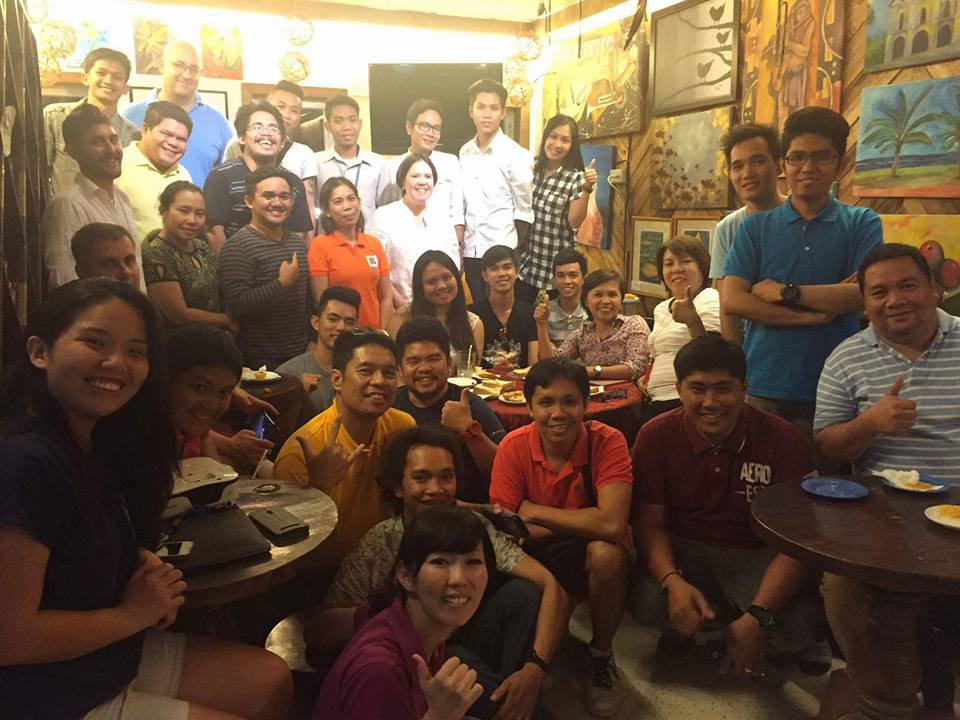
The participants of the Ideaspace Competition Roadshow in Bohol.
by admin | Jan 30, 2016 | Headlines, Tech Talk
Report by: Ben Skelton

Students and volunteer speakers Ben, Roy, Nelson and Dalareich
Bohol ICT Council volunteers were in action again this week. This time at Holy Name University as part of the Rural Impact Sourcing initiative. An afternoon of presentation and Q&A was held to spread awareness of online job opportunities, now ripe for the taking by students and new graduates.
The show was led by tech entrepreneurs Jay Paul Aying and Ben Skelton. They expounded the variety of opportunities available.
Writers, educators, engineers, artists, virtual assistants and programmers are among those in demand for online work. The earning potential is attractive, for instance those teaching English to Japanese students via video chat are commonly receiving 750PHP per day part time.
The BICTC Team gave a practical how-to explaining where to go to find work online, how to make the difficult first steps and the kind of mindset to adopt to achieve success. Genesis Reonico of onlinejobsuniversity.com supplied expert up to date material for inclusion in the presentation.
Nelson Buena gave an account of his real world experience of online work in web design and social media management. His testimonial was invaluable proof to the audience that it can be done here, and done by someone who began from their position not long ago.
To bring the afternoon to an end local business heroes Roy Bayonas and Dalareich Polot recounted their trials and paths to eventual success. Developing electronics and chocolate products respectively, they both broke the news that their operations are expected to grow rapidly in 2016.
To learn about future events find ‘Bohol ICT Council’ on Facebook and click like.
by admin | Jan 30, 2016 | National News, Tech Talk
IdeaSpace Foundation (IdeaSpace), the leading early-stage technology incubator and accelerator in the Philippines, announced the opening of its annual startup competition for 2016, which will begin accepting early-stage startup ideas beginning January 21.
Now on its fourth year, the IdeaSpace startup competition will also have a new structure which will focus on providing equity-free funding and support to competition winners so founders can pursue their innovative ideas.
“Ever since IdeaSpace was founded, we have declared our belief that Filipino entrepreneurs can turn their innovative startup ideas into reality and make it big on the world stage as long as there is an ecosystem to support them,” said Diane Eustaquio, Executive Director at IdeaSpace.
“With this new equity-free funding structure, IdeaSpace strengthens its commitment to the local startup ecosystem to bring out the most socially relevant innovations that can help solve pressing problems of the world, particularly in emerging economies such as the Philippines,” she added.
Ideas from across the country, region
Interested groups and individuals can now log on to apply.ideaspacefoundation.org to fill up the form and submit their startup ideas for evaluation until March 18, 2016. Submissions from around the Philippines, as well as in the Southeast Asian region, are welcome.
The top twenty ideas from this pool will be screened by an esteemed panel of judges, and the top 20 early-stage startups that will enter incubation will be announced by July 5, 2016. At least ten of these startups, meanwhile, will enter the acceleration phase beginning August 1, 2016.
Those who enter the acceleration phase will have access to up to P1 million funding which will include up to P500,000 in cash, while non-cash benefits such as housing, transportation, incorporation, office space, communication, software support, trainings and classes, as well as mentoring from executives of companies under First Pacific.
New structure
Unlike previous years, IdeaSpace will no longer have an equity in each of the startups that will undergo its incubation and acceleration process.
Eustaquio said this will allow startup founders and IdeaSpace to collaborate and focus fully on bringing these early-stage ideas to reality, and to ensure that each idea has a clear and achievable runway toward commercial viability.
As one of the formidable technology incubators and accelerators in the country, IdeaSpace has helped give birth to about 38 startups over the last four years as part of its half a billion-peso funding that was instituted in 2012.
Some of the program’s most notable alumni include: SALt, a startup that has developed an innovative saltwater lamp and was featured during the recent APEC Summit 2015 in Manila; PinoyTravel, a startup which helps solve provincial bus reservation woes of commuters; Mobkard, which helps consumers save on purchases through discounts and promos; and Tactiles, which developed an educational toy that helps children learn electronics while playing, among many others.
IdeaSpace is supported by the following companies: First Pacific, First Pacific Leadership Academy, Metro Pacific Investments Corporation (MPIC), Metro Pacific Tollways Corporation, MPIC hospital group, PLDT, Meralco, Smart Communications, Inc., Digitel Mobile Philippines and its mobile brand Sun Cellular, SPI Global, ePLDT, Indofood, Philex Mining, Maynilad, MediaQuest, and TV5. To know more about IdeaSpace, visit www.ideaspacefoundation.org.
by admin | Dec 19, 2015 | Headlines, Tech Talk
The provincial government of Bohol held the ICT Sector Planning workshop on December 17, 2015 at the Casa Rey Francis Inn and Restaurant. The whole day even was attended by the various stakeholders of the Information and Communications Technology sector. This sector includes the Bohol Investment Promotion Center (BIPC), the academe (HNU, UB, STI, BISU), DOST-ICTO, Bohol ICT Council, the Tagbilaran City government, BEPO, DTI, EDCOM, Bohol ICT Unit, TESDA-Bohol, DepEd-Bohol, Philippine National Police (PNP-Bohol), Bohol Chamber of Commerce and Industry (BCCI), Google Educators Group (GEG), PGBH-SEEM, freelancers, TaRSIER117, Techtalks Tagbilaran, Globe Telecom, Philippine Call Center Institute, DTI and other groups interested in the ICT industry.
City Mayor Baba Yap, in his inspirational message, said that there are interested parties that are willing to locate their BPO operations in Tagbilaran City and the city government is committed to make the city attractive to investors in this industry. Currently, the Sangguniang Panglungsod is developing the incentives code for this industry.
Ms. Lai Biliran, the chairperson of the Bohol ICT Council presented the massigve opportunities for job generation in the ICT sector. Even nurses and other graduates of medical courses can find employment in the BPO industry with the increasing trend of outsourcing the medical records processing to the Philippines. In an online survey conducted by the ICT council a few years ago, Boholanos working in the BPO industry in other cities are willing to relocate back to Bohol if similar job opportunities are available.
Ms. Marjoe Narca of HNU facilitated the planning workshop.
The ICT industry is currently an US$18B industry in the country and the revenue generated is expected to exceed OFW remittances in the near future. Bohol’s share of this market is very small and is contributed by small enterprises operating locally and some foreigners who opened offices here. Although a small industry in Bohol, BPO operators are already doing inbound and outbound call center operations, software development, drafting, engineering and architectural designs, content development, graphics, animation and photography.
The perennial challenge to the small ICT enterprises is the high cost and low bandwidth of business grade Internet connections. While guaranteed bandwidth leased line connections are already available, these are very expensive and would not be economically viable to use by small enterprises.

Participants to the ICT Sector Planning Workshop.
by admin | Nov 28, 2015 | Tech Talk
By: Jerome Auza
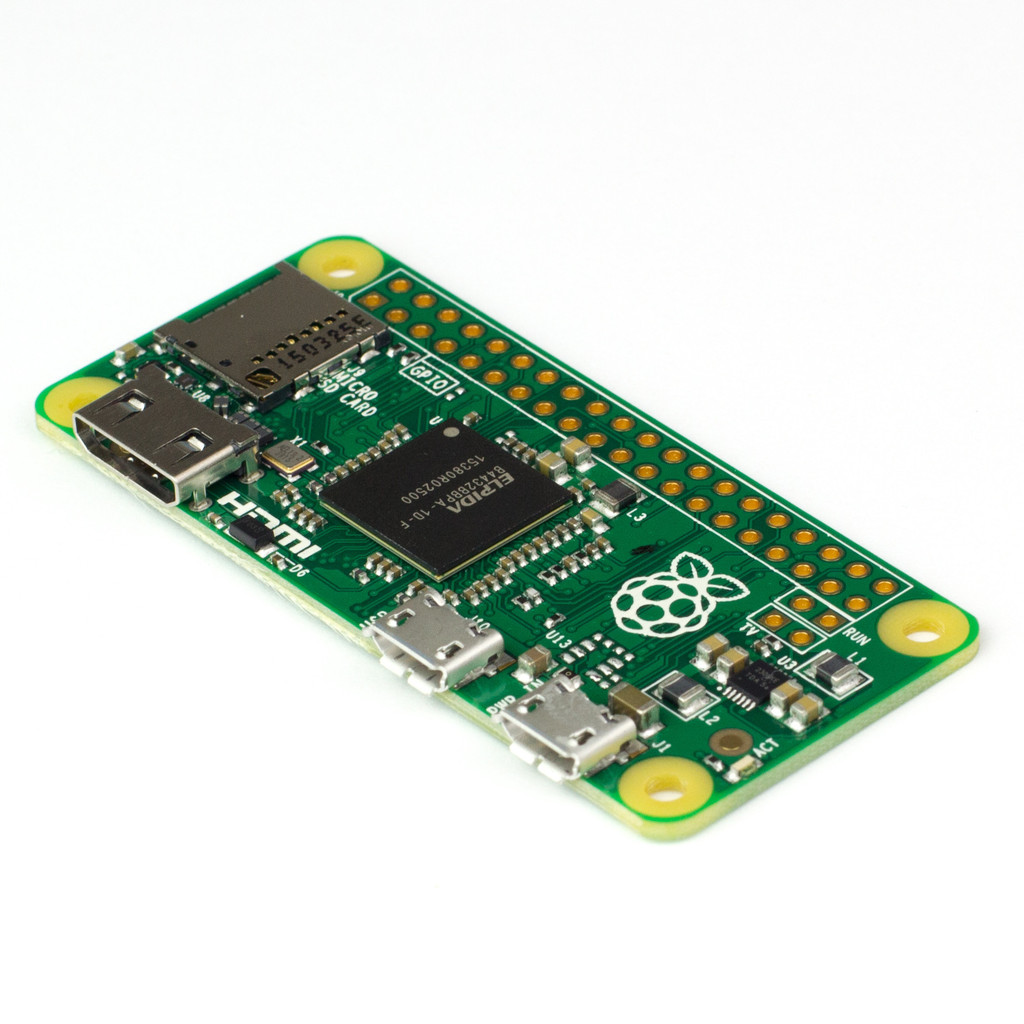
Embedded computing enthusiasts have reason to celebrate in November 2015. Raspberry Pi Foundation, the developer and manufacturer of the Raspberry Pi embedded computers, announced the immediate availability of the latest model of the Raspberry Pi series of products. The Raspberry Pi Zero is available for $5 per unit and the specs are quite decent for the price:
A Broadcom BCM2835 application processor
1GHz ARM11 core (40% faster than Raspberry Pi 1)
512MB of LPDDR2 SDRAM
A micro-SD card slot
A mini-HDMI socket for 1080p60 video output
Micro-USB sockets for data and power
An unpopulated 40-pin GPIO header
Identical pinout to Model A+/B+/2B
An unpopulated composite video header
A very small form factor at 65mm x 30mm x 5mm
Eben Upton, Raspberry Pi Founder, announced the availability of the Raspberry Pi Zero on his blog at https://www.raspberrypi.org/blog/raspberry-pi-zero/ on November 26, 2015. He said that the cost of the computer is important in increasing the chance that people will get involved in programming.
The Raspberry Pi Zero runs on Raspbian, an operating system based on the Debian Linux distribution. The application possibilities on a Raspberry Pi Zero are endless. As long as the application doesn’t required extensive processing power, very large memory or lots of fast storage, it can be done on the Raspberry Pi Zero.
This development comes at the time when the buzzword “Internet of Things”, essentially a machine-to-machine network, is very popular. In the very near future, it will be possible to link up various appliances, equipment, devices, sensors, cameras and many other things so that these can perform many tasks in an automated manner based on the user’s input or pre-defined behavior. One of the barriers of the Internet of Things is the cost of the processing unit. At $5 each, the Raspberry Pi Zero may be the wrecking ball to break this barrier.
In education, it can be used to help students learn about programming and interfacing of computers to external inputs and outputs. For hobbyists, this could enable them to tinker with more applications that may eventually lead to very useful ones.
As of this writing though, most of the online stores that sold the Raspberry Pi Zero are out of stock already. Upton expects that supply will be able to catch up with demand soon.
The $5 computer: Raspberry Pi Zero.
by admin | Nov 21, 2015 | Tech Talk
By Jerome Auza
In 2005, I purchased components to build one of the computers I used as a server at Auza.Net. This computer has served the company for more than 10 years. It finally refused to power up on November 21, 2015.
From all of the computers I have used, this was the longest operating computer ever. I haven’t replaced any component during this period. Most of the time it is running 24/7. At one point, the CPU fan stopped working so I had to put a USB powered external fan to cool the CPU.
In July 8, 2007, it powered the first ever real-time worldwide broadcast of DYRD-AM via its website www.dyrdam.com. Several months later, it also powered the data capture of the Textklamo service of the same station.
Dusty and crippled beyond repair, I removed the CPU from the server rack, gave it a final check before I hugged it goodbye. Well, I didn’t really hug it but it’s the thought that counts, right?
In its 10 years of operation, I hardly had to do any maintenance. It has streamed a few years worth of broadcast of DYRD-AM. It has processed thousands of TxtKlamo messages. It has drawn for me thousands of monitoring charts.
This is even more proof of the stability of the Linux operating system. The only times it would shutdown is when I am not able to run the generator in time before the UPS runs out of reserved power.
Goodbye computer with local IP address 192.168.15.23. You will be missed.