by admin | Nov 12, 2018 | Headlines
Thanks and no thanks to the movies that depict the sharks as diabolical creatures of the sea, the enmity between sharks and men is almost shown in the gory death of a shark, almost all the time.
Evil as they are depicted, sharks are indeed apex predators, but like storms, they bring new life and balance the ecosystem, that is what movies do not show.
Bohol Boholanos to better understand sharks and the vital roles they play in the ecosystem, Save Sharks Network Philippines is bringing to Bohol the country’s 3rd Shark Summit in time for the Shark Conservation Week, November 12-16.
Bohol is considered as one of the marine key biodiversity in the country because its marine water is rich in flora and fauna, shark species among them.
Considered the center of the center of biodiversity and with temperate waters that are home to a whole lot of species, Bohol waters have also attracted sharks, which are either hunted or chased off.
Home to several reef sharks, threshers, from the gentle giants which have become million-peso tourism industry in nearby Oslob to the cookie cutter sharks that also help control the population of dolphins, Bohol waters and its tourism potential has brought the celebration of 2018 Shark Conservation Week here.
Ecotourism activities around sharks are starting to affect the economy.
In Pamilacan then a whale shark could fetch about P200,00when caught by a fisherman. But with dive tourism or whale shark interaction, a single whale shark could bring in over a million through the years.
And a live shark today would mean a much better checked marine ecosystem, an invaluable resource that would feed communities.
Here, organizers think Boholanos could be very strong partners in conserving sharks.
Selected to host this year’s 3rd Shark Summit that will run from November 12-16, 2018, Bohol also becomes the hub of various activities Save Sharks Network Philippines (SSNP) have lined-up for this activity.
And to get the widest possible participation, organizers have opened the activities for all.
In fact, by November 12, Save Sharks Network Philippines (SSNP) is inviting everyone to join them and beat the record for most number of Baby Shark Dancers on site. This would be at 4:00 PM at the Carlos P. Garcia Sports Complex in Tagbilaran City. Participants may come in costume, organizers said.
The first Shark Summit happened in Cebu in August 2014, where there was a historical gathering of policymakers, government officials, conservationists, divers, scientists, advocates, and students to identify challenges and solutions in shark conservation.
The two-day event sprung two years of shark campaigns and projects, a policy to protect all shark species in Cebu.
The 2nd Shark Summit happened in Dumaguete, Negros Oriental in November 2016.The 2nd Shark Summit led to a nationwide campaign to list shark and ray species in Appendix II of CITES, the creation of the 2020 Shark and Ray Conservation Roadmap of the Philippines, stakeholder consultations which involved listening and dancing to “Baby Shark” on loop, and advocating for shark conservation bills in the Senate and House of Representatives.
So, why would there be a need to conserve sharks?
Sharks are apex predators, and as such, they play an important role in the ecosystem by maintaining the species below them in the food chain and serving as an indicator for ocean health, according to eu.oceana.org.
They help remove the weak and the sick as well as keeping the balance with competitors helping to ensure species diversity.
“As predators, sharks shift their prey’s habitat, which alters the feeding strategy and diets of other species. Through the spatial controls and abundance, sharks indirectly maintain the seagrass and corals reef habitats.”
The loss of sharks has led to the decline in coral reefs, seagrass beds and the loss of commercial fisheries.By taking sharks out of the coral reef ecosystem, the larger predatory fish, such as groupers, increase in abundance and feed on the herbivores. With less herbivores, macroalgae expands and coral can no longer compete, shifting the ecosystem to one of algae dominance, affecting the survival of the reef system.
On the same dates,mural artists and eco-lifestyle advocate Anina Rubio with the Bohol Baji Arts Collective will lead a community painting mural in Tagbilaran City from November 13-15.
For law makers, the activities also include Shark Conservation Legislation Toolkit launch. The Legislation Toolkit is a template for local government units intending to craft shark conservation laws in their own contexts.
Another group, Large Marine Vertebrates (LaMaVe) Research Institute Philippines is hosting the Shark Science Session on November 14, 8:00AM-12:30PM in Holy Name University, where 30 students, government officials, and interested early career researchers, and shark enthusiasts are invited for lectures on sharks and rays ecology, biology, anatomy and field research, as well as a chance to practice hands-on on anatomy and necropsy techniques on real sharks.
A Youth Forum on Oceans and Sharks: Anak ng Pating, also brings students and youth organizations members for an interactive learning experience at 1:00-5:30PM on November 14 at the University of Bohol.
Save Philippine Seas will also lead a multi-stakeholder meeting role-play of a Senate hearing on shark policies, and session on writing local and national legislators to support the shark bill. Email savesharksnetworkph@gmail.com your school, course, and age to confirm. Deadline for registration is Monday, Nov. 12.
The week also will see the first public screening of The Atom Araullo Specials: Shark Land, which originally aired on GMA7 in May 2018.
In this film, award-winning documentarist Atom Araullo traveled to different parts of the country to take a close look at how the sharks industry has been shaping and thriving: Donsol, Oslob, Mercedes, and Daanbantayan.
Altogether, the weeklong events attempt to boost shark conservation and management for the years to come under the framework of the 2020 Roadmap, organizers said. (rahc/PIA-7/Bohol)
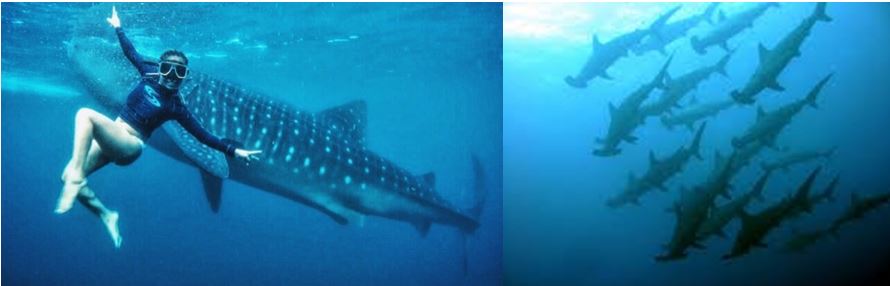
The largest marine animal, the whale shark and its interaction has become a million peso ecotourism industry, the same as the thresher sharks of Malapascua Cebu and the hammerhead sharks of Cabilao are potential income generators, when these are conserved. (PIABohol)
by admin | Nov 11, 2018 | Headlines
Bohol could be leading all other provinces in the country for coming up with a new hatchery for giant clams.
Socio Economic and Environment Management Cluster Liza Quirog, who also sits as the Provincial Agriculturist claimed this in front of the gathering of fish wardens, police environmental officers, coastal law enforcement council (CLEC) members and local officials gathered for the 2018 Annual CLEC General Assembly inside the Pavillion of the Panda Tea Gardens and Suites, Dao, Tagbilaran City.
Quirog, who took over in presiding the gathering in lieu of CLEC provincial chairman Governor Edgar Chatto, added it would not however be something new, as Bohol has consistently led the pack in innovations among local governments.
CLEC has been Bohol’s response to coastal law enforcement as it remains one of the most daunting challenges of resource management for local government units (LGUs) depleting valuable resources and making campaigners lose steam.
Decades back however, the campaign against illegal fishing in Bohol is made more efficient at lass costs with LGUs sharing resources and information through an inter-LGU, multi-agency, multi-sectoral CLEC.
After the national government empowered LGUs to manage their own resources, illegal fishers here have always evaded apprehension simply by moving from one town to another.
As their activities hold enormous negative impacts on the coastal environment including lessening fish catch, destruction of marine habitats, loss of income of small-scale fishers, expensive fish prices and fewer marine products, the Provincial Government of Bohol, supported by CRMP, called all fishery stakeholders to a Coastal Law Enforcement Summit in 2000.
This was to discuss and identify solutions to the illegal fishing problem.
The common conclusion: illegal fishing can be more effectively addressed through coordination and an integrated approach to coastal law enforcement.
This pushed for the creation of CLEC in each of Bohol’s three congressional districts, a move which now expanded to cluster of contiguous coastal towns.
And just as the collaboration between municipal governments improved in terms of resource sharing, the annual training and sharing of information allowed law enforcers and prosecutors and judges to be more technically equipped to handle cases involving violations of coastal laws.
This year, the CLECs, summoned by Executive Order No. 1, series of 2015 which strengthened and sustained monitoring and protection of Bohol coastal resources by institutionalizing CLEC, as part of its sustaining mechanisms for effective implementation, members gather to discuss accomplishments and challenges.
CLEC members also shared initiatives and best practices, especially in enriching coastal ecosystems and increasing fish stocks.
Just as local communities adopted marine protected areas assess their fishing areas in a bid to fast track rehabilitation of the depleted resources, the idea of seeding the MPAs with giant clams came naturally.
Giant clams or the Hippopus and Tridacnagigasspecies are believed to play a wide range of ecological roles in coral reef ecosystems, according to then Bohol CRM coordinator AdelfaSalutan.
Marine biologists have seen how giant clams’ tissues become food for a wide array of predators and scavengers, while their discharges of live zooxanthellae and gametes are eaten by opportunistic feeders.
Their shells provide substrate for colonization by organisms that live on its surface while other organisms and ectoparasitic organisms thrive within their mantle cavities, increasing the topographic heterogeneity of the reefs, as they act as reservoirs of zooxanthellae (Symbiodinium spp.), and those that potentially counteract eutrophication via water filtering.
Scientists also stress that dense populations of giant clams produce large quantities of calcium carbonate shell material that are eventually incorporated into the reef framework.
Found to be endemic to Bohol waters as proven by the presence of giant clam shells, these clams were over harvested to extinction in these waters, Salutan added.
First seeded in five marine sanctuaries: Bingag in Dauis, Basdio in Guinduman, Badiang in Anda, Sinandigan in Ubay and Lipata in Carlos P. Garcia, the giant clams sourced out from a facility in BolinaoPangasinan, is now being hatched at the Bureau of Fisheries and Aquatic Resources Multi-speciaes Hatchery in Sinandigan.
Quirog told CLEC members that the Provincial Government has sourced out a giant clam hatchery spawning tank and larval rearing, phycology laboratory for algal feed to the clams, and water pumps with aeration and filtration systems.
Said to be operational soon at the multi-species hatchery that also hatches grouper, pompano, siganids, prawn, mussels, abalones and blue swimming crabs, the giant clams to be produced here would be seeded in well managed marine protected areas all over Bohol.
Bohol aims to provide incentives and livelihood to communities managing their MPAs well by giving them earning potentials from the export of these exotic meat and novelty shells, Bohol Environment Management Officer JovenciaGanub said. (rahc/PIA-7/Bohol)
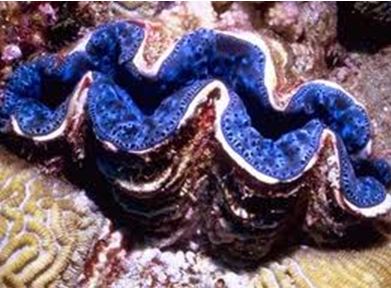
Tridacnagigas or giant clams used to be common in Bohol seas but overharvesting has made these marine resource extinct. With the help of science and a boost from research, Bohol now sets up a hatchery for giant clams, for future seeding in Bohol waters to hasten the restoration of the ruined and overfished marine ecosystem. (PIABOhol)
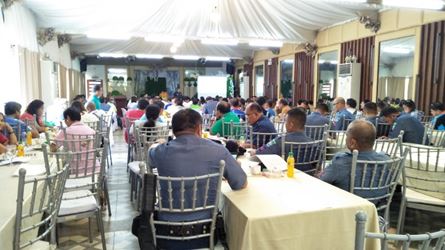
CLEC members gathered last week to share experiences and discuss common issues and concerns in keeping Bohol’s coastal resources at its peak to be able to feed its people. (rahc/PIA-7/Bohol)
by admin | Aug 25, 2018 | Headlines
TAGBILARAN CITY, Bohol, August 24 (PIA)—Bohol may not look far when it comes to seeking a stable supply of cheap fish, it can be easily found here.
Experts at the Bureau of Fisheries and Aquatic Resources (BFAR) think a strong support to mariculture and engaging big ticket investments along this line would make flooding fish in Bohol literally at arms’ reach.
Now scampering to stabilize what many believe as an artificial manipulation if only to dictate the local prices of fish, the Department of Agriculture (DA) has stepped in.
DA Secretary Emmanuel Piñol weeks ago, promised to treat the situation by bringing in fish from different regions through his department’s TienDA.
TienDA is DA’s version and actualization of the “farmer’s market” concept, by putting up a venue for farmers and fishers to be able to directly sell their produce, and for consumers to be able to access these products at its farm gate price.
Opened at the Bohol Agricultural Promotion Center (BAPC) last August 16 and 17, the first batch of TienDA’s Bohol Fish Market Bohol brought to Bohol a wide option of fish for the Boholano table, marine resources which were priced way below those found at local markets and travelling peddlers.
Data shared during the tow day selling event bared that the fish market allowed nearly 20 tons of cheap fish and sea products to Boholanos.
Further assuring Boholanos that the TienDA is not just temporary supply spiking to disrupt a local aberration in pricing, Sec Piñol announced: August 16-17 TienDA is just the start of similar farmer-fishers and consumers engagements.
Last August 24, the second TienDA Bohol Fish market reopened for a day at the BAPC.
But instead of the bulk of fish supply, local consumers were in for a disappointment: Zamboanga, which earlier assured to bring the huge bulk of fish supply for the one day selling event refused.
Bohol fish dealers who earlier took a huge supply from Zamboanga did not pay, resulting in the stalling of the supply flow.
Just as BFAR facilities in Calape and Regions 8 and 10, the second Bohol Fish Market managed less than 5 tons, to the dismay of DA officials and consumers here.
It was not known of local officials stepped in to patch the situation, but BFAR fisheries experts said Bohol need not look far.
“We brought in 2.1 tons of milkfish (bangus) from Region 10,” BFAR 10 Aquatechnician Jejomar Grupo said.
The supply, which BFAR 10 arranged to bring in, came from only one source: a fish cage operator in Lopez-Jaena, Misamis occidental.
The supply, Grupo, added, is only from one module of a 10 cubic meters (cu m) by 10 cum by 8 meter-deep cage in a mariculture project. The operator owns many modules.
In Bohol, Talibon resident, regional mariculture expert and now Cebu BFAR Fisheries Officer Edgar Delfin, Bohol Fishery Officer Leo Bongalos and BFAR Panggangan Calape Facility chief Dionisio Colantro altogether believe these is still something Bohol can do: take a second hard look at mariculture as a local source of fish supply.
Delfin, whose office monitors fisheries supply in Cebu admit: a fish cage in Tambo Island in Talibon with an investor from Cebu, grows fish and harvests tons and tons but for Cebu markets.
And while the Tambo fish cage is settled in possible Foreshore Lease Agreement, there are instances when local officials can make arrangements that a certain percentage of the regular harvest would be supplied to Bohol markets, hinted Colantro, whose facility in Calape breeds bangus fingerlings for distribution to government and private commercial fish growers and fishpond owners.
Delfin said building a 10 x10 x 8 cum, using bamboo floaters, nets and mooring buoys, would only cost about P150K to P160K, while a 6 feeding regimen a day for 3 months of operation would cost about P500K.
But with a stocking density of 30 fingerlings in a cubic meter, a 15,000 fingerling seeded, at least 30% mortality, a modular cage can still harvest 5 tons.
With multiple modules, an investor with 10-12 modules or a capitalization of P10 million can easily supply 10 tons of fish every month.
Delfin cited the favorable waters and sheltered bays in Bohol as ideal for fish cages and mariculture parks.
Bohol PFO Bongalos also recalled that the BFAR used to put up about five mariculture parks in Bohol, but now, only two have remained, and these are not even sustainable as these are just single modules enough to transfer the technology to local fishers who could be support workers for investments in the area.
BFAR said these facilities were placed in Maribojoc, Mabini, Candijay, Talibon and Calape.
“We had 5 mariculture parks, but it is sad to say that we have not engaged enough large scale private investors. What we had are small scale investors who could hardly recoup operational expenses,” Delfin lamented, further explaining the economies of scale.
And from these, only in Talibon did an investor, who keeps over 54 modules with alternating fish stocking pattern that a weekly harvest of over 10 tons happen, the bulk of the fish getting to Cebu.
At 29.8% fish sufficiency in Bohol citing Philippine Statistics Authority survey in 2017, an influx of locally supplied fish from mariculture parks, a weekly bulk supply can easily plus stricter marker regulations can dent upon the issue, experts propose.
In Candijay for example, the main bulk of the fishery harvest is dedicated to local markets and only the excess is shipped out, Bohol PFO Bongalos shared.
In fact, there is nothing more Bohol can ask, we have hatcheries that provide over 1.3 million fingerlings in Panggangan, multi-species hatcheries in Sinandigan Ubay, Clarin brackish water nursery and Bentig facility in Calape, BFAR authorities said.
Over this Colantro, who has 38 years of fisheries expertise under his belt proposed more investments in good storage facilities to keep supplies stable even in times of pinch.
He picked emergency harvest situations in fish cages especially amidst threat of impending typhoons, this time, in an oversupply of fish, prices go sagging down, but with storage facilities, everything can be kept to stabilize local prices.
While Bohol boasts of being among the most investor friendly province, questions as to why there are no takers for large scale marine investments, unlike less investor friendly provinces, kept bugging people.
As to its answer, local officials must work harder as the daily influx of tourists all the more put a strain on the local fish consumption, fisheries experts pointed out. (rahc/PIA-7/Bohol)
by admin | Aug 24, 2018 | Headlines
The Committee on Tariff and Related Matters (CTRM), Chaired by Department of Trade and Industry (DTI) Secretary Ramon Lopez, together with Department of Agriculture (DA) Secretary Emmanuel Piñol and other member-agencies, proposed supply-side interventions to minimize the impact of inflation and lower the prices of agricultural commodities.
“Based on the report of Tariff Commission, modifying the tariff rates will not have a significant impact on the prices of agricultural products because many of these have relatively lower tariff base already, or would have landed costs lower than local prices. After consulting with various stakeholders as well as the current status of tariff rates, there’ll be minimum movement if we bring the tariff to 5 percent. So, this would not be the solution. Instead, we focus on supply-oriented actions and volume enhancements that would have immediate impact,” said Sec. Lopez.
During the CTRM meeting on 15 August, potential solutions to reduce inflation as well as the results of the public hearing on the proposed tariff modification on meat, edible offal, fish, edible vegetables, feed wheat, and corn were discussed.
It was concluded that the reduction on most favored nation (MFN) rates will not significantly reduce prices as the agricultural products are already being sourced from Free Trade Agreement (FTA) partners under lower preferential rates.
“We need to focus our efforts in finding realistic and practical solutions to lower the prices while balancing the interests of both consumers and producers,” Sec. Lopez added.
Meanwhile, the DA had issued a Certificate of Necessity allowing a maximum 17,000 MT of galunggong to be imported by accredited fish importers. The articles will only be unloaded in Bureau of Fisheries and Aquatic Resources (BFAR)-accredited cold storage facilities and will be sold in Navotas Fishport.
“We’re also amending the Fisheries Administrative Order No. 195 to allow the sale of imported fish in wet markets,” said Sec. Piñol.
DA also requested the Bureau of Customs to temporarily suspend of the imposition of Special Safeguard Measures on chicken meat imports.
In the case of pork supply, it was reported that MAV certificate holders utilize 50% only of their allocations. Sec. Piñol directed MAV certificate holders to utilize their allocations, otherwise, these can be cancelled and rebidded to others.
DTI and DA will also be conducting regular inspection of commodity importers’ warehouses to establish level of inventory. Likewise, arrival and distribution of NFA rice imports will also be monitored.
The CTRM meeting was attended by the departments of Finance (DOF), Budget and Management (DBM), Foreign Affairs (DFA), Labor and Employment (DOLE), Agrarian Reform (DAR), and Transportation (DOTr). Representatives of the Office of the Executive Secretary, Bangko Sentral ng Pilipinas (BSP), Tariff Commission, Board of Investments (BOI), and National Economic and Development Authority (NEDA) were also present.
by admin | Jun 9, 2018 | Business, Headlines, World
Geneva, Switzerland – Department of Trade and Industry’s Philippine Trade and Investment Center (PTIC) – Geneva tested the cadmium level of Philippine cacao beans and the results are encouraging!
“Davao-sourced fermented cacao beans have low cadmium level that is well within the acceptable values, providing a big opportunity for Filipino cacao farmers,” said Michiel Hendriksz, Executive Director of FarmStrong Foundation.
The test was made in light of the European Union’s (EU) new limits on the cadmium levels in cocoa products by 1 January 2019 (EU No 488/2014) that could pose a serious threat to many smallholder cacao farmers, and present a challenge to chocolate producers.
“While Switzerland is not part of the EU, it adopts the EU General Food Law and exports majority of its chocolate production to the EU. Swiss consumers also have the highest per capita rate of chocolate consumption worldwide,” according to Mr Jean-Benoit Charrin, Director of Operations of FarmStrong Foundation.
Cadmium is a heavy metal found both through natural occurrence and from industrial and agricultural resources. The maximum levels for cadmium in food have existed in EU legislation since 2001. Thus, to reduce exposure levels to the metal in certain food groups where exposure is highest or where the consumer groups were most vulnerable, new recommendations for maximum exposure levels in a range of infant products and cocoa-based products were released. Three maximum levels have been set for chocolate, where the strictest maximum levels apply to chocolate varieties most eaten by children, while a maximum level is also set for cocoa powder destined for direct consumption.
![Text Box: From 1 January 2019: • Milk chocolate with below 30% total dry cocoa solids contain no more than 0.10 mg/kg wet weight of cadmium • Chocolate with over 30% cocoa and below 50% must have no more than 0.30 mg/kg of cadmium • Chocolate with more than 50% will have a threshold of 0.80 mg/kg • Cocoa powder sold to the final consumer typically as drinking will have a limit of 0.60mg/ kg Source: (EU) No 488/2014]() Cacao beans from Latin America are particularly affected. Previous research has indicated higher levels of lead and cadmium in cacao beans in Latin America compared to beans from West Africa. Cacao beans from West Africa, however, are considered “bulk beans” and lack the flavour Swiss chocolatiers are looking for.
Cacao beans from Latin America are particularly affected. Previous research has indicated higher levels of lead and cadmium in cacao beans in Latin America compared to beans from West Africa. Cacao beans from West Africa, however, are considered “bulk beans” and lack the flavour Swiss chocolatiers are looking for.
The low cadmium level of Philippine cacao beans brings opportunities for Philippine cacao farmers and producers, particularly in premium products (specialty, fine flavour and certified chocolate) as Swiss chocolate manufacturers look for new sources of cacao beans to protect its international reputation for high quality with many famous international brands.
The Department of Trade and Industry, through the various foreign trade posts, supports Philippine cacao farmers in demonstrating significant progress in the Philippine cacao sectors by aiming at niche markets for high quality and speciality cocoa and chocolate products. Government agencies and farmers/producers need to work hand-in-hand to be able to supply high quality Criollo/Trinitario cacao beans with good traceability and superior quality.
This positive development is also timely in light of the DTI’s thrust to upgrade the Philippine cacao industry in the global value chain. The cadmium level could also feed in the discussion during the Philippines’ hosting of the Asia-Pacific Cacao Congress scheduled from September 15 to 17 at the SMX Convention Center.
PTIC-Geneva works with Swiss cacao distributors, buyers and sourcing organisations, as well cocoa sustainability specialists. FarmStrong Foundation (http://farmstrong-foundation.org/) is a Swiss public interest organisation that promotes resilient, structured, rural economic development through integrated sustainable agricultural production systems in cocoa growing communities. The cadmium test was done by Intertek Group plc (http://www.intertek.com/), a multinational inspection, product testing and certification company headquartered in the UK with testing facilities in 100 countries including Switzerland and the Philippines. (END)
***
To request for a copy of the cadmium test, please write to PTIC-Geneva (geneva@dti.gov.ph).
Written by: TSO Magnolia Uy, PTIC-Geneva.

